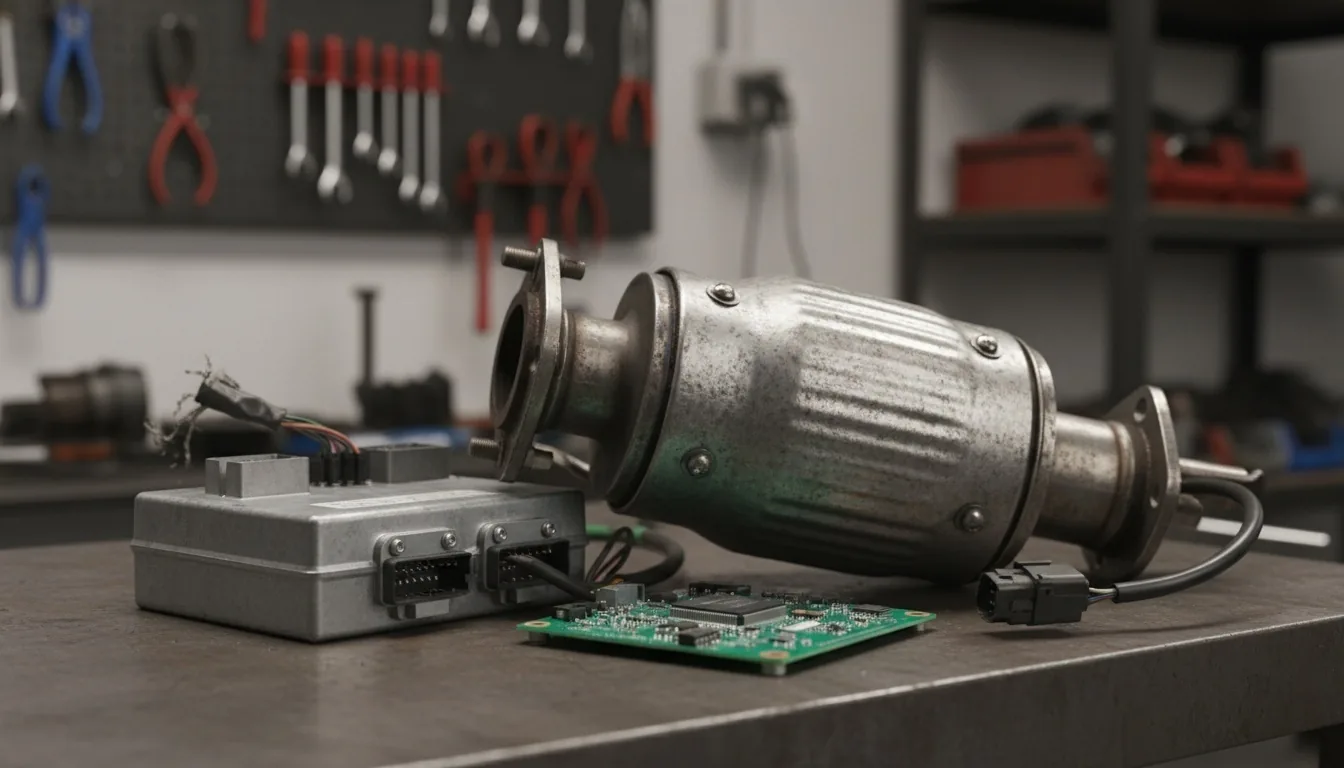
Regeneration does not happen at random. It is the result of complex electronic logic based on calculations, sensors, and safety strategies.
Introduction
.imported-article{ --bg: #06110B; --card: #12281A; --ink: #F5F7FA; --muted: #AEB8C2; --accent: #58CF0D; --accent-light: #7FE836; --accent-2: #7FE836; --line: #1C3624; --line-light: #16321F; --shadow: 0 4px 24px rgba(0,0,0,0.35); --shadow-lg: 0 12px 48px rgba(0,0,0,0.45); --radius: 12px; --radius-sm: 8px; } .imported-article *{ box-sizing: border-box; margin: 0; padding: 0; } .imported-article{ font-size: 16px; scroll-behavior: smooth; } .imported-article{ font-family: "Mona Sans", system-ui, sans-serif; color: var(--ink); background: var(--bg); line-height: 1.75; font-weight: 400; -webkit-font-smoothing: antialiased; -moz-osx-font-smoothing: grayscale; } .imported-article a{ color: var(--accent-2); text-decoration: none; transition: color 0.2s ease; } .imported-article a:hover{ color: var(--accent); text-decoration: underline; } .imported-article .container{ max-width: 800px; margin: 0 auto; padding: 40px 24px 80px; } .imported-article /* Header / Hero */ .hero{ background: linear-gradient(135deg, var(--card) 0%, var(--line-light) 100%); border: 1px solid var(--line); border-radius: var(--radius); padding: 40px 36px; margin-bottom: 32px; box-shadow: var(--shadow); } .imported-article .badge{ display: inline-flex; align-items: center; font-family: "Mona Sans", system-ui, sans-serif; font-size: 0.75rem; font-weight: 600; letter-spacing: 0.05em; text-transform: uppercase; color: var(--accent); background: rgba(88, 207, 13, 0.14); padding: 8px 14px; border-radius: 20px; margin-bottom: 20px; } .imported-article .meta{ display: flex; align-items: center; gap: 16px; font-family: "Mona Sans", system-ui, sans-serif; font-size: 0.875rem; color: var(--muted); margin-bottom: 16px; } .imported-article .meta-item{ display: flex; align-items: center; gap: 6px; } .imported-article h1{ font-family: "Mona Sans", system-ui, sans-serif; font-size: 2.25rem; font-weight: 900; line-height: 1.2; letter-spacing: -0.02em; color: var(--ink); margin-bottom: 16px; } .imported-article .subtitle{ font-size: 1.125rem; color: var(--muted); line-height: 1.6; max-width: 90%; } .imported-article /* Table of Contents */ .toc{ margin-top: 28px; padding: 24px; background: rgba(255,255,255,0.04); border: 1px solid var(--line); border-radius: var(--radius-sm); } .imported-article .toc-title{ font-family: "Mona Sans", system-ui, sans-serif; text-transform: uppercase; letter-spacing: 0.08em; font-size: 0.75rem; font-weight: 600; color: var(--accent); margin-bottom: 12px; } .imported-article .toc ul{ list-style: none; } .imported-article .toc li{ margin: 8px 0; font-family: "Mona Sans", system-ui, sans-serif; font-size: 0.9rem; } .imported-article .toc a{ color: var(--ink); } .imported-article .toc a:hover{ color: var(--accent); } .imported-article .toc .toc-sub{ margin-left: 20px; font-size: 0.85rem; color: var(--muted); } .imported-article /* Article Content */ .article{ background: var(--card); border-radius: var(--radius); border: 1px solid var(--line); padding: 48px 40px; box-shadow: var(--shadow); } .imported-article .article h2{ font-family: "Mona Sans", system-ui, sans-serif; font-size: 1.625rem; font-weight: 700; margin: 2.5rem 0 1rem; padding-top: 1.5rem; border-top: 1px solid var(--line-light); color: var(--ink); letter-spacing: -0.01em; } .imported-article .article h2:first-child{ margin-top: 0; padding-top: 0; border-top: none; } .imported-article .article h3{ font-family: "Mona Sans", system-ui, sans-serif; font-size: 1.25rem; font-weight: 700; margin: 1.75rem 0 0.75rem; color: var(--ink); } .imported-article .article p{ margin: 1rem 0; font-size: 1.0625rem; } .imported-article .article ul, .imported-article .article ol{ margin: 1rem 0 1.25rem 1.5rem; } .imported-article .article li{ margin: 0.5rem 0; font-size: 1.0625rem; } .imported-article .article li::marker{ color: var(--accent); } .imported-article .article strong{ font-weight: 600; color: var(--ink); } .imported-article .article hr{ border: none; height: 1px; background: var(--line-light); margin: 2rem 0; } .imported-article /* Tags */ .tags{ margin-top: 3rem; padding-top: 2rem; border-top: 1px solid var(--line); } .imported-article .tags h2{ font-family: "Mona Sans", system-ui, sans-serif; font-size: 0.875rem; font-weight: 600; text-transform: uppercase; letter-spacing: 0.05em; color: var(--muted); margin-bottom: 12px; border: none; padding: 0; } .imported-article .tag-list{ list-style: none; display: flex; flex-wrap: wrap; gap: 8px; } .imported-article .tag-list li{ font-family: "Mona Sans", system-ui, sans-serif; background: var(--line-light); border: 1px solid var(--line); border-radius: 20px; padding: 6px 14px; font-size: 0.8125rem; font-weight: 500; color: var(--muted); transition: all 0.2s ease; } .imported-article .tag-list li:hover{ background: rgba(88, 207, 13, 0.14); border-color: var(--accent); color: var(--accent); } .imported-article /* Footer */ .footer{ text-align: center; font-family: "Mona Sans", system-ui, sans-serif; color: var(--muted); font-size: 0.875rem; margin-top: 40px; padding-top: 24px; border-top: 1px solid var(--line); } .imported-article .footer a{ color: var(--accent); font-weight: 500; } .imported-article /* Responsive */ @media (max-width: 768px){ .container { padding: 24px 16px 60px; } .hero { padding: 28px 24px; } h1 { font-size: 1.75rem; } .article { padding: 32px 24px; } .article h2 { font-size: 1.375rem; } .article p, .article li { font-size: 1rem; } .meta { flex-wrap: wrap; gap: 10px; } } .imported-article /* Print styles */ @media print{ .toc, .tags, .badge, .footer { display: none; } .hero, .article { box-shadow: none; border: none; } body { font-size: 12pt; } } .imported-article .container{max-width:100%;padding:0;margin:0;}.meta{display:flex;flex-wrap:wrap;gap:8px 18px;align-items:center}.meta-item{display:inline-flex;gap:6px;align-items:center}.meta-item svg{width:16px;height:16px;flex:none} ReproRACE - Technical Guide By the ReproRACE Team 11 min read Contents The DPF as a software-controlled system What information the ECU uses to decide when to regenerate 1\. Soot load calculation 2\. DPF differential pressure 3\. Exhaust gas temperature 4\. Regeneration history 5\. Engine safety conditions Types of regeneration according to the ECU strategy Passive regeneration Active regeneration Inhibited or blocked regeneration Why the ECU does not regenerate even when the DPF is loaded How other systems affect regeneration EGR Injection system Turbo Visible signs that the ECU is regenerating What happens if a regeneration is interrupted Why clearing errors does not force a successful regeneration Proper diagnosis of regeneration problems Importance of electronic calibration in regeneration DPF regeneration in trucks and heavy machinery Common misconceptions about DPF regeneration Mathematical soot load model Minimum conditions for starting regeneration Key sensors in the decision-making process Active regeneration: what the ECU does Interrupted regeneration and its consequences Ash: the limit the ECU cannot remove Relationship with EGR and turbocharger Diagnosis using live data Case study: regeneration blocked by an EGT sensor Best practices to promote regeneration Passive vs. active regeneration OBD monitors and system validation Driving cycles and regeneration windows Impact on fuel consumption and oil DPF in commercial vehicles Common mistakes when diagnosing regeneration Quick checklist for proper regeneration ECU adaptive learning Signs of active regeneration for the driver Failed regeneration counters Importance of actual data Conclusion Introduction One of the most misunderstood aspects of modern diesel engines is when and why the DPF regenerates . Many drivers notice symptoms such as a temporary increase in fuel consumption, fans running after the engine is switched off, or a higher idle speed, without realizing that the ECU has initiated a DPF regeneration . Regeneration does not happen at random. It is the result of a complex electronic logic , based on calculations, sensors, and safety strategies. Understanding how the ECU decides when to regenerate the DPF helps prevent clogging, avoid serious faults, and explain why in some cases the DPF does not regenerate even though the vehicle appears to be driving “normally.” In this article, we explain in detail the actual logic used by the ECU to manage the particulate filter. The DPF as a software-controlled system In modern engines, the DPF is not cleaned “when it fills up.” The ECU: Calculates the soot load Estimates ash accumulation Checks the effectiveness of regenerations Decides when to regenerate, when to wait, and when to block regeneration All of this is done using mathematical models , not by directly measuring the inside of the filter. What information does the ECU use to decide when to regenerate? The ECU combines multiple sources of information. None is sufficient on its own. 1\. Calculating the soot load The soot load is estimated based on: Amount of fuel injected Engine speed Load and driving style Sensor data (MAF, lambda, EGT) This calculation is continuous and accumulates until it reaches a threshold. 2\. Differential pressure of the DPF The differential pressure sensor makes it possible to: Confirm the theoretical soot calculation Detect actual restrictions in the exhaust system If the pressure is higher than expected for a given load, the ECU accelerates the decision to regenerate . 3\. Exhaust gas temperature To regenerate, the ECU needs to: Reach a minimum temperature Maintain it for a sufficient amount of time If the temperature conditions are not suitable (urban driving, cold engine), the ECU postpones regeneration , even if the DPF is loaded with soot. 4\. Regeneration history The ECU keeps a history that records: Number of regenerations Whether they were completed or interrupted Time since the last regeneration Repeatedly interrupted regenerations increase the urgency or trigger safety lockouts. 5\. Engine safety conditions Before starting a regeneration, the ECU checks: Engine temperature Oil temperature Oil level Active sensor faults EGR, turbo and injection status If any condition is unsafe, regeneration does not start , even if the DPF is saturated. Types of regeneration according to the ECU strategy Passive regeneration Occurs when: The exhaust temperature is naturally high The engine operates under a steady load The ECU does not actively intervene; it only allows the process to take place . Active regeneration Starts when: The soot load exceeds a threshold The safety conditions are met The ECU adjusts: Post-injection Injection timing Air management to raise the exhaust temperature. Regeneration inhibited or blocked The ECU blocks regeneration when: There are active electronic faults There is a thermal risk Too many regeneration attempts have failed In these cases, DTCs are recorded and protection mode . Why the ECU doesn’t regenerate even when the DPF is clogged This commonly happens when: The vehicle is driven on short trips The temperature doesn’t reach the minimum required level Some sensors give inconsistent readings The system detects a risk The ECU prioritizes engine safety over cleaning the DPF. How other systems affect regeneration EGR A faulty EGR: Increases soot production Makes regeneration more difficult The ECU may delay or block regenerations if it detects inconsistencies. Fuel injection system Faulty injectors: Generate more particles Reduce regeneration efficiency The ECU adapts or limits strategies accordingly. Turbocharger Boost pressure affects: Exhaust temperature Regeneration capability Turbocharger faults alter the regeneration logic. Visible signs that the ECU is regenerating Although there isn’t always an explicit warning, you’ll often notice: Slightly elevated idle speed Cooling fans running Temporarily higher fuel consumption Different engine sound These signs indicate that the ECU has decided to start an active regeneration . What happens if a regeneration is interrupted If the engine is switched off during a regeneration: The ECU marks it as incomplete The attempt counter increases It tries to regenerate sooner next time Repeated interruptions lead to lockouts and electronic faults . Why clearing errors does not force a successful regeneration Clearing DTCs: Does not reset internal counters Does not correct sensor inconsistencies Does not eliminate detected risks The ECU will maintain its strategy as long as it detects problems. Proper diagnosis of regeneration problems A professional diagnosis should analyze: Calculated soot load Actual differential pressure Temperatures before and after the DPF Regeneration history Conditions that prevent regeneration Only then can you understand why the ECU is not regenerating . Importance of electronic calibration in regeneration Engine software calibration affects: Activation thresholds Regeneration frequency Safety strategies Proper electronic management: Reduces thermal stress Prevents unnecessary regenerations Extends the service life of the DPF DPF regeneration in trucks and heavy machinery In commercial vehicles: Regenerations are critical Downtime costs money The ECU applies more conservative strategies Preventive diagnostics are key to avoiding downtime. Common misconceptions about DPF regeneration “The DPF always regenerates when it fills up” “Driving on the highway fixes everything” “Clearing error codes triggers regeneration” The reality is more complex and depends on the ECU's internal logic . Mathematical soot load model The ECU does not measure soot directly. It uses a model based on engine load, fuel injection, temperature, and differential pressure. The model is adjusted using sensor data and determines when to regenerate. If the model and the measurements do not match, the ECU records inconsistencies and modifies its strategy. Minimum conditions for starting regeneration Regeneration only starts when safety conditions are met: Stable engine temperature Sufficient speed and load Adequate fuel level No critical DTCs If these conditions are not met, regeneration is postponed even if the DPF is loaded. Key sensors in the decision-making process DPF differential pressure EGT before and after the filter MAF and MAP for calculating load Coolant temperature A sensor reading outside the normal range can prevent regeneration or trigger unnecessary regeneration cycles. Active regeneration: what the ECU does During active regeneration, the ECU adjusts injection, turbo and EGR operation to raise the temperature. This controlled process aims to burn soot without exceeding thermal limits. If the temperature cannot be maintained, regeneration is considered unsuccessful. Interrupted regeneration and its consequences Turning off the engine during active regeneration causes soot to accumulate. The ECU increases the frequency of regeneration attempts and may activate limp mode if saturation continues. This explains why urban driving leads to more DPF warnings. Ash: the limit the ECU cannot overcome Ash is a permanent residue from oil. It cannot be removed through regeneration and reduces the filter's capacity. The ECU may regenerate successfully and still detect saturation caused by ash. This factor should be taken into account in high-mileage vehicles. Relationship with EGR and turbo The ECU coordinates EGR and turbo operation during regeneration. If the EGR is stuck or the turbo does not respond, regeneration is blocked. A fault in these systems can appear as a DPF problem. Diagnosis using live data A proper diagnosis examines differential pressure, EGT readings and regeneration counters. Without live data, it is impossible to tell whether the ECU is attempting regeneration or has blocked the process. Case study: regeneration blocked by an EGT sensor A vehicle fails to regenerate and displays a DPF warning. The EGT sensor reports low temperatures due to sensor drift. The ECU blocks regeneration as a safety measure. After the sensor is replaced, the system works again. The problem was not the filter, but the measurement. Best practices to support regeneration Take longer drives periodically Avoid turning off the engine during regeneration Use the correct oil to minimize ash Check sensors and pressure hoses With these practices, the ECU can regenerate when needed. Passive vs. active regeneration Passive regeneration occurs when the exhaust temperature is high enough without any additional intervention. Active regeneration requires the ECU to raise the temperature through post-injection. Active regeneration is more common in urban driving. Understanding this difference helps explain why the DPF becomes clogged more often in city driving. OBD monitors and system validation The DPF system is monitored by OBD. If regenerations fail, the monitors remain in a not-ready state. After a repair, driving cycles must be completed to validate the system. Clearing codes does not replace electronic validation. Driving cycles and regeneration windows The ECU needs stable load and speed conditions to complete regeneration. If the cycle is interrupted, regeneration remains incomplete and soot builds up. This explains why certain driving habits lead to recurring warnings. Impact on fuel consumption and oil Active regeneration temporarily increases fuel consumption and can dilute the oil if it happens frequently. That is why a clogged DPF affects not only performance but also maintenance. Reducing unnecessary regenerations improves fuel economy and reliability. DPF in industrial vehicles In trucks and machinery, regeneration is more demanding because of load and temperature. The ECU applies conservative strategies, and a sensor failure can cause downtime. Preventive diagnostics are essential in these environments. Common mistakes when diagnosing regeneration issues Replacing the DPF without checking the sensors Ignoring clogged pressure hoses Clearing DTCs without validating conditions Failing to check EGT temperatures These mistakes incur costs without addressing the root cause. Quick checklist for proper regeneration Differential pressure within the expected range EGT within range during regeneration No critical DTCs present Regeneration history reviewed This checklist helps determine whether the fault is in the filter or the measurement system. ECU adaptive learning The ECU adjusts its soot model over time. If it detects failed regenerations, it modifies thresholds and makes the system more conservative. This explains why some vehicles begin regenerating more frequently as mileage increases. Signs of active regeneration for the driver Although many instrument panels do not indicate it, there are typical signs: Slightly higher idle speed Fans running at high speed High instantaneous consumption Hot smell from the exhaust Recognizing these signs helps prevent interrupting regeneration. Failed regeneration counters The ECU stores counters for failed regenerations. When they increase, it may activate protection mode and limit torque. So, simply clearing codes is not enough: the cause must be resolved. Why live data matters Live data makes it possible to distinguish between actual saturation and a sensor fault. Without this information, diagnosis becomes guesswork. Regeneration is a controlled process, not a random event. If it is repeatedly interrupted, the ECU adopts more restrictive strategies. That is why completing regenerations reduces faults and extends the filter's service life. The decision to regenerate is always tied to actual conditions, not just mileage. If the temperature is not high enough, the ECU plays it safe and postpones the process. The goal is to protect the engine and meet emissions requirements, even if power is reduced. An incorrect measurement alters the entire regeneration strategy. That is why diagnosis should focus on sensors before the filter. With accurate data, the process is predictable and the DPF lasts longer. That is why the ECU—not the driver—makes the decision. ------ With sound judgment and accurate data, the process is reliable and repeatable. This is the basis for keeping the DPF operational and avoiding unnecessary saturation. Conclusion Understanding how the ECU decides when to regenerate the DPF makes it possible to correctly interpret engine behavior, prevent saturation, and avoid serious breakdowns. Regeneration is not a random event, but the result of a complex electronic strategy that prioritizes safety, emissions, and reliability. At ReproRACE, we approach DPF systems from an electronic, analytical, and preventive , always interpreting the ECU's complete logic before taking action. Tags particulate filter clogged DPF DPF regeneration DPF fault DPF cleaning engine electronics advanced diagnostics error code electronic fault specialist workshop Related ReproRACE services P2459 regeneration code Clogged particulate filter: what to do FAP / DPF software removal Find your vehicle and check its gains ReproRACE remapping workshops near you Stage 1 remapping ReproRACE — ReproRACE - engine electronics with technical expertise.