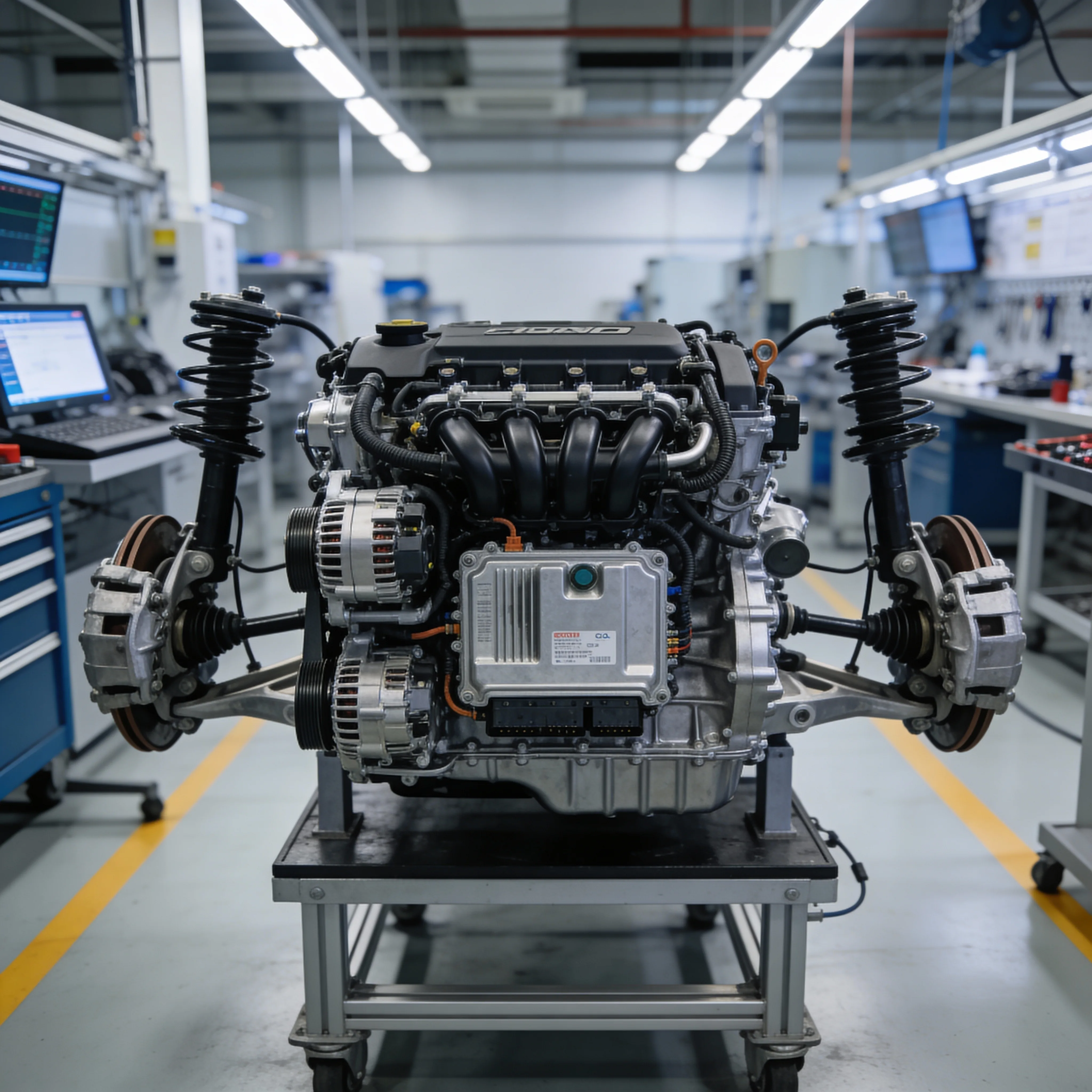
The ECU is designed to work across a wide range of conditions, but when the engine faces extreme situations, the strategy changes.
Introduction
.imported-article{ --bg: #06110B; --card: #12281A; --ink: #F5F7FA; --muted: #AEB8C2; --accent: #58CF0D; --accent-light: #7FE836; --accent-2: #7FE836; --line: #1C3624; --line-light: #16321F; --shadow: 0 4px 24px rgba(0,0,0,0.35); --shadow-lg: 0 12px 48px rgba(0,0,0,0.45); --radius: 12px; --radius-sm: 8px; } .imported-article *{ box-sizing: border-box; margin: 0; padding: 0; } .imported-article{ font-size: 16px; scroll-behavior: smooth; } .imported-article{ font-family: "Mona Sans", system-ui, sans-serif; color: var(--ink); background: var(--bg); line-height: 1.75; font-weight: 400; -webkit-font-smoothing: antialiased; -moz-osx-font-smoothing: grayscale; } .imported-article a{ color: var(--accent-2); text-decoration: none; transition: color 0.2s ease; } .imported-article a:hover{ color: var(--accent); text-decoration: underline; } .imported-article .container{ max-width: 800px; margin: 0 auto; padding: 40px 24px 80px; } .imported-article /* Header / Hero */ .hero{ background: linear-gradient(135deg, var(--card) 0%, var(--line-light) 100%); border: 1px solid var(--line); border-radius: var(--radius); padding: 40px 36px; margin-bottom: 32px; box-shadow: var(--shadow); } .imported-article .badge{ display: inline-flex; align-items: center; font-family: "Mona Sans", system-ui, sans-serif; font-size: 0.75rem; font-weight: 600; letter-spacing: 0.05em; text-transform: uppercase; color: var(--accent); background: rgba(88, 207, 13, 0.14); padding: 8px 14px; border-radius: 20px; margin-bottom: 20px; } .imported-article .meta{ display: flex; align-items: center; gap: 16px; font-family: "Mona Sans", system-ui, sans-serif; font-size: 0.875rem; color: var(--muted); margin-bottom: 16px; } .imported-article .meta-item{ display: flex; align-items: center; gap: 6px; } .imported-article h1{ font-family: "Mona Sans", system-ui, sans-serif; font-size: 2.25rem; font-weight: 900; line-height: 1.2; letter-spacing: -0.02em; color: var(--ink); margin-bottom: 16px; } .imported-article .subtitle{ font-size: 1.125rem; color: var(--muted); line-height: 1.6; max-width: 90%; } .imported-article /* Table of Contents */ .toc{ margin-top: 28px; padding: 24px; background: rgba(255,255,255,0.04); border: 1px solid var(--line); border-radius: var(--radius-sm); } .imported-article .toc-title{ font-family: "Mona Sans", system-ui, sans-serif; text-transform: uppercase; letter-spacing: 0.08em; font-size: 0.75rem; font-weight: 600; color: var(--accent); margin-bottom: 12px; } .imported-article .toc ul{ list-style: none; } .imported-article .toc li{ margin: 8px 0; font-family: "Mona Sans", system-ui, sans-serif; font-size: 0.9rem; } .imported-article .toc a{ color: var(--ink); } .imported-article .toc a:hover{ color: var(--accent); } .imported-article .toc .toc-sub{ margin-left: 20px; font-size: 0.85rem; color: var(--muted); } .imported-article /* Article Content */ .article{ background: var(--card); border-radius: var(--radius); border: 1px solid var(--line); padding: 48px 40px; box-shadow: var(--shadow); } .imported-article .article h2{ font-family: "Mona Sans", system-ui, sans-serif; font-size: 1.625rem; font-weight: 700; margin: 2.5rem 0 1rem; padding-top: 1.5rem; border-top: 1px solid var(--line-light); color: var(--ink); letter-spacing: -0.01em; } .imported-article .article h2:first-child{ margin-top: 0; padding-top: 0; border-top: none; } .imported-article .article h3{ font-family: "Mona Sans", system-ui, sans-serif; font-size: 1.25rem; font-weight: 700; margin: 1.75rem 0 0.75rem; color: var(--ink); } .imported-article .article p{ margin: 1rem 0; font-size: 1.0625rem; } .imported-article .article ul, .imported-article .article ol{ margin: 1rem 0 1.25rem 1.5rem; } .imported-article .article li{ margin: 0.5rem 0; font-size: 1.0625rem; } .imported-article .article li::marker{ color: var(--accent); } .imported-article .article strong{ font-weight: 600; color: var(--ink); } .imported-article .article hr{ border: none; height: 1px; background: var(--line-light); margin: 2rem 0; } .imported-article /* Tags */ .tags{ margin-top: 3rem; padding-top: 2rem; border-top: 1px solid var(--line); } .imported-article .tags h2{ font-family: "Mona Sans", system-ui, sans-serif; font-size: 0.875rem; font-weight: 600; text-transform: uppercase; letter-spacing: 0.05em; color: var(--muted); margin-bottom: 12px; border: none; padding: 0; } .imported-article .tag-list{ list-style: none; display: flex; flex-wrap: wrap; gap: 8px; } .imported-article .tag-list li{ font-family: "Mona Sans", system-ui, sans-serif; background: var(--line-light); border: 1px solid var(--line); border-radius: 20px; padding: 6px 14px; font-size: 0.8125rem; font-weight: 500; color: var(--muted); transition: all 0.2s ease; } .imported-article .tag-list li:hover{ background: rgba(88, 207, 13, 0.14); border-color: var(--accent); color: var(--accent); } .imported-article /* Footer */ .footer{ text-align: center; font-family: "Mona Sans", system-ui, sans-serif; color: var(--muted); font-size: 0.875rem; margin-top: 40px; padding-top: 24px; border-top: 1px solid var(--line); } .imported-article .footer a{ color: var(--accent); font-weight: 500; } .imported-article /* Responsive */ @media (max-width: 768px){ .container { padding: 24px 16px 60px; } .hero { padding: 28px 24px; } h1 { font-size: 1.75rem; } .article { padding: 32px 24px; } .article h2 { font-size: 1.375rem; } .article p, .article li { font-size: 1rem; } .meta { flex-wrap: wrap; gap: 10px; } } .imported-article /* Print styles */ @media print{ .toc, .tags, .badge, .footer { display: none; } .hero, .article { box-shadow: none; border: none; } body { font-size: 12pt; } } .imported-article .container{max-width:100%;padding:0;margin:0;}.meta{display:flex;flex-wrap:wrap;gap:8px 18px;align-items:center}.meta-item{display:inline-flex;gap:6px;align-items:center}.meta-item svg{width:16px;height:16px;flex:none} ReproRACE - Technical Guide By the ReproRACE Team 10 min read Contents What the ECU considers an extreme condition Cold start and warm-up phase High temperature and heat soak Altitude and low air density Sustained load: towing, climbing and industrial use Spirited driving and load peaks Low-quality fuel or fuel variations Dust, water and dirt in the intake Voltage and electrical stability in cold weather or under high demand Emissions management in extreme conditions Adaptive learning under stress Protection mode and progressive degradation Real cases and ECU decisions Case 1: summer, towing and a long climb Case 2: high altitude with black smoke Case 3: cold snap and repeated starts Recommendations for calibration and diagnosis in extreme conditions Impact on torque and the driver's perception Altitude, heat and extreme cold Prolonged load and towing Low-quality fuel Wind, load and prolonged use Extreme cold-start strategies Conclusion Introduction The ECU is designed to work across a wide range of conditions, but when the engine faces extreme situations, the strategy changes. Altitude, heat, intense cold, towing, spirited driving or low-quality fuels force the ECU to make fast decisions to protect torque, emissions and reliability. In this scenario, a basic principle applies: the ECU decides, not the driver . The pedal only requests torque; the ECU authorizes or reduces it based on real conditions. Understanding how it behaves at the extremes makes it possible to diagnose correctly and calibrate with a safety margin. What the ECU considers an extreme condition Not every “tough” situation is extreme for the ECU. Conditions are considered extreme when a variable approaches a safety limit or when several variables change at once. Typical examples: Very high or very low ambient temperatures. High altitude with low air density. Sustained load on climbs or when towing. Spirited driving with repeated torque peaks. Low-octane or low-cetane fuel. Under these conditions, the ECU prioritizes protection and may limit torque even if there are no faults. Cold start and warm-up phase In cold weather, combustion is less stable and the oil does not lubricate as effectively. The ECU applies specific strategies: Higher idle speed to stabilize the engine. Temporary mixture enrichment (gasoline). Injection timing adapted for starting (diesel). Activation of glow plugs and management of post-injections. During warm-up, the ECU limits the maximum available torque to avoid mechanical and thermal stress. That is why slower response is common until the engine reaches operating temperature. High temperature and heat soak Extreme heat reduces air density and raises oil temperature. The ECU responds with several measures: Lower boost pressure when IAT is high. Timing adjustments to avoid knock. Progressive derate if oil or coolant exceeds thresholds. In heat soak scenarios (engine shut off and restarted with high internal temperature), the ECU usually limits initial torque to avoid thermal spikes. This explains why an engine can perform worse in summer even without any faults. Altitude and low air density At altitude, barometric pressure drops and the available air mass decreases. The ECU compensates with the turbo, but there are physical limits. To avoid smoke and excessive temperatures, it: Adjusts the maximum authorized torque. Reduces injection to maintain a safe air/fuel ratio. Modifies turbo management to avoid overspeed. On naturally aspirated engines, power loss is unavoidable. On turbocharged engines, the ECU protects the turbo and prevents compressor overload. Sustained load: towing, climbing and industrial use Sustained load is one of the most demanding situations. The ECU monitors EGT, oil pressure and coolant temperature. If it detects an upward trend, it applies a gradual torque reduction. This strategy is critical in work vehicles and machinery. Holding maximum torque for minutes at a time can damage the turbo, pistons or valves. That is why the torque available under these conditions is usually lower than the rated figure. Spirited driving and load peaks Under repeated acceleration, the ECU must manage torque surges and possible knock. To do so, it: Monitors the knock signal on gasoline engines. Controls lambda to keep the mixture safe. Manages boost pressure, smoothing out spikes. If it detects knock, it reduces timing and torque. The driver may notice it as a lack of response, but it is a direct defense of the engine. Low-quality fuel or fuel variations Fuel quality varies between countries and seasons. The ECU adapts its strategy: On gasoline engines, it reduces timing if it detects low octane. On diesels, it compensates for cetane variations with injection adjustments. It corrects the mixture through adaptive learning. An overly aggressive calibration leaves no margin for these corrections and increases the risk of knock or unstable combustion under real conditions. Dust, water and dirt in the intake Extreme conditions are not only thermal. In dusty or humid environments, the airflow meter and intake suffer. The ECU may detect inconsistencies between estimated and measured airflow, and then limit torque to avoid an incorrect mixture. If the filter is clogged, the engine gets less air and the ECU reduces injection to maintain a safe ratio. This is not a “mechanical” loss of power, but an electronic limit to avoid smoke and excessive temperature. Voltage and electrical stability in cold weather or under high demand In extreme cold or with many electrical loads switched on, system voltage drops. The ECU monitors battery voltage because low voltage affects the response of injectors, coils, pumps and sensors. To avoid misfires or erratic readings, the strategy usually includes: Higher idle speed to stabilize the electrical load. Injection timing adjustments to compensate for slower actuators. Torque limitation if voltage drops below a threshold. In vehicles with degraded batteries, these limits kick in more often. The driver notices intermittent power loss, but the root cause is the electrical supply, not the engine itself. Emissions management in extreme conditions Emissions control systems have legal priority. In extreme conditions, the ECU may: Postpone regenerations if there is a thermal risk. Limit torque to avoid DPF clogging. Reduce EGR if intake temperature is too high. These decisions affect performance, but they protect both the engine and the emissions system. Adaptive learning under stress Extreme conditions accelerate adaptive learning. The ECU corrects mixture, timing and boost pressure to maintain stability, and those corrections are stored. This can “normalize” a loss of torque without any DTCs appearing. That is why it is key to review adaptations during diagnosis and reset them once the causes have been fixed. A proper calibration must leave room for these corrections. If the base map is already at the limit, the system will have no capacity to adapt and will go into protection mode sooner. Protection mode and progressive degradation When variables exceed safety thresholds, the ECU applies an escalating protection sequence: Gentle torque reduction to stabilize. Progressive derate if the condition persists. Protection mode with limited power. Safety shutdown in critical cases. Progressive degradation prevents damage and keeps the vehicle safely operational until it is repaired. Real cases and ECU decisions Case 1: summer, towing and a long climb On a climb while towing in summer, oil temperature and EGT rise quickly. The ECU detects the trend and reduces the maximum available torque. The driver notices a loss, but it prevents the turbo from exceeding its critical thermal zone. If the load is reduced or the pace eased, torque gradually returns. Case 2: high altitude with black smoke A turbodiesel at altitude produces smoke due to lack of air. The ECU reduces injection to maintain the mixture and avoid clogging the DPF. If this limitation is overridden with an aggressive calibration, the engine can accumulate soot and trigger failed regenerations. Case 3: cold snap and repeated starts In sub-zero temperatures, the ECU raises idle speed and adjusts injection to stabilize combustion. If the engine is shut off and restarted several times, the ECU extends the warm-up phase and limits torque to protect the still-cold oil. Recommendations for calibration and diagnosis in extreme conditions To work safely in extreme conditions, we recommend: Measuring real temperature, pressure and lambda data. Validating torque response in sustained-load scenarios. Checking the ECU's ability to correct for variable fuel quality. Making sure protection strategies remain active after calibration. A responsible calibration does not seek to remove limits, but to optimize within safe margins. Reliability must always come before the power figure. Impact on torque and the driver's perception In extreme conditions, torque reduction is gradual so the driver does not feel an abrupt cut. The ECU modulates throttle response and smooths delivery to protect the transmission and tires. This can create the feeling of a “lazy engine”, when in reality a thermal spike or excess pressure is being avoided. It is important to remember that power is a consequence : the ECU controls available torque and adapts it to the context. That is why two seemingly identical situations can produce different responses if temperatures, voltage or air density change. Altitude, heat and extreme cold At high altitude, air density drops and the ECU reduces torque to protect the turbo and emissions. In extreme heat, IAT rises and thermal cuts are applied. In cold weather, the ECU limits load to protect the oil and prevent wear. These adjustments are normal. The engine does not perform the same in all conditions, because the ECU prioritizes reliability. Understanding this prevents misdiagnosis. Prolonged load and towing On long climbs or when towing, the ECU monitors EGT and oil temperature. As the limits approach, it reduces torque to maintain safety. An aggressive map under these conditions ends up being cut back and generates more heat. A correct calibration aims to maintain usable torque without breaking thermal margins. This is validated with logs under real conditions, not just on the dyno. Low-quality fuel Poor fuel alters combustion. On gasoline engines it increases the tendency to knock; on diesels it produces more smoke. The ECU corrects and reduces torque to protect the engine. A responsible tune leaves room for these variations and avoids excessive timing advance. Stability in extreme conditions comes from margin, not from peak figures. Wind, load and prolonged use On the road, headwinds and constant load increase torque demand. The ECU responds by increasing load until temperatures approach the limit. When that happens, it reduces torque to protect the engine. The driver perceives it as power loss, but it is a logical response. A responsible map leaves margin for these situations. If it is calibrated too close to the limit, any change in wind or load triggers protection. Stability under real conditions matters more than peak power. Extreme cold-start strategies In extreme cold, the ECU increases injection and corrects timing to keep the engine stable. During those minutes, it limits torque to prevent wear. This is normal behavior. Demanding power when cold only accelerates wear and can set DTCs. The technical recommendation is simple: let the engine warm up before applying heavy load. That habit protects the engine and preserves performance in the long term. In very humid environments, air density changes and the ECU adjusts the load. These corrections can alter response, but they are normal. The goal is to keep combustion stable and emissions under control. City traffic in high temperatures is also an extreme condition. Airflow speed drops, IAT rises and the ECU reduces torque to protect the engine. It is a preventive cut that disappears once airflow is restored. In heavy rain or with low-quality fuel, the ECU may soften delivery to keep combustion stable. It is not a fault; it is protection. Response may feel slower, but the engine stays within safe limits. For altitude or heat testing, it is advisable to clean the intercooler and check the filters before adjusting maps. If airflow is low, the ECU cuts power and the result is misinterpreted. Preparing the hardware is part of validation in extreme conditions. With that margin, the engine maintains performance even on difficult days. Thermal margin prevents abrupt power cuts and protects the turbo and catalytic converter. And it prevents erratic response. With that margin, everything stabilizes. Conclusion In extreme conditions, the ECU acts as an intelligent protection system. It adjusts torque, boost and combustion to keep the engine within safe limits, even if that temporarily reduces performance. At ReproRACE we analyze these conditions before calibrating and validate in real-world scenarios. Because the best improvement is the one that stays stable when the engine faces the reality of everyday use. Tags particulate filter clogged DPF DPF regeneration DPF failure DPF cleaning engine electronics advanced diagnostics error code electronic fault specialist workshop Related services from ReproRACE Find your vehicle and check its gains ReproRACE remapping workshops near you Stage 1 Remapping Faults and fault codes ReproRACE — ReproRACE - engine electronics guided by technical expertise.