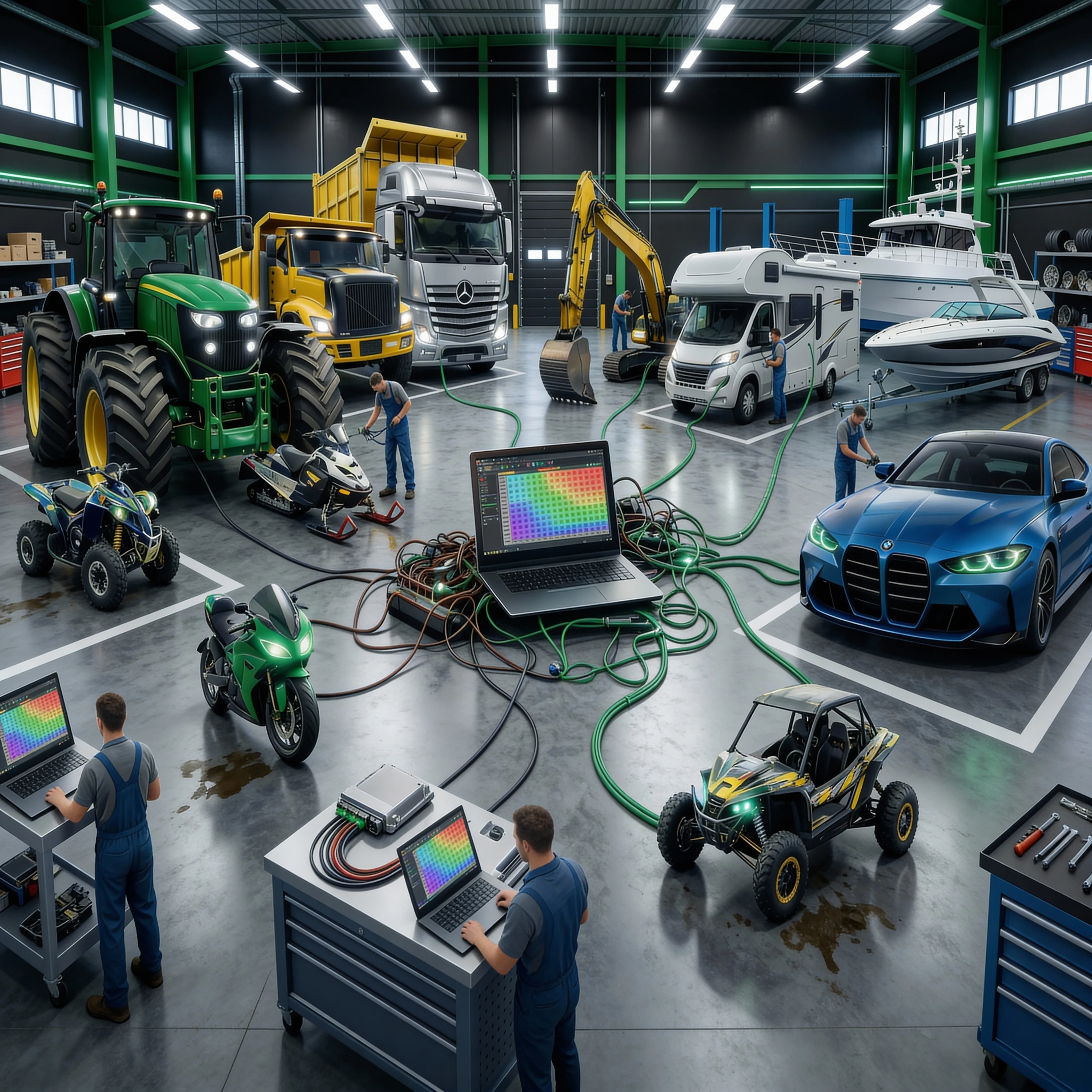
The terms Stage 1, Stage 2, and Stage 3 have become extremely popular in the world of ECU remapping and chiptuning.
Introduction
.imported-article{ --bg: #06110B; --card: #12281A; --ink: #F5F7FA; --muted: #AEB8C2; --accent: #58CF0D; --accent-light: #7FE836; --accent-2: #7FE836; --line: #1C3624; --line-light: #16321F; --shadow: 0 4px 24px rgba(0,0,0,0.35); --shadow-lg: 0 12px 48px rgba(0,0,0,0.45); --radius: 12px; --radius-sm: 8px; } .imported-article *{ box-sizing: border-box; margin: 0; padding: 0; } .imported-article{ font-size: 16px; scroll-behavior: smooth; } .imported-article{ font-family: "Mona Sans", system-ui, sans-serif; color: var(--ink); background: var(--bg); line-height: 1.75; font-weight: 400; -webkit-font-smoothing: antialiased; -moz-osx-font-smoothing: grayscale; } .imported-article a{ color: var(--accent-2); text-decoration: none; transition: color 0.2s ease; } .imported-article a:hover{ color: var(--accent); text-decoration: underline; } .imported-article .container{ max-width: 800px; margin: 0 auto; padding: 40px 24px 80px; } .imported-article /* Header / Hero */ .hero{ background: linear-gradient(135deg, var(--card) 0%, var(--line-light) 100%); border: 1px solid var(--line); border-radius: var(--radius); padding: 40px 36px; margin-bottom: 32px; box-shadow: var(--shadow); } .imported-article .badge{ display: inline-flex; align-items: center; font-family: "Mona Sans", system-ui, sans-serif; font-size: 0.75rem; font-weight: 600; letter-spacing: 0.05em; text-transform: uppercase; color: var(--accent); background: rgba(88, 207, 13, 0.14); padding: 8px 14px; border-radius: 20px; margin-bottom: 20px; } .imported-article .meta{ display: flex; align-items: center; gap: 16px; font-family: "Mona Sans", system-ui, sans-serif; font-size: 0.875rem; color: var(--muted); margin-bottom: 16px; } .imported-article .meta-item{ display: flex; align-items: center; gap: 6px; } .imported-article h1{ font-family: "Mona Sans", system-ui, sans-serif; font-size: 2.25rem; font-weight: 900; line-height: 1.2; letter-spacing: -0.02em; color: var(--ink); margin-bottom: 16px; } .imported-article .subtitle{ font-size: 1.125rem; color: var(--muted); line-height: 1.6; max-width: 90%; } .imported-article /* Table of Contents */ .toc{ margin-top: 28px; padding: 24px; background: rgba(255,255,255,0.04); border: 1px solid var(--line); border-radius: var(--radius-sm); } .imported-article .toc-title{ font-family: "Mona Sans", system-ui, sans-serif; text-transform: uppercase; letter-spacing: 0.08em; font-size: 0.75rem; font-weight: 600; color: var(--accent); margin-bottom: 12px; } .imported-article .toc ul{ list-style: none; } .imported-article .toc li{ margin: 8px 0; font-family: "Mona Sans", system-ui, sans-serif; font-size: 0.9rem; } .imported-article .toc a{ color: var(--ink); } .imported-article .toc a:hover{ color: var(--accent); } .imported-article .toc .toc-sub{ margin-left: 20px; font-size: 0.85rem; color: var(--muted); } .imported-article /* Article Content */ .article{ background: var(--card); border-radius: var(--radius); border: 1px solid var(--line); padding: 48px 40px; box-shadow: var(--shadow); } .imported-article .article h2{ font-family: "Mona Sans", system-ui, sans-serif; font-size: 1.625rem; font-weight: 700; margin: 2.5rem 0 1rem; padding-top: 1.5rem; border-top: 1px solid var(--line-light); color: var(--ink); letter-spacing: -0.01em; } .imported-article .article h2:first-child{ margin-top: 0; padding-top: 0; border-top: none; } .imported-article .article h3{ font-family: "Mona Sans", system-ui, sans-serif; font-size: 1.25rem; font-weight: 700; margin: 1.75rem 0 0.75rem; color: var(--ink); } .imported-article .article p{ margin: 1rem 0; font-size: 1.0625rem; } .imported-article .article ul, .imported-article .article ol{ margin: 1rem 0 1.25rem 1.5rem; } .imported-article .article li{ margin: 0.5rem 0; font-size: 1.0625rem; } .imported-article .article li::marker{ color: var(--accent); } .imported-article .article strong{ font-weight: 600; color: var(--ink); } .imported-article .article hr{ border: none; height: 1px; background: var(--line-light); margin: 2rem 0; } .imported-article /* Tags */ .tags{ margin-top: 3rem; padding-top: 2rem; border-top: 1px solid var(--line); } .imported-article .tags h2{ font-family: "Mona Sans", system-ui, sans-serif; font-size: 0.875rem; font-weight: 600; text-transform: uppercase; letter-spacing: 0.05em; color: var(--muted); margin-bottom: 12px; border: none; padding: 0; } .imported-article .tag-list{ list-style: none; display: flex; flex-wrap: wrap; gap: 8px; } .imported-article .tag-list li{ font-family: "Mona Sans", system-ui, sans-serif; background: var(--line-light); border: 1px solid var(--line); border-radius: 20px; padding: 6px 14px; font-size: 0.8125rem; font-weight: 500; color: var(--muted); transition: all 0.2s ease; } .imported-article .tag-list li:hover{ background: rgba(88, 207, 13, 0.14); border-color: var(--accent); color: var(--accent); } .imported-article /* Footer */ .footer{ text-align: center; font-family: "Mona Sans", system-ui, sans-serif; color: var(--muted); font-size: 0.875rem; margin-top: 40px; padding-top: 24px; border-top: 1px solid var(--line); } .imported-article .footer a{ color: var(--accent); font-weight: 500; } .imported-article /* Responsive */ @media (max-width: 768px){ .container { padding: 24px 16px 60px; } .hero { padding: 28px 24px; } h1 { font-size: 1.75rem; } .article { padding: 32px 24px; } .article h2 { font-size: 1.375rem; } .article p, .article li { font-size: 1rem; } .meta { flex-wrap: wrap; gap: 10px; } } .imported-article /* Print styles */ @media print{ .toc, .tags, .badge, .footer { display: none; } .hero, .article { box-shadow: none; border: none; } body { font-size: 12pt; } } .imported-article .container{max-width:100%;padding:0;margin:0;}.meta{display:flex;flex-wrap:wrap;gap:8px 18px;align-items:center}.meta-item{display:inline-flex;gap:6px;align-items:center}.meta-item svg{width:16px;height:16px;flex:none} ReproRACE - Technical Guide By the ReproRACE Team 11 min read Contents What the Concept of “Stage” Really Means Stage 1: Electronic Optimization on Stock Hardware What Is a Stage 1 What Is Changed in a Stage 1 What to Expect from a Stage 1 When to Choose a Stage 1 Stage 2: Electronics Tuned to Upgraded Hardware What Is a Stage 2 Typical Stage 2 Modifications What Changes Electronically in a Stage 2 What to Expect from a Stage 2 When to Choose a Stage 2 Stage 3: High-Performance Project with Modified Internal Hardware What Is a Stage 3 Common Stage 3 Modifications Electronics in a Stage 3 What to Expect from a Stage 3 When to Choose a Stage 3 Key Differences Between Stage 1, 2, and 3 (Conceptual Overview) Common Mistakes When Choosing a Stage Thinking that “Stage 2 is always better” Calling a stock car Stage 2 Underestimating the importance of electronics The importance of calibration versus “Stage” Stages in industrial and agricultural engines and trucks Torque as a key variable at every Stage Thermal impact and reliability by Stage Preliminary diagnostics and logs: mandatory requirements Stages and legality: the role of emissions Recommendations by type of use Why there is no universal Stage How much power a Stage can actually add Critical hardware for Stage 2 and Stage 3 Hidden costs and maintenance after each Stage Checklist for choosing a workshop and calibration Electronic protections and limp modes Case study: Stage 2 without an intercooler Conclusion Introduction The terms Stage 1, Stage 2 and Stage 3 have become extremely popular in the world of ECU remapping and chiptuning. However, they are also among the concepts most widely misunderstood by users and, in many cases, used rather imprecisely. Not all Stage 1 tunes are the same , nor does a Stage 2 necessarily mean greater reliability or better results, and a Stage 3 is not simply “more power.” Understanding the real differences between Stage 1, Stage 2 and Stage 3 is essential for making the right decisions, avoiding unrealistic expectations and protecting engine reliability. In this article, we explain what each level really means, what modifications it involves, how electronics come into play, and when it makes sense to choose each one depending on the vehicle type and how it is used. What the concept of “Stage” really means The term Stage is not an official technical standard. There is no international regulation defining what Stage 1, 2, or 3 is. It is a commercial-technical classification used to: Differentiate levels of modification Set power expectations Communicate project complexity That’s why the actual meaning of each Stage depends on: The engine The available hardware The electronic management system The vehicle’s intended purpose Stage 1: electronic optimization with stock hardware What is a Stage 1 A Stage 1 is an electronic engine optimization carried out without modifying mechanical components . All hardware remains stock, and the improvement is achieved by adjusting the electronic management system. What is modified in a Stage 1 A well-executed Stage 1 adjusts, among other things: Engine torque maps Boost pressure (within safe limits) Fuel injection (quantity and timing) Throttle management Electronic limiters All while respecting: Thermal limits Turbo capacity Injection system Engine safety regulations What to expect from a Stage 1 Significant increase in torque Improved response More flexible driving In many cases, better efficiency The gains depend on the engine, but it is usually the best balance of performance and reliability . When to choose a Stage 1 Daily-use vehicles Production cars, motorcycles, trucks, or machinery Users looking for an improvement without compromising reliability A well-calibrated Stage 1 is the most balanced option for most engines. Stage 2: tuning adapted to upgraded hardware What is a Stage 2 A Stage 2 means the engine is no longer completely stock . Hardware modifications have been made, allowing it to operate beyond its original limits. The tuning is specifically adapted to this new hardware. Typical Stage 2 modifications Depending on the engine, a Stage 2 usually includes: Freer-flowing exhaust Higher-flow downpipe, retaining the approved catalytic converter and particulate filter if the vehicle is driven on public roads Upgraded intercooler Optimized intake In some cases, upgraded injectors or fuel pump The key is that the ECU calibration must be adapted to these changes . What changes electronically in a Stage 2 tune In a Stage 2 tune, the ECU manages: Higher airflow Different temperatures New pressure dynamics New safety limits It’s not a “more aggressive Stage 1”; it’s a different calibration . What to expect from a Stage 2 tune More power than a Stage 1 Better sustained performance Less thermal stress if the hardware is well chosen But also: Greater complexity Greater reliance on a good calibration When to choose a Stage 2 tune Modified vehicles Sport or intensive use Drivers looking for an extra boost in performance It should always be approached with a holistic view of reliability . Stage 3: high-performance project with modified internal hardware What Is a Stage 3? A Stage 3 is a high-performance , where the engine has been extensively modified. This is no longer just about optimization, but about engineering the entire system . Typical Stage 3 Modifications Larger turbocharger Upgraded fuel injection system Reinforced engine internals Advanced thermal management Reinforced clutch or transmission Every Stage 3 is unique and must be treated as such. Electronics in a Stage 3 In a Stage 3: Maps are completely redefined Internal ECU models are adjusted Protection systems are recalibrated Custom margins are used There are no “generic files” here. Everything is custom calibration . What to Expect from a Stage 3 Very significant power increases Behavior completely different from stock Requires specific maintenance It is not a Stage for uncompromising everyday use. When to choose a Stage 3 Competition projects Show cars Very specific use Users with clear and realistic goals Key differences between Stage 1, 2, and 3 (conceptual overview) | Aspect | Stage 1 | Stage 2 | Stage 3 | | ----- | ----- | ----- | ----- | | Hardware | Stock | Modified | Heavily modified | | Electronics | Optimization | Adaptation | Reengineering | | Complexity | Low | Medium | High | | Reliability | Very high | High (when done properly) | Depends on the project | | Daily use | Yes | Yes / partial | Not recommended | Common mistakes when choosing a Stage Thinking that “Stage 2 is always better” It isn't if the intended use or hardware isn't suited to it. Calling a stock car Stage 2 It's just marketing, not a real technical definition. Underestimating the importance of electronics Without proper calibration, no Stage is safe. The importance of calibration versus the “Stage” More important than the Stage number is: How the engine is calibrated Which safety margins are maintained How temperatures and torque are managed A well-executed Stage 1 can be more reliable and effective than a poorly planned Stage 2. Stage tuning for industrial and agricultural engines and trucks In heavy machinery: The Stage concept exists, but with a different focus Torque, efficiency, and reliability are prioritized A “Stage 1” is usually the best option Here, the electronics must adapt to working hours and constant loads . Torque as the key variable at every Stage At any level of tuning, the ECU works with one main variable: torque . Power is the result of available torque and engine speed, but the control logic always focuses on limiting or allowing torque according to safety conditions. That’s why a properly calibrated Stage 1 can feel more responsive than a poorly adjusted Stage 2. The real difference lies in how torque limiters are managed and in the consistency between request, delivery, and protection maps. Thermal impact and reliability at each Stage As the level of tuning increases, so do thermal demands. A Stage 1 operates close to factory limits, while Stages 2 and 3 require more refined strategies to control exhaust gas temperature, turbo pressure, and mixture stability. This explains why reliability depends not only on the power figure, but also on how temperature and pressure are controlled . Conservative, consistent calibration usually offers better durability than aggressively chasing power. Preliminary diagnostics and logs: mandatory requirements There is no reliable Stage without preliminary diagnostics. Before any adjustments, the following must be verified: Turbo condition and actual boost pressure Condition of the injection system Readings from critical sensors (MAF, MAP, EGT) DTC history and data consistency In addition, logs must be recorded during calibration to check that the ECU responds as expected. This process distinguishes professional calibration from a simple generic file. Stage tuning and legality: the role of emissions Emissions control systems take legal priority. A Stage 2 or 3 involving modifications to the exhaust or catalytic converter must account for the effects on OBD monitors and actual emissions. The ECU may activate protective measures if it detects inconsistencies. That’s why not every Stage is legal or recommended for daily use. The decision should take regulations, inspections, and the vehicle’s actual purpose into account. Common mistakes when choosing a Stage Choosing a Stage because it’s trendy, without defining a real objective. Failing to adapt the hardware to the engine’s electronic requirements. Chasing maximum power while ignoring torque and reliability. Using generic files on engines with different tolerances. These mistakes often lead to power loss, recurring DTCs, or accelerated wear. Recommendations by type of use Daily use : Stage 1 focused on torque and efficiency. Occasional sporty driving : Stage 2 with basic hardware upgrades and thermal management. Competition : Stage 3 with a comprehensive build and intensive maintenance. Commercial vehicles : conservative optimization, prioritizing reliability. This classification is more useful than the Stage label because it aligns the tune with the vehicle’s actual needs. Why there is no universal Stage Two identical engines can respond differently because of tolerances, wear, or maintenance history. That’s why treating one Stage as suitable for everyone is a technical mistake. The calibration must be tailored to each vehicle and its actual condition. This idea reinforces ReproRACE’s philosophy: calibrate using technical judgment, not templates. How much power can a Stage really add? Actual gains vary depending on the engine and its factory headroom. In turbo diesels, a Stage 1 tune usually delivers a noticeable increase in torque with a moderate power gain. Naturally aspirated engines have less headroom, and results depend heavily on the calibration. With Stages 2 and 3, the figures depend directly on the hardware installed and how well the components work together. Promising fixed gains without evaluating the engine is a misguided approach. Critical hardware for Stage 2 and Stage 3 From Stage 2 onward, hardware makes all the difference. The components with the greatest impact are: An efficient intercooler to control intake temperatures A less restrictive exhaust to reduce back pressure An optimized or higher-capacity turbo for Stage 3 Fuel injection suited to fuel demand If the hardware can’t keep up, the ECU enters protection mode and actual gains are reduced. Hidden costs and maintenance after each Stage The higher the Stage, the greater the maintenance demands. Filters, oil, spark plugs, and injectors operate closer to their limits. That’s not a problem if you account for it, but it is if you ignore it. A well-calibrated Stage 1 usually requires maintenance similar to the stock setup. With Stage 2 and 3, it makes sense to shorten service intervals and step up preventive checks. Checklist for choosing a workshop and calibration Before choosing a Stage, it’s worth checking: Whether they perform a preliminary diagnosis and data readout Whether they use custom calibration Whether they explain the impact on reliability and emissions Whether they provide logs and verification records A well-executed Stage isn’t just about power: it’s about method, measurement, and consistency. Electronic protections and limp mode With any Stage, the ECU maintains its protection strategies. If it detects inconsistencies in boost pressure, temperature, or air-fuel mixture, it limits torque and may activate limp mode. This happens more often with Stage 2 and 3 if the hardware isn’t perfectly matched. That’s why a professional calibration includes safety margins and doesn’t remove critical protections. Reliability depends on respecting those strategies. Case study: Stage 2 without an intercooler A turbo-diesel engine gets a free-flowing exhaust and an electronic tune, but retains the original intercooler. In summer conditions, intake temperature rises and the ECU limits torque to protect the engine. The result is inconsistent power delivery. The solution wasn’t to push the map further, but to upgrade the intercooler and recalibrate. This example shows how the hardware determines the real-world results of each Stage. Choosing the right Stage isn’t a matter of fashion, but of goals, usage, and the engine’s actual condition. A balanced tune usually delivers better long-term results. At ReproRACE, we prioritize reliability over peak figures. A well-matched Stage respects sensors, thermal limits, and protection strategies. It’s the only way to maintain performance and durability over time. Absolutely key. Conclusion The differences between Stage 1, Stage 2, and Stage 3 are based not only on power, but on the level of modification, electronic complexity, and the project’s objective . Choosing the right Stage avoids frustration, breakdowns, and unnecessary costs. At ReproRACE, we approach every Stage from a technical, honest, reliability-focused perspective , always adapting the electronics to the actual hardware and how the vehicle is used. Tags EGR valve Dirty EGR EGR fault EGR cleaning EGR delete Engine electronics Advanced diagnostics Error code Electronic fault Specialist workshop Related ReproRACE services Stage 1, 2 and 3: differences Stage 2 remapping Find your vehicle and check its power gains ReproRACE remapping workshops near you Stage 1 remapping Faults and fault codes ReproRACE — ReproRACE - engine electronics with technical expertise.