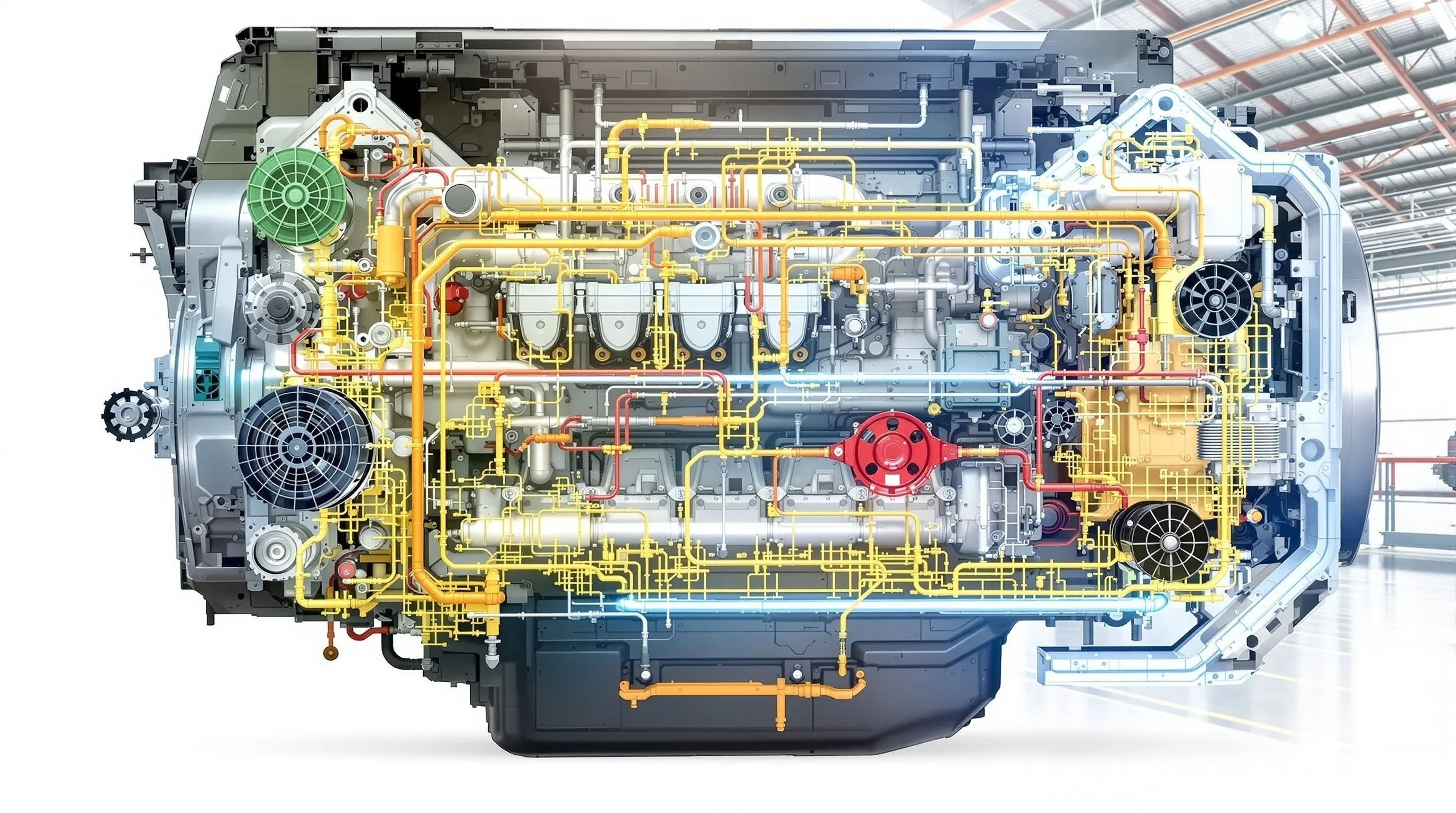
Adaptive learning consists of corrections the ECU applies to the base maps. It builds on operating experience and is stored in memory.
Introduction
.imported-article{ --bg: #06110B; --card: #12281A; --ink: #F5F7FA; --muted: #AEB8C2; --accent: #58CF0D; --accent-light: #7FE836; --accent-2: #7FE836; --line: #1C3624; --line-light: #16321F; --shadow: 0 4px 24px rgba(0,0,0,0.35); --shadow-lg: 0 12px 48px rgba(0,0,0,0.45); --radius: 12px; --radius-sm: 8px; } .imported-article *{ box-sizing: border-box; margin: 0; padding: 0; } .imported-article{ font-size: 16px; scroll-behavior: smooth; } .imported-article{ font-family: "Mona Sans", system-ui, sans-serif; color: var(--ink); background: var(--bg); line-height: 1.75; font-weight: 400; -webkit-font-smoothing: antialiased; -moz-osx-font-smoothing: grayscale; } .imported-article a{ color: var(--accent-2); text-decoration: none; transition: color 0.2s ease; } .imported-article a:hover{ color: var(--accent); text-decoration: underline; } .imported-article .container{ max-width: 800px; margin: 0 auto; padding: 40px 24px 80px; } .imported-article /* Header / Hero */ .hero{ background: linear-gradient(135deg, var(--card) 0%, var(--line-light) 100%); border: 1px solid var(--line); border-radius: var(--radius); padding: 40px 36px; margin-bottom: 32px; box-shadow: var(--shadow); } .imported-article .badge{ display: inline-flex; align-items: center; font-family: "Mona Sans", system-ui, sans-serif; font-size: 0.75rem; font-weight: 600; letter-spacing: 0.05em; text-transform: uppercase; color: var(--accent); background: rgba(88, 207, 13, 0.14); padding: 8px 14px; border-radius: 20px; margin-bottom: 20px; } .imported-article .meta{ display: flex; align-items: center; gap: 16px; font-family: "Mona Sans", system-ui, sans-serif; font-size: 0.875rem; color: var(--muted); margin-bottom: 16px; } .imported-article .meta-item{ display: flex; align-items: center; gap: 6px; } .imported-article h1{ font-family: "Mona Sans", system-ui, sans-serif; font-size: 2.25rem; font-weight: 900; line-height: 1.2; letter-spacing: -0.02em; color: var(--ink); margin-bottom: 16px; } .imported-article .subtitle{ font-size: 1.125rem; color: var(--muted); line-height: 1.6; max-width: 90%; } .imported-article /* Table of Contents */ .toc{ margin-top: 28px; padding: 24px; background: rgba(255,255,255,0.04); border: 1px solid var(--line); border-radius: var(--radius-sm); } .imported-article .toc-title{ font-family: "Mona Sans", system-ui, sans-serif; text-transform: uppercase; letter-spacing: 0.08em; font-size: 0.75rem; font-weight: 600; color: var(--accent); margin-bottom: 12px; } .imported-article .toc ul{ list-style: none; } .imported-article .toc li{ margin: 8px 0; font-family: "Mona Sans", system-ui, sans-serif; font-size: 0.9rem; } .imported-article .toc a{ color: var(--ink); } .imported-article .toc a:hover{ color: var(--accent); } .imported-article .toc .toc-sub{ margin-left: 20px; font-size: 0.85rem; color: var(--muted); } .imported-article /* Article Content */ .article{ background: var(--card); border-radius: var(--radius); border: 1px solid var(--line); padding: 48px 40px; box-shadow: var(--shadow); } .imported-article .article h2{ font-family: "Mona Sans", system-ui, sans-serif; font-size: 1.625rem; font-weight: 700; margin: 2.5rem 0 1rem; padding-top: 1.5rem; border-top: 1px solid var(--line-light); color: var(--ink); letter-spacing: -0.01em; } .imported-article .article h2:first-child{ margin-top: 0; padding-top: 0; border-top: none; } .imported-article .article h3{ font-family: "Mona Sans", system-ui, sans-serif; font-size: 1.25rem; font-weight: 700; margin: 1.75rem 0 0.75rem; color: var(--ink); } .imported-article .article p{ margin: 1rem 0; font-size: 1.0625rem; } .imported-article .article ul, .imported-article .article ol{ margin: 1rem 0 1.25rem 1.5rem; } .imported-article .article li{ margin: 0.5rem 0; font-size: 1.0625rem; } .imported-article .article li::marker{ color: var(--accent); } .imported-article .article strong{ font-weight: 600; color: var(--ink); } .imported-article .article hr{ border: none; height: 1px; background: var(--line-light); margin: 2rem 0; } .imported-article /* Tags */ .tags{ margin-top: 3rem; padding-top: 2rem; border-top: 1px solid var(--line); } .imported-article .tags h2{ font-family: "Mona Sans", system-ui, sans-serif; font-size: 0.875rem; font-weight: 600; text-transform: uppercase; letter-spacing: 0.05em; color: var(--muted); margin-bottom: 12px; border: none; padding: 0; } .imported-article .tag-list{ list-style: none; display: flex; flex-wrap: wrap; gap: 8px; } .imported-article .tag-list li{ font-family: "Mona Sans", system-ui, sans-serif; background: var(--line-light); border: 1px solid var(--line); border-radius: 20px; padding: 6px 14px; font-size: 0.8125rem; font-weight: 500; color: var(--muted); transition: all 0.2s ease; } .imported-article .tag-list li:hover{ background: rgba(88, 207, 13, 0.14); border-color: var(--accent); color: var(--accent); } .imported-article /* Footer */ .footer{ text-align: center; font-family: "Mona Sans", system-ui, sans-serif; color: var(--muted); font-size: 0.875rem; margin-top: 40px; padding-top: 24px; border-top: 1px solid var(--line); } .imported-article .footer a{ color: var(--accent); font-weight: 500; } .imported-article /* Responsive */ @media (max-width: 768px){ .container { padding: 24px 16px 60px; } .hero { padding: 28px 24px; } h1 { font-size: 1.75rem; } .article { padding: 32px 24px; } .article h2 { font-size: 1.375rem; } .article p, .article li { font-size: 1rem; } .meta { flex-wrap: wrap; gap: 10px; } } .imported-article /* Print styles */ @media print{ .toc, .tags, .badge, .footer { display: none; } .hero, .article { box-shadow: none; border: none; } body { font-size: 12pt; } } .imported-article .container{max-width:100%;padding:0;margin:0;}.meta{display:flex;flex-wrap:wrap;gap:8px 18px;align-items:center}.meta-item{display:inline-flex;gap:6px;align-items:center}.meta-item svg{width:16px;height:16px;flex:none} ReproRACE - Technical Guide By the ReproRACE Team 11 min read Contents What Is Adaptive Learning Fuel Corrections (STFT and LTFT) Diesel Learning: Injector Corrections Air and Turbo Learning Idle and Stability Adaptations Adaptation in Emissions Systems Learning vs. Degradation Resetting Adaptations: When and Why Impact on Torque and Fuel Consumption Real-World Cases of Adaptive Learning Case 1: High Fuel Consumption Without a DTC Case 2: Loss of Torque in a Diesel Case 3: Turbo with Slow Response Common Errors with Adaptations Technical Checklist for Evaluating Adaptations Relationship to ECU Axioms Relearning Procedure After an Intervention EGR and Emissions System Adaptations Indicators of Adaptations Outside the Normal Range Learning and Progressive Degradation Relationship Between Learning and Calibration Transmission Adaptation and Torque by Gear Learning Strategies Under Extreme Conditions Periodic Adaptation Review Plan What the ECU Really Learns Learning Time and Limits Relationship to Remapping Adaptive Reset and Validation After Changes Adaptations as a Control Tool Conclusion Introduction Modern ECUs do more than execute fixed maps. They learn and adapt based on engine wear, fuel quality, and real-world use. This adaptive learning helps maintain stability, but it can also mask faults or reduce torque without the driver clearly noticing. At ReproRACE, we work according to a clear principle: sensors fail more often than actuators and the ECU makes corrections to keep the engine within safe limits. Understanding how the ECU learns is essential for diagnosing, calibrating, and restoring actual performance. What Is Adaptive Learning? Adaptive learning consists of corrections the ECU applies to the base maps. These corrections are developed through real-world use and stored in memory. They are used to: Compensate for injector wear. Adjust the mixture to the actual fuel. Maintain a stable idle. Correct sensor deviations. Without these adaptations, the engine would lose stability over time. Fuel Trims (STFT and LTFT) In gasoline engines, the ECU uses fuel-trim corrections: STFT (Short Term Fuel Trim): immediate correction. LTFT (Long Term Fuel Trim): accumulated correction. If the lambda reading indicates a lean mixture, the ECU increases fuel. If the mixture is rich, it reduces fuel. When the correction is maintained, it becomes a long-term adjustment. If these corrections reach their limits, the ECU interprets this as a real problem. In diesel engines, learning is reflected in injection flow corrections and rail pressure adjustments. Diesel learning: injector corrections In modern diesel engines, the ECU adapts the amount injected into each cylinder: Compensates for differences between injectors. Adjusts injection timing for smoother operation. Corrects for pump wear and rail pressure. These adaptations are recorded and can change actual torque. A degraded injector may cause the ECU to reduce overall torque to protect the system. Air and turbo learning The ECU also learns how the turbo and intake behave: Adjusts the response of the variable geometry. Corrects wastegate response times. Compensates for intake restrictions. If the turbo responds more slowly, the ECU may reduce torque to prevent overboost or smoke. This correction may be gradual and may not immediately trigger a DTC. Idle and stability adaptations Idle is a critical operating point where the ECU applies adjustments: Idle air correction. Advance adjustment for stability. Compensation for auxiliary loads (alternator, compressor). If the engine is unstable, the ECU learns to compensate. This improves how it feels to operate, but may hide underlying problems such as leaks or degraded sensors. Adaptation in emissions systems The ECU also applies learning to emissions systems: Adjusts the EGR strategy based on actual flow. Corrects urea dosing in SCR. Changes the DPF regeneration frequency. These adaptations aim to meet regulations, but may reduce torque if the ECU detects that the system is not working as expected. Learning vs. degradation Learning is not unlimited. When corrections reach a limit, the ECU interprets this as a real deviation: A degraded MAF that requires mixture correction. Injectors with flow rates outside the acceptable range. Sluggish turbo requiring excessive adjustments. In these cases, the ECU may limit torque or trigger a DTC. Learning stops being helpful and becomes a warning sign. Resetting adaptations: when and why Resetting adaptations may be necessary after: Replacing injectors or the MAF sensor. Intake or turbo repairs. An ECU software update. If adaptations are reset without fixing the fault, the engine may run worse for the first few miles. Resetting only makes sense when the mechanical condition is stable. Impact on torque and fuel consumption Adaptations directly affect actual torque: Mixture corrections can reduce power. Turbo adjustments can limit responsiveness. Adapted emissions strategies can reduce usable torque. The same applies to fuel consumption. An engine with high LTFT values usually uses more fuel. Advanced diagnostics should check these adaptations before changing maps. Real-world cases of adaptive learning Case 1: high fuel consumption with no DTC A gasoline engine showed high LTFT values. There were no fault codes, but fuel consumption was increasing. A minor intake leak was found. After repairing it and resetting the adaptations, fuel consumption returned to normal. Case 2: loss of torque in a diesel engine The ECU had reduced torque because injection adaptations were out of range. The problem was an injector with low flow. After replacing it and recalibrating, torque was restored. Case 3: slow turbo response Under load, the ECU applied progressive corrections. There was no DTC, but the engine felt sluggish. A worn variable-geometry actuator was found. After the repair, the adaptations were reset and response became linear again. Common mistakes with adaptations Resetting adaptations without fixing the underlying fault. Ignoring high fuel-trim corrections. Interpreting adaptations as permanent “calibration.” Using generic maps that disrupt the learning process. These mistakes lead to torque loss and unstable behavior. Technical checklist for evaluating adaptations Before calibrating or diagnosing: Check STFT and LTFT on gasoline engines. Analyze injector corrections in diesel engines. Check turbo adaptations under actual load. Check whether the ECU is at its correction limits. If adaptations are at their limit, the priority is to correct the cause. Relationship to the ECU axioms Adaptive learning confirms the principles: The ECU decides, not the driver : it corrects to maintain stability. Torque is the central variable : it adapts to protect the engine. Sensors fail more often than actuators : the ECU corrects the reading. Reprogramming optimizes; it does not repair : without a sound foundation, adaptation is not enough. Relearning procedure after an intervention After a repair or reprogramming, the ECU needs to relearn. Simply clearing adaptations is not enough: a consistent driving cycle must be completed. Proper relearning includes: Stable idle for several minutes. Driving under partial load to adjust the mixture. Gradual acceleration to adapt the turbo. Sustained engine speeds to stabilize temperatures. If relearning is interrupted, adaptations remain incomplete and the engine may run irregularly. EGR and emissions system adaptations Learning also affects emissions. The ECU adjusts: Actual EGR flow compared with expected flow. Urea dosing in the SCR system based on NOx readings. DPF regeneration frequency based on actual use. When these adaptations go out of range, the ECU reduces torque to protect the system and comply with regulations. This is a critical issue in modern diesel engines. Indicators of adaptations outside the normal range There are clear signs that the ECU is correcting too much: Very high LTFT or injection corrections. Turbo with constant pressure correction. Unstable idle that is “compensated for” with ignition advance. More frequent-than-normal regenerations. These indicators suggest an underlying problem, not a software fault. Learning and progressive degradation Learning can mask gradual degradation. For example: A contaminated MAF forces increasingly frequent mixture corrections. Worn injectors cause corrections to increase. Minor intake leaks force the turbo to adjust. The ECU keeps the engine running, but actual torque drops and fuel consumption rises. Only an analysis of adaptations reveals the problem before a DTC appears. Relationship between learning and calibration A professional calibration must take learning into account. If maps are adjusted without reviewing adaptations, the engine’s behavior may change within a few days. That’s why at ReproRACE, we always analyze: Current adaptations before adjusting maps. How actual torque changes after relearning. Correction stability with the new adjustment. The goal is for the ECU to learn from a sound baseline, not from a hidden problem. Transmission adaptation and torque by gear In vehicles with automatic or automated manual transmissions, the ECU coordinates torque with the transmission. Adaptive learning can modify: Torque during gear changes to reduce jolts. Response in higher gears for efficiency. Torque limitation when pulling away under load. If these adaptations become misadjusted, the driver may notice harsh shifts or slow response. A complete diagnosis should include communication between the ECU and TCM. Learning strategies in extreme conditions The ECU also learns based on ambient temperature and altitude. If the engine operates in very hot areas or at high altitudes: It adjusts the mixture to maintain temperature. It corrects turbo pressure to prevent smoke. It modifies injection timing under sustained loads. These adaptations are normal, but can reduce torque if the engine is operating outside its optimal range. Ignoring them can lead to unstable calibrations. Periodic adaptation review plan For fleets or vehicles in continuous operation, it is advisable to review adaptations periodically. This helps detect deviations before they turn into breakdowns. A basic plan includes: Reading fuel trim corrections. Injector balance check. Actual vs. target turbo pressure comparison. If the learned values are extreme, the priority is to fix the root cause. What the ECU actually learns Adaptive learning isn't magic. The ECU adjusts fuel trims, ignition timing corrections, and air control to keep combustion stable. It also learns how actuators behave and corrects small deviations. If the engine is healthy, these adjustments are small and stable. If the adaptive values become too large, they point to an underlying problem: a leak, a degraded sensor, or an inconsistent map. That's why adaptive values are a diagnostic tool. Learning time and limits The ECU needs drive cycles to learn. In many cases, it takes several trips under different loads. However, adaptive values have limits to prevent the ECU from compensating for serious faults. If those limits are exceeded, protection is activated or a DTC is triggered. Understanding these limits helps explain why a car runs well on the first day and then loses responsiveness. It's not random; the learned values are out of range. Relationship with remapping After a remap, adaptive values should be reset or monitored. If they aren't checked, the ECU may overcorrect and alter the final result. A reputable calibrator checks the adaptive values after a few drive cycles and makes adjustments if needed. Remapping doesn't eliminate learning. It works with it, which is why follow-up and real-world data are essential. Adaptive reset and validation after changes When a sensor is replaced or the car is remapped, it's a good idea to reset the adaptive values and let the ECU relearn. Otherwise, the ECU continues to use old corrections, distorting the result. That's why many adjustments seem unstable during the first few days. After the reset, a complete drive cycle is recommended: cold start, moderate load, a long acceleration, and city driving. This data helps confirm that the adaptive values stay within range. Adaptive values as a monitoring tool Adaptive values can reveal problems before a DTC appears. If the fuel trim spikes or ignition timing correction is high, there's an underlying cause: a leak, a sensor issue, or an inconsistent map. Checking these values reduces trial-and-error diagnosis. The ECU learns, but it can't correct everything. That's why learning is an indicator, not a solution. Changes in fuel or altitude also affect learning. The ECU adapts the mixture and ignition timing, but if the changes are extreme, learning can take longer and lead to inconsistent behavior. That's why it's essential to evaluate the engine in its real-world environment. A battery replacement or disconnection can reset adaptive values. After the reset, the engine may behave differently for a few days. That's normal, but it's a good idea to complete a learning cycle so the values can stabilize. If the learned values remain stable, it's a sign that the engine and calibration are healthy. If they change abruptly, the problem is usually external to the software. High adaptive values shouldn't be confused with an immediate failure, but they are a clear sign that something is out of range. Conclusion The ECU and adaptive learning work together to keep the engine stable despite wear and changes in driving conditions. These corrections are useful, but they can also mask faults and reduce torque if they go out of range. At ReproRACE, we analyze the adaptations before calibrating. Understanding how the ECU learns is the only way to restore real performance without compromising reliability. Tags particulate filter Clogged DPF DPF regeneration DPF fault DPF cleaning engine electronics advanced diagnostics error code electronic fault specialist workshop Related ReproRACE services Find your vehicle and check its gains ReproRACE tuning workshops near you Stage 1 tuning Faults and fault codes ReproRACE — ReproRACE - engine electronics backed by technical expertise.