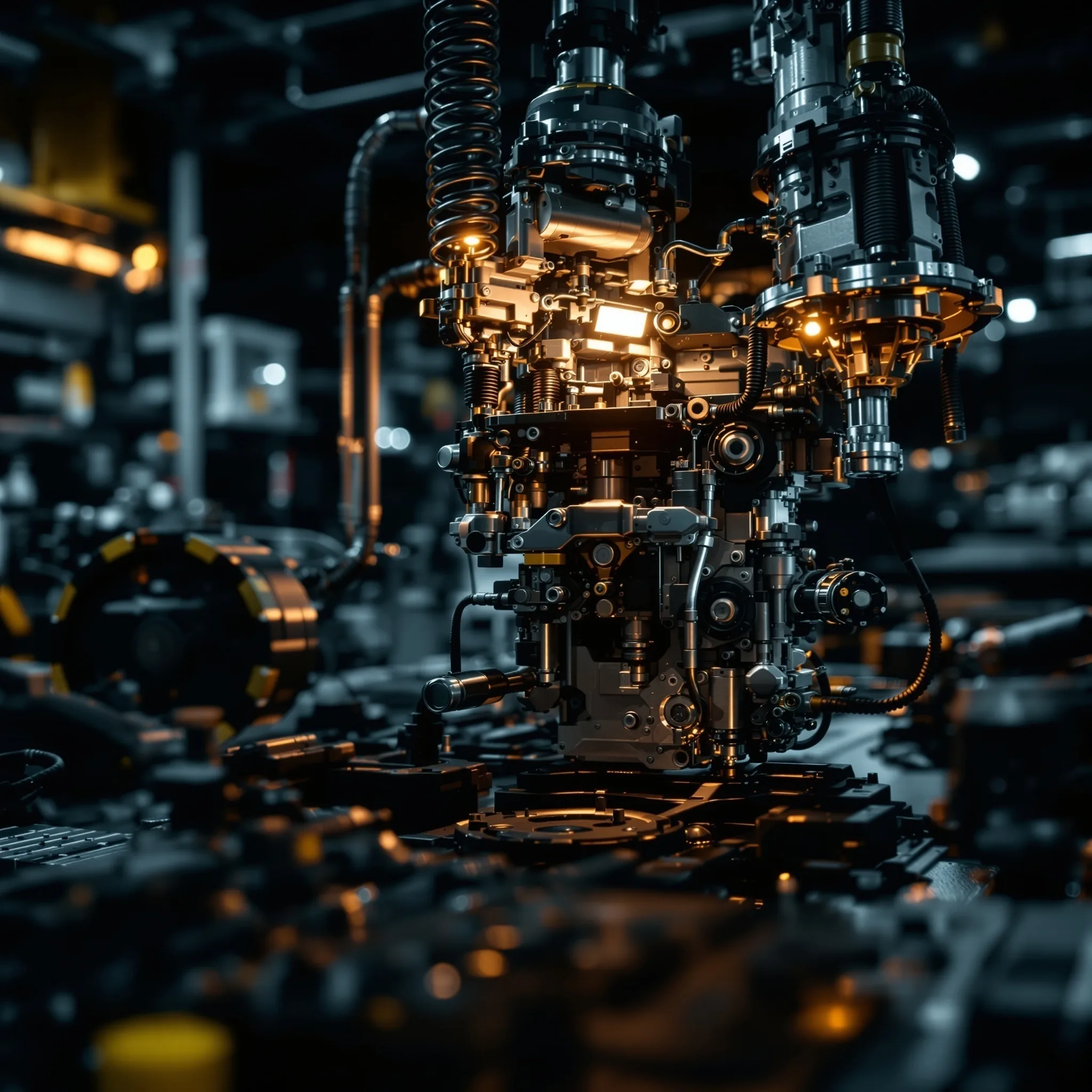
Electronics in modern industrial engines are not an accessory: they are the system that determines how the engine operates, how it protects the entire system, and how it integrates…
Introduction
.imported-article{ --bg: #06110B; --card: #12281A; --ink: #F5F7FA; --muted: #AEB8C2; --accent: #58CF0D; --accent-light: #7FE836; --accent-2: #7FE836; --line: #1C3624; --line-light: #16321F; --shadow: 0 4px 24px rgba(0,0,0,0.35); --shadow-lg: 0 12px 48px rgba(0,0,0,0.45); --radius: 12px; --radius-sm: 8px; } .imported-article *{ box-sizing: border-box; margin: 0; padding: 0; } .imported-article{ font-size: 16px; scroll-behavior: smooth; } .imported-article{ font-family: "Mona Sans", system-ui, sans-serif; color: var(--ink); background: var(--bg); line-height: 1.75; font-weight: 400; -webkit-font-smoothing: antialiased; -moz-osx-font-smoothing: grayscale; } .imported-article a{ color: var(--accent-2); text-decoration: none; transition: color 0.2s ease; } .imported-article a:hover{ color: var(--accent); text-decoration: underline; } .imported-article .container{ max-width: 800px; margin: 0 auto; padding: 40px 24px 80px; } .imported-article /* Header / Hero */ .hero{ background: linear-gradient(135deg, var(--card) 0%, var(--line-light) 100%); border: 1px solid var(--line); border-radius: var(--radius); padding: 40px 36px; margin-bottom: 32px; box-shadow: var(--shadow); } .imported-article .badge{ display: inline-flex; align-items: center; font-family: "Mona Sans", system-ui, sans-serif; font-size: 0.75rem; font-weight: 600; letter-spacing: 0.05em; text-transform: uppercase; color: var(--accent); background: rgba(88, 207, 13, 0.14); padding: 8px 14px; border-radius: 20px; margin-bottom: 20px; } .imported-article .meta{ display: flex; align-items: center; gap: 16px; font-family: "Mona Sans", system-ui, sans-serif; font-size: 0.875rem; color: var(--muted); margin-bottom: 16px; } .imported-article .meta-item{ display: flex; align-items: center; gap: 6px; } .imported-article h1{ font-family: "Mona Sans", system-ui, sans-serif; font-size: 2.25rem; font-weight: 900; line-height: 1.2; letter-spacing: -0.02em; color: var(--ink); margin-bottom: 16px; } .imported-article .subtitle{ font-size: 1.125rem; color: var(--muted); line-height: 1.6; max-width: 90%; } .imported-article /* Table of Contents */ .toc{ margin-top: 28px; padding: 24px; background: rgba(255,255,255,0.04); border: 1px solid var(--line); border-radius: var(--radius-sm); } .imported-article .toc-title{ font-family: "Mona Sans", system-ui, sans-serif; text-transform: uppercase; letter-spacing: 0.08em; font-size: 0.75rem; font-weight: 600; color: var(--accent); margin-bottom: 12px; } .imported-article .toc ul{ list-style: none; } .imported-article .toc li{ margin: 8px 0; font-family: "Mona Sans", system-ui, sans-serif; font-size: 0.9rem; } .imported-article .toc a{ color: var(--ink); } .imported-article .toc a:hover{ color: var(--accent); } .imported-article .toc .toc-sub{ margin-left: 20px; font-size: 0.85rem; color: var(--muted); } .imported-article /* Article Content */ .article{ background: var(--card); border-radius: var(--radius); border: 1px solid var(--line); padding: 48px 40px; box-shadow: var(--shadow); } .imported-article .article h2{ font-family: "Mona Sans", system-ui, sans-serif; font-size: 1.625rem; font-weight: 700; margin: 2.5rem 0 1rem; padding-top: 1.5rem; border-top: 1px solid var(--line-light); color: var(--ink); letter-spacing: -0.01em; } .imported-article .article h2:first-child{ margin-top: 0; padding-top: 0; border-top: none; } .imported-article .article h3{ font-family: "Mona Sans", system-ui, sans-serif; font-size: 1.25rem; font-weight: 700; margin: 1.75rem 0 0.75rem; color: var(--ink); } .imported-article .article p{ margin: 1rem 0; font-size: 1.0625rem; } .imported-article .article ul, .imported-article .article ol{ margin: 1rem 0 1.25rem 1.5rem; } .imported-article .article li{ margin: 0.5rem 0; font-size: 1.0625rem; } .imported-article .article li::marker{ color: var(--accent); } .imported-article .article strong{ font-weight: 600; color: var(--ink); } .imported-article .article hr{ border: none; height: 1px; background: var(--line-light); margin: 2rem 0; } .imported-article /* Tags */ .tags{ margin-top: 3rem; padding-top: 2rem; border-top: 1px solid var(--line); } .imported-article .tags h2{ font-family: "Mona Sans", system-ui, sans-serif; font-size: 0.875rem; font-weight: 600; text-transform: uppercase; letter-spacing: 0.05em; color: var(--muted); margin-bottom: 12px; border: none; padding: 0; } .imported-article .tag-list{ list-style: none; display: flex; flex-wrap: wrap; gap: 8px; } .imported-article .tag-list li{ font-family: "Mona Sans", system-ui, sans-serif; background: var(--line-light); border: 1px solid var(--line); border-radius: 20px; padding: 6px 14px; font-size: 0.8125rem; font-weight: 500; color: var(--muted); transition: all 0.2s ease; } .imported-article .tag-list li:hover{ background: rgba(88, 207, 13, 0.14); border-color: var(--accent); color: var(--accent); } .imported-article /* Footer */ .footer{ text-align: center; font-family: "Mona Sans", system-ui, sans-serif; color: var(--muted); font-size: 0.875rem; margin-top: 40px; padding-top: 24px; border-top: 1px solid var(--line); } .imported-article .footer a{ color: var(--accent); font-weight: 500; } .imported-article /* Responsive */ @media (max-width: 768px){ .container { padding: 24px 16px 60px; } .hero { padding: 28px 24px; } h1 { font-size: 1.75rem; } .article { padding: 32px 24px; } .article h2 { font-size: 1.375rem; } .article p, .article li { font-size: 1rem; } .meta { flex-wrap: wrap; gap: 10px; } } .imported-article /* Print styles */ @media print{ .toc, .tags, .badge, .footer { display: none; } .hero, .article { box-shadow: none; border: none; } body { font-size: 12pt; } } .imported-article .container{max-width:100%;padding:0;margin:0;}.meta{display:flex;flex-wrap:wrap;gap:8px 18px;align-items:center}.meta-item{display:inline-flex;gap:6px;align-items:center}.meta-item svg{width:16px;height:16px;flex:none} ReproRACE - Technical Guide By the ReproRACE Team 11-minute read Contents What Defines a Modern Industrial Engine Electronic Architecture: ECU, PLC, and Control Systems Torque and Power Setpoints Critical Sensors in Industry Key Actuators and Their Relationship to Torque Torque Management as a Core Variable Key Maps in the Industrial ECU Thermal Management and Stability During Long Operating Hours Industrial Emissions: NOx, Particulate Matter, and SCR Internal Models and Predictive Diagnostics Advanced Electronic Diagnostics Electronics-Driven Preventive Maintenance Real-World Industrial Use Cases Case 1: Compressor in a Process Plant Case 2: Generator Set with Variable Torque Case 3: Industrial Pump with Thermal Limitation Common Errors in Industrial Electronics Industrial Validation Checklist Relationship to ECU Axioms Integration with Predictive Maintenance Air Quality and Filtration in Industrial Environments Energy Validation and Plant KPIs Cold Starts and Safe Shutdowns Sensor Networks and Industrial Communication Predictive Maintenance and Real-Time Data Integration with Management Systems Redundancy and Safe Modes Remote Diagnostics and Updates Data Integrity and Electronic Security Conclusion Introduction Electronics in modern industrial engines is not an accessory: it is the system that determines how the engine operates, how it protects the equipment, and how it integrates into a plant. In compressors, generator sets, pumps, mills, or process equipment, the goal is not acceleration, but stable torque, controlled consumption, and continuous availability . Calibration or adjustment without understanding the ECU's logic may increase torque in an instant, but reduce reliability and actual service life. In this context, the technical axioms hold true: the ECU decides, not the operator , torque is the central variable , sensors fail more often than actuators and reprogramming optimizes, it does not repair . This article explains how modern industrial electronics is structured, which variables control torque delivery, and which criteria are critical for maintaining reliability. What Defines a Modern Industrial Engine A modern industrial engine is characterized by: Continuous operation at fixed or semi-variable load Integration with PLCs, drives, or plant controllers Efficiency measured per hour, not per cycle Strict protection strategies to prevent shutdowns Electronics are configured for an environment where a failure can mean hours or days of lost production. That is why ECU strategies prioritize thermal stability and consistency in torque delivery. Electronic architecture: ECU, PLC, and control systems In industry, the engine does not operate in isolation. It often works alongside: PLCs or SCADA systems that specify torque or power setpoints Frequency drives on coupled electric motors Safety systems that command load reduction The ECU interprets setpoints and determines how much torque to deliver based on sensors and limiters. If the engine electronics are not synchronized with the process logic, shutdowns or unstable behavior can occur. Torque and power setpoints Most industrial systems operate according to a required torque or power setpoint. The ECU translates that setpoint into: Injection and rail pressure Turbo pressure and air control Thermal and emissions limiters The result is torque delivery that must be linear and predictable. A brief spike may be interpreted as a fault by the PLC. Critical sensors in industry The ECU makes decisions based on sensors that, in industrial environments, are exposed to dust, vibration, and long operating cycles. The most relevant are: Intake pressure and temperature Oil and coolant temperature Fuel and rail pressure NOx sensors and lambda probe (depending on regulations) Engine speed and actual load A degraded sensor triggers automatic adjustments that reduce torque and increase fuel consumption. That is why preliminary diagnostics are essential before any adjustment. Key actuators and their relationship to torque Final torque depends on several actuators: Turbo control valve or variable geometry Injectors and their opening time EGR or recirculation systems (if applicable) Throttle valves or intake air control A professional calibration coordinates these components to achieve stable torque without increasing EGT or causing smoke. The goal is real-world efficiency, not lab figures. Torque management as the central variable In industrial engines, the ECU manages torque based on: Torque requested by the process Maximum torque allowed by temperature Torque limited by emissions or smoke Safe torque based on oil and fuel pressure This means that power is always a consequence of the available torque. If the thermal system or intake is not in good condition, actual torque is reduced even with the same map. Main maps in the industrial ECU A modern ECU integrates specific maps for continuous operation: Torque map by engine speed and load Thermal limiters for coolant and oil Limiters for turbo pressure and EGT Specific fuel consumption (BSFC) strategies These maps are calibrated for sustained efficiency. An aggressive tune reduces the thermal margin and forces the system to enter protection mode. Thermal management and stability over long operating periods Temperature is the biggest enemy in industrial applications. The ECU monitors and adjusts: Coolant and oil temperature EGT at the manifold or turbo Coolant flow In an industrial engine, the thermal limit determines the maximum sustained torque. A professional remap must respect these limits and be validated with extended testing, not just brief bursts of acceleration. Industrial emissions: NOx, particulates, and SCR Modern industrial engines are subject to Stage V, EPA, and other regulations. This entails: SCR and NOx control EGR or combined reduction systems DPF or specific filters in some applications The ECU adjusts the air-fuel mixture and torque to meet emissions requirements. Modifying maps without respecting these strategies causes recurring faults, excessive regenerations, and a loss of real-world efficiency. Internal models and predictive diagnostics Today's industrial ECUs integrate internal mathematical models that estimate: Actual torque vs. requested torque Actual vs. calculated airflow Estimated in-cylinder temperature When an inconsistency is detected, the ECU reduces the load or enters safe mode. DTCs are symptoms , but the real cause is usually a sensor deviation or a degraded system. Advanced electronic diagnostics A professional diagnosis should include: DTC readings and protection status Logs of requested torque vs. delivered torque Temperature curves under real operating conditions Rail pressure and fuel stability Without this data, any adjustment is a risk. Industrial electronics requires precision and validation under real-world conditions. Preventive maintenance linked to the electronics The electronics can only optimize performance if the engine is in good condition. A preventive maintenance plan includes: Air and fuel filters replaced at the correct intervals Cleaning the intercooler and radiators Inspection of critical sensors Fuel quality control A modern ECU detects deviations and reduces torque. Keeping the system clean is essential for the calibration to work. Real-world industrial use cases Case 1: compressor at a process plant The engine was operating at a constant load but consuming too much fuel. A degraded intake pressure sensor was detected. After replacing it and adjusting the torque maps for the operating range, fuel consumption decreased and thermal stability improved. Case 2: generator set with variable torque A generator showed RPM fluctuations. The problem was not the remap, but a partially clogged fuel filter that was affecting rail pressure. After fixing the issue and recalibrating, power delivery stabilized. Case 3: industrial pump with thermal limitation After a torque adjustment, the ECU went into protection mode due to oil temperature. A dirty radiator and low cooling efficiency were detected. After cleaning and thermal validation, torque was sustained without reductions. Common mistakes in industrial electronics Adjusting torque without validating actual cooling performance Ignoring integration with the PLC and external setpoints Disabling emissions strategies to improve response Applying generic maps without process data These mistakes lead to downtime, high fuel consumption, and reduced reliability. Industrial validation checklist Before releasing a calibration: Logs under real load for several hours Verification of water, oil, and EGT temperatures Rail pressure and turbo stability Checking signals and limits from the PLC Validation under real-world conditions is what distinguishes a useful remap from a purely theoretical modification. Relationship to ECU axioms In industry, these principles are non-negotiable: The ECU decides, not the operator : control logic is in charge. Torque is the central variable : power is a consequence. Sensors fail more often than actuators : diagnosis comes first. Reliability > figures : production continuity is the goal. Integration with predictive maintenance Many industrial plants use data-driven predictive maintenance. The ECU can provide key signals such as temperature, rail pressure, service hours, and torque deviations. A professional calibration must: Maintain signal consistency for trend analysis Avoid adjustments that conceal real faults Allow correlation between fuel consumption and actual load When the ECU provides reliable data, maintenance teams can anticipate failures and reduce downtime. An ill-considered remap breaks that traceability and increases operational risk. Air quality and filtration in industrial environments Industrial environments often contain fine dust, moisture, or process vapors. These directly affect the intake and sensor readings. The ECU adjusts torque according to the actual air mass, so inadequate filtration causes: Automatic torque reduction Increased combustion chamber temperature Higher specific fuel consumption Calibration must take into account the actual condition of the filters and intercooler. You cannot optimize an engine that is breathing poorly. Energy validation and plant KPIs In industry, improvements are measured using specific indicators, not impressions. After calibration, the following should be validated: kWh per unit of production Liters per hour under sustained load Cycle time in critical processes A remap is valid if it improves or maintains these KPIs without increasing temperature or failures. If the energy indicator worsens, the adjustment is not correct. Cold starts and safe shutdowns Even when the engine runs for hours, cold starts remain critical. The ECU uses protective strategies to prevent excessive wear. A remap must: Respect warm-up times Avoid increasing torque when the oil is cold Maintain safe shutdowns with gradual cooling Ignoring these points shortens service life and causes failures in the first few minutes of operation. Sensor network and industrial communications Modern industrial engines incorporate a sensor network that feeds the ECU's internal models. MAF, MAP, EGT, oil pressure, and emissions sensors work alongside communication buses such as CAN or J1939. This network allows the engine to adapt torque according to load, temperature, and process demand. When a sensor drifts, the ECU activates protective measures and reduces torque. That is why diagnostics must focus on real data and consistency between signals. Modern electronics leave no room for guesswork. Predictive maintenance and real-time data A clear advantage of modern electronics is predictive maintenance. The ECU records trends in temperature, pressure, and mixture corrections. This information can be used to anticipate failures before they cause downtime. Plants that use real-time data reduce costs and improve availability. The ECU becomes a source of technical information, not just a controller. Integration with management systems In industrial environments, the ECU integrates with plant management systems. This makes it possible to adjust setpoints, monitor consumption, and detect deviations. A consistent calibration facilitates this integration by keeping data consistent. Engine electronics are no longer an isolated system. They are part of production control and overall efficiency. Redundancy and safe modes Modern industrial engines include backup strategies. If a sensor fails, the ECU can estimate values using internal models and keep the engine running in safe mode. This reduces torque but prevents abrupt shutdowns. Understanding these modes is key to diagnostics: there isn't always a mechanical fault; sometimes the ECU chooses to limit output as a protective measure. Modern electronics prioritize operational continuity while maintaining safety. Remote diagnostics and updates Connectivity enables remote diagnostics and software updates. This improves availability, but also makes version control essential. A calibration must be documented so that any OEM update does not disrupt map consistency. When the ECU is integrated into remote systems, traceability is key. Without it, the ability to compare data is lost and diagnostics take longer. Data integrity and electronic security Digitalization brings benefits, but also risks. A connected ECU must maintain data integrity to ensure torque models are reliable. Communication errors or corrupted data can trigger unnecessary protective measures. That is why integrity checks and security protocols are used. Keeping versions under control and restricting access prevents unauthorized adjustments and protects operations. Electronic reliability is just as important as mechanical reliability. Conclusion The electronics in modern industrial engines defines efficiency, reliability, and real-world productivity. The ECU not only controls injection but also coordinates sensors, thermal strategies, emissions, and plant setpoints to keep the engine within safe limits. At ReproRACE, we apply technical calibration based on real-world data and validation under continuous load. The goal is not a peak power figure, but stable performance and maximum uptime in industrial environments. Tags particulate filter clogged DPF DPF regeneration DPF fault DPF cleaning engine electronics advanced diagnostics error code electronic fault specialist workshop Related ReproRACE services Heavy machinery remapping Find your vehicle and check its gains ReproRACE remapping workshops near you Stage 1 remapping Faults and fault codes ReproRACE — ReproRACE - engine electronics with technical expertise.