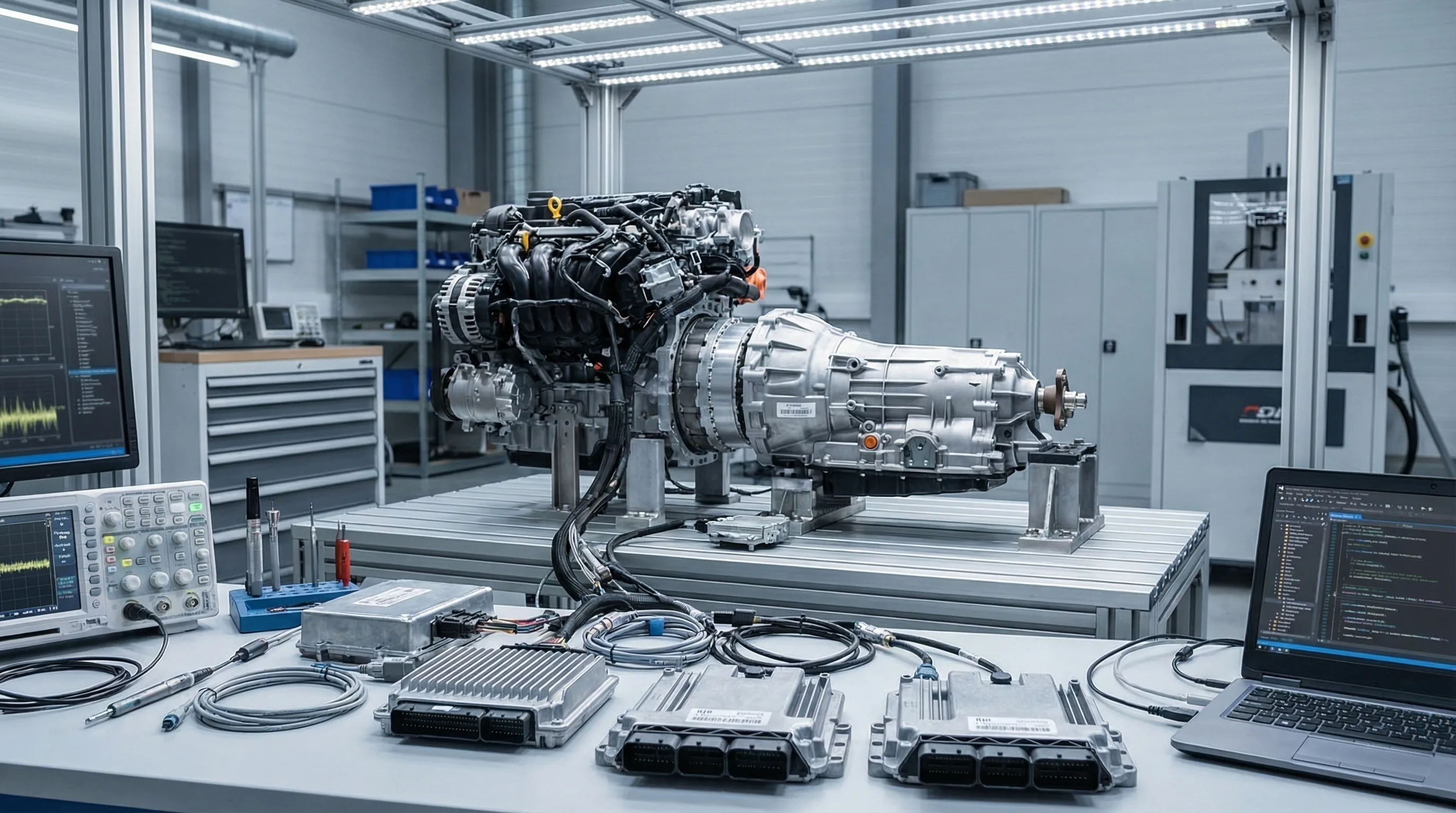
A modern ECU does more than read sensors and act on the injectors or turbo. In fact, it works with internal mathematical models that estimate torque, air…
Introduction
.imported-article{ --bg: #06110B; --card: #12281A; --ink: #F5F7FA; --muted: #AEB8C2; --accent: #58CF0D; --accent-light: #7FE836; --accent-2: #7FE836; --line: #1C3624; --line-light: #16321F; --shadow: 0 4px 24px rgba(0,0,0,0.35); --shadow-lg: 0 12px 48px rgba(0,0,0,0.45); --radius: 12px; --radius-sm: 8px; } .imported-article *{ box-sizing: border-box; margin: 0; padding: 0; } .imported-article{ font-size: 16px; scroll-behavior: smooth; } .imported-article{ font-family: "Mona Sans", system-ui, sans-serif; color: var(--ink); background: var(--bg); line-height: 1.75; font-weight: 400; -webkit-font-smoothing: antialiased; -moz-osx-font-smoothing: grayscale; } .imported-article a{ color: var(--accent-2); text-decoration: none; transition: color 0.2s ease; } .imported-article a:hover{ color: var(--accent); text-decoration: underline; } .imported-article .container{ max-width: 800px; margin: 0 auto; padding: 40px 24px 80px; } .imported-article /* Header / Hero */ .hero{ background: linear-gradient(135deg, var(--card) 0%, var(--line-light) 100%); border: 1px solid var(--line); border-radius: var(--radius); padding: 40px 36px; margin-bottom: 32px; box-shadow: var(--shadow); } .imported-article .badge{ display: inline-flex; align-items: center; font-family: "Mona Sans", system-ui, sans-serif; font-size: 0.75rem; font-weight: 600; letter-spacing: 0.05em; text-transform: uppercase; color: var(--accent); background: rgba(88, 207, 13, 0.14); padding: 8px 14px; border-radius: 20px; margin-bottom: 20px; } .imported-article .meta{ display: flex; align-items: center; gap: 16px; font-family: "Mona Sans", system-ui, sans-serif; font-size: 0.875rem; color: var(--muted); margin-bottom: 16px; } .imported-article .meta-item{ display: flex; align-items: center; gap: 6px; } .imported-article h1{ font-family: "Mona Sans", system-ui, sans-serif; font-size: 2.25rem; font-weight: 900; line-height: 1.2; letter-spacing: -0.02em; color: var(--ink); margin-bottom: 16px; } .imported-article .subtitle{ font-size: 1.125rem; color: var(--muted); line-height: 1.6; max-width: 90%; } .imported-article /* Table of Contents */ .toc{ margin-top: 28px; padding: 24px; background: rgba(255,255,255,0.04); border: 1px solid var(--line); border-radius: var(--radius-sm); } .imported-article .toc-title{ font-family: "Mona Sans", system-ui, sans-serif; text-transform: uppercase; letter-spacing: 0.08em; font-size: 0.75rem; font-weight: 600; color: var(--accent); margin-bottom: 12px; } .imported-article .toc ul{ list-style: none; } .imported-article .toc li{ margin: 8px 0; font-family: "Mona Sans", system-ui, sans-serif; font-size: 0.9rem; } .imported-article .toc a{ color: var(--ink); } .imported-article .toc a:hover{ color: var(--accent); } .imported-article .toc .toc-sub{ margin-left: 20px; font-size: 0.85rem; color: var(--muted); } .imported-article /* Article Content */ .article{ background: var(--card); border-radius: var(--radius); border: 1px solid var(--line); padding: 48px 40px; box-shadow: var(--shadow); } .imported-article .article h2{ font-family: "Mona Sans", system-ui, sans-serif; font-size: 1.625rem; font-weight: 700; margin: 2.5rem 0 1rem; padding-top: 1.5rem; border-top: 1px solid var(--line-light); color: var(--ink); letter-spacing: -0.01em; } .imported-article .article h2:first-child{ margin-top: 0; padding-top: 0; border-top: none; } .imported-article .article h3{ font-family: "Mona Sans", system-ui, sans-serif; font-size: 1.25rem; font-weight: 700; margin: 1.75rem 0 0.75rem; color: var(--ink); } .imported-article .article p{ margin: 1rem 0; font-size: 1.0625rem; } .imported-article .article ul, .imported-article .article ol{ margin: 1rem 0 1.25rem 1.5rem; } .imported-article .article li{ margin: 0.5rem 0; font-size: 1.0625rem; } .imported-article .article li::marker{ color: var(--accent); } .imported-article .article strong{ font-weight: 600; color: var(--ink); } .imported-article .article hr{ border: none; height: 1px; background: var(--line-light); margin: 2rem 0; } .imported-article /* Tags */ .tags{ margin-top: 3rem; padding-top: 2rem; border-top: 1px solid var(--line); } .imported-article .tags h2{ font-family: "Mona Sans", system-ui, sans-serif; font-size: 0.875rem; font-weight: 600; text-transform: uppercase; letter-spacing: 0.05em; color: var(--muted); margin-bottom: 12px; border: none; padding: 0; } .imported-article .tag-list{ list-style: none; display: flex; flex-wrap: wrap; gap: 8px; } .imported-article .tag-list li{ font-family: "Mona Sans", system-ui, sans-serif; background: var(--line-light); border: 1px solid var(--line); border-radius: 20px; padding: 6px 14px; font-size: 0.8125rem; font-weight: 500; color: var(--muted); transition: all 0.2s ease; } .imported-article .tag-list li:hover{ background: rgba(88, 207, 13, 0.14); border-color: var(--accent); color: var(--accent); } .imported-article /* Footer */ .footer{ text-align: center; font-family: "Mona Sans", system-ui, sans-serif; color: var(--muted); font-size: 0.875rem; margin-top: 40px; padding-top: 24px; border-top: 1px solid var(--line); } .imported-article .footer a{ color: var(--accent); font-weight: 500; } .imported-article /* Responsive */ @media (max-width: 768px){ .container { padding: 24px 16px 60px; } .hero { padding: 28px 24px; } h1 { font-size: 1.75rem; } .article { padding: 32px 24px; } .article h2 { font-size: 1.375rem; } .article p, .article li { font-size: 1rem; } .meta { flex-wrap: wrap; gap: 10px; } } .imported-article /* Print styles */ @media print{ .toc, .tags, .badge, .footer { display: none; } .hero, .article { box-shadow: none; border: none; } body { font-size: 12pt; } } .imported-article .container{max-width:100%;padding:0;margin:0;}.meta{display:flex;flex-wrap:wrap;gap:8px 18px;align-items:center}.meta-item{display:inline-flex;gap:6px;align-items:center}.meta-item svg{width:16px;height:16px;flex:none} ReproRACE - Technical Guide By the ReproRACE Team 11 min read Contents What an internal model in the ECU is Air model and volumetric efficiency Why the air model is critical Torque model and internal friction Combustion and lambda model Thermal model and EGT Emissions model: NOx and particulates Turbo models and boost control Validating models with sensors Real-world cases based on internal models Case 1: torque limited with no DTC Case 2: smoke under acceleration Case 3: intermittent turbo limitation Common mistakes when ignoring the models Technical checklist before calibrating Relationship to the ECU axioms Diagnostic and plausibility model Diesel- and gasoline-specific models Validation on the dyno and on the road Impact on professional calibration Common mistakes when interpreting models Operational summary for diagnosis Final validation note Final note Torque models and conversion to actuators Base maps and dynamic corrections Different hardware, different model Friction and efficiency models Validation using real-world data Conclusion Introduction A modern ECU does more than read sensors and act on the injectors or turbo. In fact, it works with internal mathematical models that estimate torque, air, temperature and emissions. These models determine how much injection is allowed, when torque is limited and how the engine is protected. That is why understanding the models is key to any real diagnosis or calibration. At ReproRACE we take it as a principle: the ECU decides, not the driver . Torque is the central variable and power is a consequence. This article explains which models the ECU uses, how it validates them with sensors and why inconsistencies trigger torque cuts. What an internal model in the ECU is An internal model is an equation or set of maps that predicts the engine's behavior. The ECU compares those values with the real sensors. If the difference is large, it corrects or limits. Models make it possible to: Estimate actual torque without measuring it directly. Calculate the air needed for clean combustion. Predict exhaust temperature and thermal risks. Control emissions in real time. In short: without models, the ECU could not make sound decisions. Air model and volumetric efficiency The ECU estimates the mass of air entering the cylinder. To do so it uses: Intake manifold pressure (MAP). Air temperature. Engine speed. Volumetric efficiency models. If the actual MAF reading does not match the model, the ECU detects inconsistencies. That is why a degraded sensor can reduce torque without an obvious DTC. Why the air model is critical Air is the basis of combustion. If the model estimates less air, the ECU limits fuel to prevent smoke. If it estimates more air than there actually is, the ECU may produce a rich mixture and high temperature. The model maintains the balance. Torque model and internal friction The ECU calculates torque based on fuel mass, load and efficiency. To do so it integrates internal friction maps: Torque lost to friction as a function of rpm. Torque consumed by pumps and accessories. Corrections for oil temperature. This model makes it possible to estimate actual torque without a physical sensor. If the estimated torque does not match the demand, limiters are activated. Combustion and lambda model In modern gasoline and diesel engines, the ECU estimates the air/fuel ratio and its effect on combustion. This model includes: Injected fuel mass. Injection time and rail pressure. Target and actual lambda. If combustion deviates, the ECU corrects timing or injection. On diesels, it also adjusts the smoke limiters to prevent particulates. Thermal model and EGT The thermal model estimates exhaust gas temperature and the thermal load on the turbo and catalytic converters. It uses: Delivered torque and load. Rpm and boost pressure. Time spent under load. When the model indicates a thermal risk, the ECU reduces torque even if the EGT sensor has not reached its limit. This model provides protection in phases where the sensor reacts late. Emissions model: NOx and particulates The ECU calculates emissions in real time. To do so it estimates: NOx production based on temperature and mixture. Soot mass based on torque and available air. DPF loading based on load and time. These models determine when to regenerate the DPF and how much torque to allow. The ECU does not wait for a fault; it acts preventively. Turbo models and boost control Turbo control is based on an air flow and pressure model. The ECU calculates: Target pressure based on requested torque. Expected response of the variable geometry or wastegate. Turbo speed limit to prevent overload. If the actual pressure does not follow the model, the ECU limits torque or logs an inconsistency. A split hose or a slow valve breaks this consistency. Validating models with sensors The models are compared with sensors in real time: MAF vs. air model. MAP vs. target pressure. Actual lambda vs. calculated lambda. Actual temperature vs. thermal model. When the differences persist, the ECU goes into safe mode or reduces torque. This explains power losses without clear codes. Real-world cases based on internal models Case 1: torque limited with no DTC A vehicle lost power under high load with no faults. The log showed that the thermal model was estimating high EGT. The sensor was still within range, but the ECU was reducing torque as a precaution. A dirty intercooler was found and, after cleaning, torque held steady. Case 2: smoke under acceleration The air model was estimating more mass than there actually was because of a contaminated MAF. The ECU allowed more fuel and smoke appeared. After cleaning the MAF, the model matched reality again. Case 3: intermittent turbo limitation The target pressure was not being reached during transients. The model detected an inconsistency and limited torque. The problem was a slow control valve. Once it was replaced, the pressure followed the model and torque stabilized. Common mistakes when ignoring the models Adjusting torque maps without considering the thermal model. Raising boost pressure without validating the flow model. Ignoring consistency between MAF and MAP. Copying generic maps that break the internal logic. These mistakes cause torque cuts and recurring faults. Technical checklist before calibrating Before modifying maps: Verify consistency between MAF, MAP and boost pressure. Analyze the thermal model under real load. Check lambda and the estimated fuel mass. Confirm that the requested torque matches the calculated torque. If the model is already inconsistent, the calibration will not solve the problem. Relationship to the ECU axioms The internal models reinforce the basic principles: The ECU decides, not the driver : it decides with models, not by feel. Torque is the central variable : every model revolves around torque. Sensors fail more often than actuators : the model detects the inconsistency. Reprogramming optimizes; it does not repair : without consistency, there is no real improvement. Diagnostic and plausibility model Besides calculating torque or air, the ECU integrates a plausibility model that compares expected behavior with actual behavior. This model uses rules and thresholds to decide whether a sensor is reliable or whether there is a control fault. For example: If boost pressure rises, the MAF reading should increase in the same proportion. If injection time increases, lambda should not fall out of range. If requested torque rises, estimated torque should follow it with a logical delay. When these relationships are not met, the ECU triggers cuts or goes into safe mode. It is a less visible model, but critical for reliability. Diesel- and gasoline-specific models Although the general logic is common, each type of engine has its own models: On diesels, the smoke model limits fuel mass according to the actual air. On gasoline engines, the knock model adjusts timing to protect the pistons. On direct-injection engines, the catalytic converter temperature model controls enrichment strategies. These models explain why an aggressive calibration can work on one engine but cause cuts on another. The internal architecture determines the real limits. Validation on the dyno and on the road The dyno makes it possible to validate curves and overall consistency, but the models are put to the test in real conditions: Sustained loads on the highway. High ambient temperatures. Sudden transients on grades. A map can look right on the dyno and fail on the road if the thermal model goes into protection. That is why validation in real-world use is mandatory. Impact on professional calibration A serious calibration does not “override” models; it respects them and adjusts within their margins. This means: Adjusting torque maps without breaking the consistency of the air model. Keeping the thermal model within safe limits. Respecting emissions strategies to avoid unexpected cuts. The goal is for the engine to deliver more usable torque without triggering protections. If the model is not consistent, the ECU will detect it and limit the result. Common mistakes when interpreting models Confusing estimated torque with actual measured torque. Ignoring that the thermal model can limit before the sensor does. Adjusting the turbo without checking the flow model. These mistakes usually explain why a seemingly correct tune ends up with torque cuts or protection modes. Operational summary for diagnosis If the engine loses torque with no obvious fault, the first step is to check the consistency between model and sensor. A diagnosis that ignores the internal models usually replaces parts without solving the real cause. Final validation note Consistency between model and sensor is the first requirement for a stable engine. Without that consistency, any torque improvement will be temporary. Final note Model consistency is the best defense against hidden faults. Torque models and conversion to actuators The torque model translates pedal demand into air, fuel and timing. The ECU calculates the torque possible with the available air and decides how much fuel to inject. On diesels, this relates to the smoke limiters; on gasoline engines, to lambda and knock control. If the model is not properly calibrated, the ECU believes it is delivering more or less torque than it really is. That causes cuts or an irregular response. That is why models are the core of modern engine control. Base maps and dynamic corrections Base maps do not work alone. The ECU applies corrections for temperature, altitude, pressure and fuel quality. These corrections fit the model to reality. When a sensor drifts, the corrections become exaggerated and the engine loses performance. Professional ECU tuning adjusts maps while keeping them consistent with those corrections. If one map is changed without considering the rest, the model breaks and inconsistencies appear. Different hardware, different model A larger turbo, a different intercooler or different injectors change the air and fuel flow. The internal model must adapt or the ECU limits torque. This explains why upgraded hardware can perform worse with a stock map. The correct calibration rescales the model so the ECU correctly interprets the new reality. Without that adjustment, the ECU protects itself and performance is lost. Friction and efficiency models Modern ECUs include internal friction and volumetric efficiency models. These models correct actual torque according to temperature and rpm. At low rpm the engine needs more torque to overcome friction, and the ECU takes this into account. If these models are poorly adjusted, the response becomes inconsistent. On gasoline engines, volumetric efficiency affects load and timing. On diesels, it influences the calculation of smoke and usable torque. That is why the models are not a detail; they are the foundation of the engine's consistency. Validation using real-world data A correct mathematical model is validated with data logs. If the calculated torque does not match the actual torque, the model has to be reviewed, not just the pressure maps. Validation compares air, fuel and torque at different loads. Without that validation, the ECU works on assumptions and goes into protection mode. With real data, the model is adjusted and the engine responds consistently. A well-adjusted model even improves diagnosis. If the model predicts one torque and the actual torque differs greatly, the ECU detects an inconsistency and logs events. With a correct model, these events indicate real faults rather than simple map deviations. Updating the models after a hardware change prevents the ECU from limiting for safety. If the model lags behind, the engine seems inconsistent even though the hardware is better. When the model is aligned, the ECU responds predictably in all conditions. That consistency is the foundation of a well-calibrated engine. With that approach, the engine keeps the same response on the dyno and on the road, which is the real test of a consistent model. Conclusion The The ECU's internal mathematical models are the heart of modern engine management. They define torque, control emissions and protect the thermal system. The ECU does not act blindly: it compares what it expects with what it measures, and limits when there are inconsistencies. At ReproRACE we calibrate in a way that respects these models and validate with real data. Because without mathematical consistency, there is no reliability or sustainable performance. Tags particulate filter clogged DPF DPF regeneration DPF failure DPF cleaning engine electronics advanced diagnostics error code electronic fault specialist workshop Related services from ReproRACE Find your vehicle and check its gains ReproRACE remapping workshops near you Stage 1 Remapping Faults and fault codes ReproRACE — ReproRACE - engine electronics guided by technical expertise.