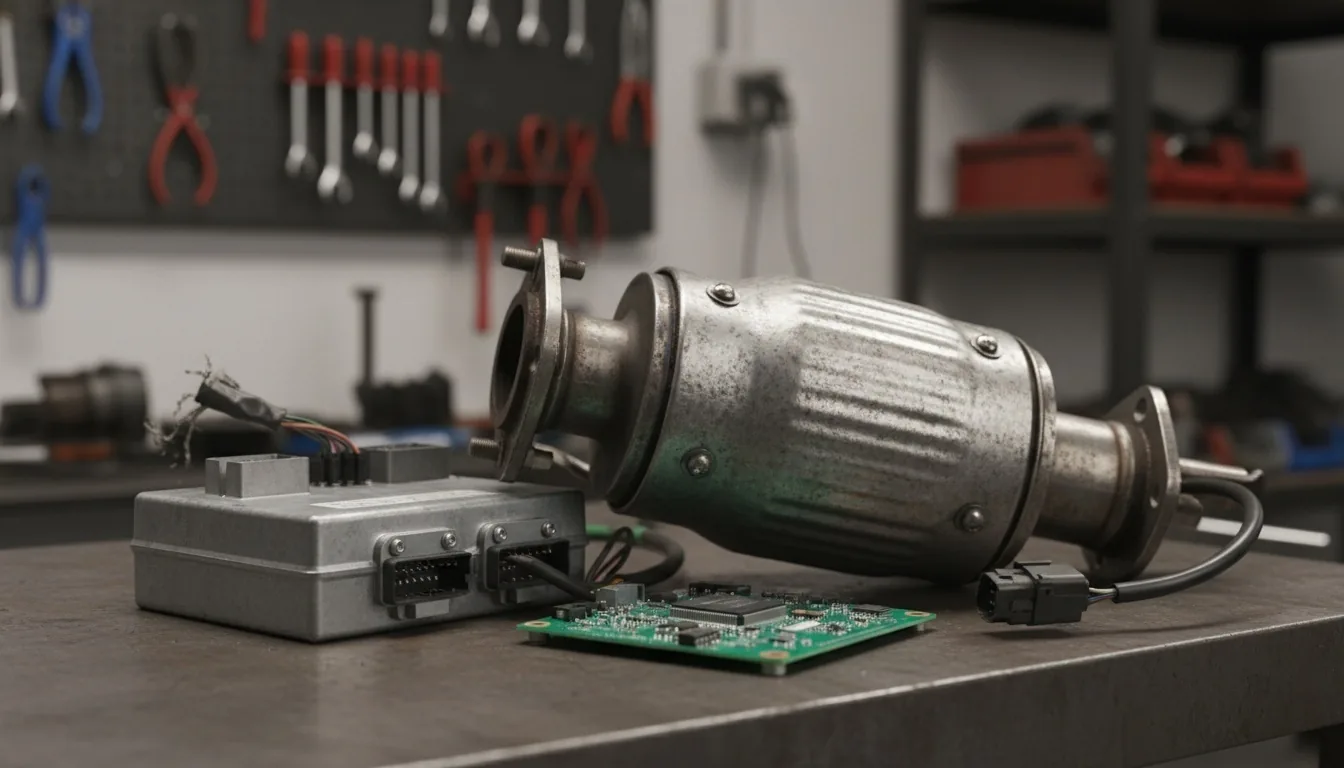
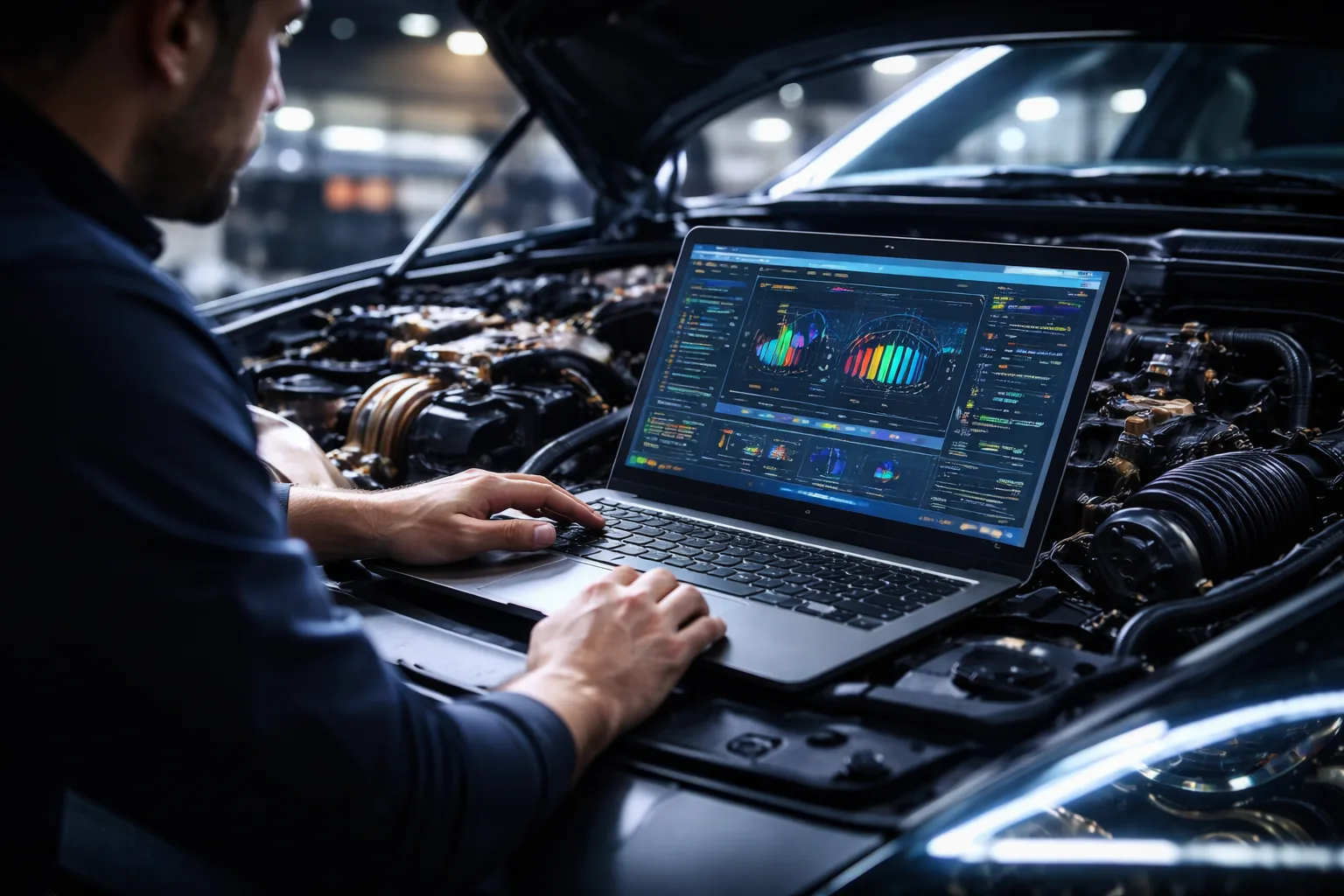
Understanding why DPF regenerations fail is key to preventing costly breakdowns and keeping the engine in optimal condition.
Introduction
.imported-article{ --bg: #06110B; --card: #12281A; --ink: #F5F7FA; --muted: #AEB8C2; --accent: #58CF0D; --accent-light: #7FE836; --accent-2: #7FE836; --line: #1C3624; --line-light: #16321F; --shadow: 0 4px 24px rgba(0,0,0,0.35); --shadow-lg: 0 12px 48px rgba(0,0,0,0.45); --radius: 12px; --radius-sm: 8px; } .imported-article *{ box-sizing: border-box; margin: 0; padding: 0; } .imported-article{ font-size: 16px; scroll-behavior: smooth; } .imported-article{ font-family: "Mona Sans", system-ui, sans-serif; color: var(--ink); background: var(--bg); line-height: 1.75; font-weight: 400; -webkit-font-smoothing: antialiased; -moz-osx-font-smoothing: grayscale; } .imported-article a{ color: var(--accent-2); text-decoration: none; transition: color 0.2s ease; } .imported-article a:hover{ color: var(--accent); text-decoration: underline; } .imported-article .container{ max-width: 800px; margin: 0 auto; padding: 40px 24px 80px; } .imported-article /* Header / Hero */ .hero{ background: linear-gradient(135deg, var(--card) 0%, var(--line-light) 100%); border: 1px solid var(--line); border-radius: var(--radius); padding: 40px 36px; margin-bottom: 32px; box-shadow: var(--shadow); } .imported-article .badge{ display: inline-flex; align-items: center; font-family: "Mona Sans", system-ui, sans-serif; font-size: 0.75rem; font-weight: 600; letter-spacing: 0.05em; text-transform: uppercase; color: var(--accent); background: rgba(88, 207, 13, 0.14); padding: 8px 14px; border-radius: 20px; margin-bottom: 20px; } .imported-article .meta{ display: flex; align-items: center; gap: 16px; font-family: "Mona Sans", system-ui, sans-serif; font-size: 0.875rem; color: var(--muted); margin-bottom: 16px; } .imported-article .meta-item{ display: flex; align-items: center; gap: 6px; } .imported-article h1{ font-family: "Mona Sans", system-ui, sans-serif; font-size: 2.25rem; font-weight: 900; line-height: 1.2; letter-spacing: -0.02em; color: var(--ink); margin-bottom: 16px; } .imported-article .subtitle{ font-size: 1.125rem; color: var(--muted); line-height: 1.6; max-width: 90%; } .imported-article /* Table of Contents */ .toc{ margin-top: 28px; padding: 24px; background: rgba(255,255,255,0.04); border: 1px solid var(--line); border-radius: var(--radius-sm); } .imported-article .toc-title{ font-family: "Mona Sans", system-ui, sans-serif; text-transform: uppercase; letter-spacing: 0.08em; font-size: 0.75rem; font-weight: 600; color: var(--accent); margin-bottom: 12px; } .imported-article .toc ul{ list-style: none; } .imported-article .toc li{ margin: 8px 0; font-family: "Mona Sans", system-ui, sans-serif; font-size: 0.9rem; } .imported-article .toc a{ color: var(--ink); } .imported-article .toc a:hover{ color: var(--accent); } .imported-article .toc .toc-sub{ margin-left: 20px; font-size: 0.85rem; color: var(--muted); } .imported-article /* Article Content */ .article{ background: var(--card); border-radius: var(--radius); border: 1px solid var(--line); padding: 48px 40px; box-shadow: var(--shadow); } .imported-article .article h2{ font-family: "Mona Sans", system-ui, sans-serif; font-size: 1.625rem; font-weight: 700; margin: 2.5rem 0 1rem; padding-top: 1.5rem; border-top: 1px solid var(--line-light); color: var(--ink); letter-spacing: -0.01em; } .imported-article .article h2:first-child{ margin-top: 0; padding-top: 0; border-top: none; } .imported-article .article h3{ font-family: "Mona Sans", system-ui, sans-serif; font-size: 1.25rem; font-weight: 700; margin: 1.75rem 0 0.75rem; color: var(--ink); } .imported-article .article p{ margin: 1rem 0; font-size: 1.0625rem; } .imported-article .article ul, .imported-article .article ol{ margin: 1rem 0 1.25rem 1.5rem; } .imported-article .article li{ margin: 0.5rem 0; font-size: 1.0625rem; } .imported-article .article li::marker{ color: var(--accent); } .imported-article .article strong{ font-weight: 600; color: var(--ink); } .imported-article .article hr{ border: none; height: 1px; background: var(--line-light); margin: 2rem 0; } .imported-article /* Tags */ .tags{ margin-top: 3rem; padding-top: 2rem; border-top: 1px solid var(--line); } .imported-article .tags h2{ font-family: "Mona Sans", system-ui, sans-serif; font-size: 0.875rem; font-weight: 600; text-transform: uppercase; letter-spacing: 0.05em; color: var(--muted); margin-bottom: 12px; border: none; padding: 0; } .imported-article .tag-list{ list-style: none; display: flex; flex-wrap: wrap; gap: 8px; } .imported-article .tag-list li{ font-family: "Mona Sans", system-ui, sans-serif; background: var(--line-light); border: 1px solid var(--line); border-radius: 20px; padding: 6px 14px; font-size: 0.8125rem; font-weight: 500; color: var(--muted); transition: all 0.2s ease; } .imported-article .tag-list li:hover{ background: rgba(88, 207, 13, 0.14); border-color: var(--accent); color: var(--accent); } .imported-article /* Footer */ .footer{ text-align: center; font-family: "Mona Sans", system-ui, sans-serif; color: var(--muted); font-size: 0.875rem; margin-top: 40px; padding-top: 24px; border-top: 1px solid var(--line); } .imported-article .footer a{ color: var(--accent); font-weight: 500; } .imported-article /* Responsive */ @media (max-width: 768px){ .container { padding: 24px 16px 60px; } .hero { padding: 28px 24px; } h1 { font-size: 1.75rem; } .article { padding: 32px 24px; } .article h2 { font-size: 1.375rem; } .article p, .article li { font-size: 1rem; } .meta { flex-wrap: wrap; gap: 10px; } } .imported-article /* Print styles */ @media print{ .toc, .tags, .badge, .footer { display: none; } .hero, .article { box-shadow: none; border: none; } body { font-size: 12pt; } } .imported-article .container{max-width:100%;padding:0;margin:0;}.meta{display:flex;flex-wrap:wrap;gap:8px 18px;align-items:center}.meta-item{display:inline-flex;gap:6px;align-items:center}.meta-item svg{width:16px;height:16px;flex:none} ReproRACE - Technical Guide By the ReproRACE Team 10 min read Contents What Is DPF Regeneration and Why Is It Essential? Types of DPF Regeneration Passive Regeneration Active Regeneration Forced Regeneration Conditions the ECU Requires to Start a Regeneration How the ECU Calculates Soot Load Sensors Involved in Successful Regeneration 1\. Predominantly urban driving 2\. Regenerations repeatedly interrupted 3\. Faults in DPF-related sensors 4\. EGR valve faults 5\. Problems with the injection system 6\. Turbo system faults 7\. Electronic strategies blocked by the ECU Symptoms of Failed DPF Regenerations What Happens If Regeneration Faults Are Ignored Why Clearing Error Codes Doesn't Solve the Problem Interrupted Regenerations and Oil Dilution Common DTCs Associated with Failed Regenerations Most Common Diagnostic Errors Relationship Between the DPF, EGR, and Turbocharger How to Prevent Recurring DPF Regeneration Problems Live Data That Confirms a Failed Regeneration False Regeneration Failures Consequences of Ignoring Failed Regenerations Signs That Regeneration Is in Progress Maintenance That Promotes Stable Regeneration Conclusion Introduction One of the most common problems in modern diesel engines is DPF regeneration failure . When the particulate filter fails to regenerate properly, soot gradually builds up, leading to loss of power , increased fuel consumption, warning messages and, in advanced stages, limp mode . Understanding why DPF regenerations fail is key to preventing costly breakdowns and keeping the engine in optimal condition. In this article, we take an in-depth look at how the regeneration process works, what conditions must be met, why it is interrupted, and how engine electronic management directly affects its success or failure. What Is DPF Regeneration and Why Is It Essential? The DPF regeneration is the process by which the ECU raises the temperature of the exhaust gases to burn off the accumulated soot in the particulate filter. Without periodic regeneration: The DPF becomes clogged Exhaust backpressure increases Engine performance decreases Electronic protections are activated Therefore, regeneration is not an exceptional event, but a normal part of how a modern diesel engine operates . Types of DPF regeneration To understand why they fail, you first need to know the different types of regeneration. Passive regeneration Occurs naturally when: The engine runs under a steady load The exhaust temperature is high enough The vehicle is driven at a constant speed It is the most efficient and least aggressive method for the system. Active regeneration When the ECU detects a high soot load, it initiates active regeneration by means of: Fuel post-injections Injection timing adjustments A controlled increase in temperature This process depends entirely on the engine's electronic management system . Forced regeneration It is performed using diagnostic equipment when automatic regenerations are not sufficient, and always under controlled conditions. Conditions the ECU requires to initiate regeneration The ECU does not initiate regeneration at just any time. It requires a set of minimum conditions to ensure the process is effective and safe: Engine temperature stable and within range Sufficient fuel level No critical active DTCs Engine speed and load maintained for a minimum period Gas temperature suitable for rising quickly If any of these conditions are not met, regeneration is postponed or interrupted. This is one of the most common reasons for repeated failures: the vehicle starts the process, but the ECU cancels it because the required conditions are not met. How the ECU calculates soot load The ECU does not measure soot directly. It uses an internal model that combines: Actual airflow Amount of fuel injected Engine speed EGR strategy DPF differential pressure When the estimated load exceeds a threshold, the ECU requests regeneration. If the sensors provide inconsistent data, the model becomes inaccurate and regenerations may be triggered too late, too early, or inefficiently. Sensors involved in successful regeneration The process depends on several sensors working together: Differential pressure sensor : determines the actual filter load. Exhaust gas temperature sensors : confirm that the required temperature range has been reached. MAF and MAP : help calculate actual flow and adjust the strategy. Lambda sensor (if applicable) : validates residual oxygen and combustion quality. A sensor operating outside its range can cause incomplete regenerations without triggering a direct DTC. That is why a regeneration failure is not always a DPF problem, but may instead be caused by the information the ECU receives. The causes of DPF regeneration failure are varied and, in most cases, are related to vehicle use and other engine systems. 1\. Predominantly urban driving Short trips at low engine speeds prevent: The engine from reaching operating temperature Regeneration from completing The process from continuing for the necessary amount of time This is the most common reason for a DPF that does not regenerate . 2\. Constant interruption of regeneration Turning off the engine during an active regeneration causes: Incomplete regenerations Progressive soot buildup An increase in the frequency of attempts Over time, the ECU may prevent further regenerations for safety reasons. 3\. Failures in DPF-related sensors Sensors such as: Differential pressure Exhaust gas temperature Lambda sensor if they send incorrect values, the ECU: Does not start regeneration Interrupts it Considers it failed 4\. EGR valve malfunctions A faulty EGR increases soot production, which causes: Rapid DPF saturation Regenerations that are too frequent Increased thermal stress 5\. Problems with the fuel injection system Faulty injectors or incorrect pressures cause: Incomplete combustion Increased particle production Ineffective regenerations 6\. Turbo system failures Incorrect boost pressure affects: Exhaust temperature Combustion efficiency This directly affects the success of regeneration. 7\. Electronic strategies blocked by the ECU When the ECU detects elevated risks (temperature, oil dilution, repeated errors), it can: Block regenerations Activate protection mode Limit engine operation Symptoms of failed DPF regenerations Some clear symptoms include: Very frequent regenerations Increased fuel consumption Fans running continuously Loss of power DPF warnings on the dashboard These symptoms indicate that the system is trying to compensate for a persistent problem. What happens if regeneration failures are ignored Ignoring a DPF that is not regenerating properly can lead to: Critical filter saturation Turbo damage Oil dilution Complete DPF replacement Acting in time prevents costly repairs. Why clearing errors does not solve the problem Clearing DPF-related codes: Does not clean the filter Does not fix the cause The problem returns The ECU will detect the saturation again as long as its cause persists. Interrupted regenerations and oil dilution When an active regeneration is interrupted, some of the post-injection fuel may end up in the crankcase. This causes: Oil dilution Increase in lubricant level Loss of protective capacity The result is an engine that is more vulnerable and a DPF that continues to accumulate soot. If this cycle repeats, the problem quickly worsens. Common DTCs associated with failed regenerations Some common error codes include: P2463 : high soot load P244A/P244B : insufficient regeneration temperature P2452/P2453 : differential pressure sensor out of range P2002 : DPF efficiency below threshold These DTCs do not always indicate a filter failure. They indicate that the ECU has been unable to complete the intended strategy. Most common diagnostic errors Forcing regenerations without checking the sensors . If the differential pressure reading is inaccurate, regeneration will not solve the problem. Ignoring the condition of the oil . Dilution affects combustion and accelerates soot formation. Failing to check the EGR and fuel injection . Inefficient combustion produces more particles and clogs the filter sooner. Clearing DTCs without analyzing live data . The fault returns because the cause is still present. Relationship between the DPF, EGR, and turbocharger Regeneration does not depend on the DPF alone. The EGR can increase soot production if it recirculates too much exhaust gas, and a turbocharger operating outside its specified range alters the exhaust gas temperature. If these systems are not working properly, the ECU may repeatedly attempt regeneration without success. That is why diagnostics should take a comprehensive approach rather than focusing solely on the filter. Correct diagnosis of a DPF regeneration failure** A professional diagnosis should analyze: Actual soot and ash load Differential pressure under different conditions Regeneration history Sensor and actuator status Active electronic strategies Only then can you determine why the DPF is not regenerating . How to prevent recurring DPF regeneration problems Some key recommendations: Combine city driving with longer trips Do not interrupt active regeneration cycles Keep the EGR system and fuel injection in good condition Address electronic warnings promptly Perform regular diagnostics Prevention is the best strategy for extending the life of the DPF. Live data confirming a failed regeneration A thorough diagnosis analyzes real-time parameters to confirm whether regeneration has been completed: Differential pressure before, during, and after regeneration Temperature upstream and downstream of the DPF during the active phase Number of interrupted regeneration cycles in the history Calculated soot load versus estimated soot load If the differential pressure does not drop after the process, regeneration has not been effective. If the temperature does not rise enough, the problem may lie with the sensors, fuel injection, or control strategy. False regeneration failures In some cases, the ECU records regeneration failures even though the DPF is not actually clogged. Common causes include: Drifting differential pressure sensors Blocked pressure hoses Exhaust leaks upstream of the DPF Misadjusted electronic adaptations These situations can lead to incorrect diagnoses if only the filter is addressed. Validating the signals helps avoid unnecessary replacements. Consequences of ignoring failed regeneration cycles If the failure persists, soot buildup increases and the ECU limits engine power. In the medium term, the consequences include: Critical DPF saturation Turbocharger thermal overload Oil dilution and premature wear Recurring protection modes These consequences affect the engine's performance and overall reliability. Electronic calibration during regeneration** Electronic calibration directly affects: When regeneration begins How temperature is managed Which safety limits are applied Proper electronic management allows for: More efficient regeneration Reduced thermal stress Greater system reliability Signs that regeneration is in progress Knowing when the vehicle is regenerating helps you avoid interrupting the process. The most common signs are: Higher-than-normal idle speed Fans running after the engine is switched off A slight increase in instantaneous fuel consumption A smell of hotter exhaust gases at the tailpipe Repeatedly interrupting these phases is one of the most common causes of soot buildup. Maintenance that supports stable regeneration In addition to driving style, maintenance factors can affect the ability to regenerate: Low-ash-specification oil A clean injection system with a proper return flow Thermostat and cooling system in good condition Regular checks of pressure and temperature sensors Keeping these components within specifications reduces the likelihood of failed regeneration and prevents recurring problems. and industrial** In trucks, tractors, and industrial machinery: Loads are more consistent Regenerations are critical for productivity A failure can bring operations to a standstill That’s why electronic control and preventive diagnostics are essential. Conclusion The DPF regeneration failure is not an isolated problem, but the result of multiple factors related to vehicle use and the condition of other engine systems. Understanding why it happens and taking action in time are key to preventing serious and costly breakdowns. At ReproRACE, we take a technical, preventive, and reliability-focused approach , always analyzing the complete electronic strategy before carrying out any work. This approach prevents unnecessary forced regenerations and keeps the system within its actual operating parameters. This approach improves long-term reliability. Tags particulate filter clogged DPF DPF regeneration DPF failure DPF cleaning engine electronics advanced diagnostics error code electronic fault specialist workshop Related services from ReproRACE P2459 regeneration code Clogged particulate filter: what to do FAP / DPF software deactivation Find your vehicle and check its gains ReproRACE remapping workshops near you Stage 1 Remapping ReproRACE — ReproRACE - engine electronics guided by technical expertise.