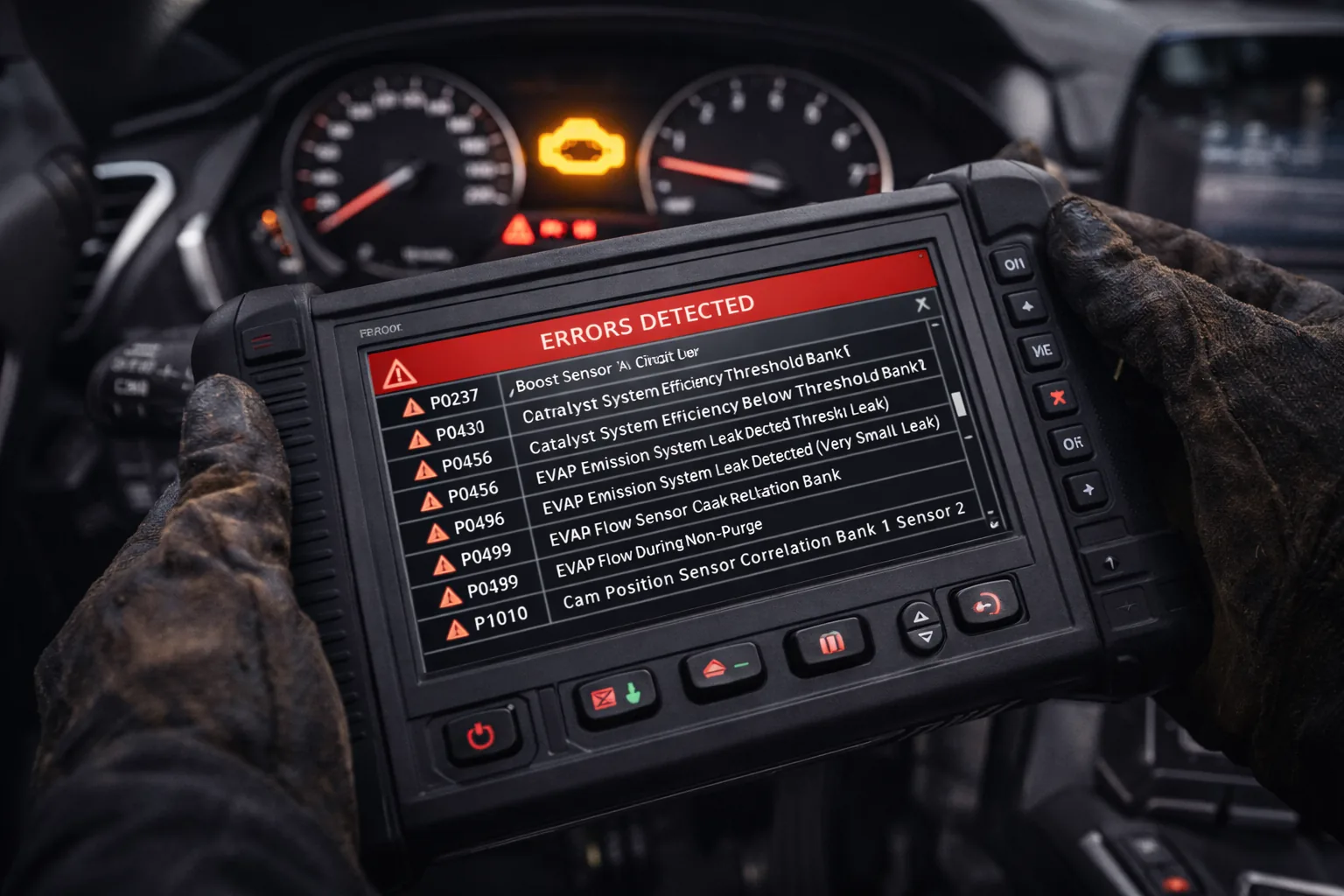
When any of these temperatures exceeds its threshold, the ECU reduces torque to protect the pistons, turbo and catalytic converters.
Introduction
.imported-article{ --bg: #06110B; --card: #12281A; --ink: #F5F7FA; --muted: #AEB8C2; --accent: #58CF0D; --accent-light: #7FE836; --accent-2: #7FE836; --line: #1C3624; --line-light: #16321F; --shadow: 0 4px 24px rgba(0,0,0,0.35); --shadow-lg: 0 12px 48px rgba(0,0,0,0.45); --radius: 12px; --radius-sm: 8px; } .imported-article *{ box-sizing: border-box; margin: 0; padding: 0; } .imported-article{ font-size: 16px; scroll-behavior: smooth; } .imported-article{ font-family: "Mona Sans", system-ui, sans-serif; color: var(--ink); background: var(--bg); line-height: 1.75; font-weight: 400; -webkit-font-smoothing: antialiased; -moz-osx-font-smoothing: grayscale; } .imported-article a{ color: var(--accent-2); text-decoration: none; transition: color 0.2s ease; } .imported-article a:hover{ color: var(--accent); text-decoration: underline; } .imported-article .container{ max-width: 800px; margin: 0 auto; padding: 40px 24px 80px; } .imported-article /* Header / Hero */ .hero{ background: linear-gradient(135deg, var(--card) 0%, var(--line-light) 100%); border: 1px solid var(--line); border-radius: var(--radius); padding: 40px 36px; margin-bottom: 32px; box-shadow: var(--shadow); } .imported-article .badge{ display: inline-flex; align-items: center; font-family: "Mona Sans", system-ui, sans-serif; font-size: 0.75rem; font-weight: 600; letter-spacing: 0.05em; text-transform: uppercase; color: var(--accent); background: rgba(88, 207, 13, 0.14); padding: 8px 14px; border-radius: 20px; margin-bottom: 20px; } .imported-article .meta{ display: flex; align-items: center; gap: 16px; font-family: "Mona Sans", system-ui, sans-serif; font-size: 0.875rem; color: var(--muted); margin-bottom: 16px; } .imported-article .meta-item{ display: flex; align-items: center; gap: 6px; } .imported-article h1{ font-family: "Mona Sans", system-ui, sans-serif; font-size: 2.25rem; font-weight: 900; line-height: 1.2; letter-spacing: -0.02em; color: var(--ink); margin-bottom: 16px; } .imported-article .subtitle{ font-size: 1.125rem; color: var(--muted); line-height: 1.6; max-width: 90%; } .imported-article /* Table of Contents */ .toc{ margin-top: 28px; padding: 24px; background: rgba(255,255,255,0.04); border: 1px solid var(--line); border-radius: var(--radius-sm); } .imported-article .toc-title{ font-family: "Mona Sans", system-ui, sans-serif; text-transform: uppercase; letter-spacing: 0.08em; font-size: 0.75rem; font-weight: 600; color: var(--accent); margin-bottom: 12px; } .imported-article .toc ul{ list-style: none; } .imported-article .toc li{ margin: 8px 0; font-family: "Mona Sans", system-ui, sans-serif; font-size: 0.9rem; } .imported-article .toc a{ color: var(--ink); } .imported-article .toc a:hover{ color: var(--accent); } .imported-article .toc .toc-sub{ margin-left: 20px; font-size: 0.85rem; color: var(--muted); } .imported-article /* Article Content */ .article{ background: var(--card); border-radius: var(--radius); border: 1px solid var(--line); padding: 48px 40px; box-shadow: var(--shadow); } .imported-article .article h2{ font-family: "Mona Sans", system-ui, sans-serif; font-size: 1.625rem; font-weight: 700; margin: 2.5rem 0 1rem; padding-top: 1.5rem; border-top: 1px solid var(--line-light); color: var(--ink); letter-spacing: -0.01em; } .imported-article .article h2:first-child{ margin-top: 0; padding-top: 0; border-top: none; } .imported-article .article h3{ font-family: "Mona Sans", system-ui, sans-serif; font-size: 1.25rem; font-weight: 700; margin: 1.75rem 0 0.75rem; color: var(--ink); } .imported-article .article p{ margin: 1rem 0; font-size: 1.0625rem; } .imported-article .article ul, .imported-article .article ol{ margin: 1rem 0 1.25rem 1.5rem; } .imported-article .article li{ margin: 0.5rem 0; font-size: 1.0625rem; } .imported-article .article li::marker{ color: var(--accent); } .imported-article .article strong{ font-weight: 600; color: var(--ink); } .imported-article .article hr{ border: none; height: 1px; background: var(--line-light); margin: 2rem 0; } .imported-article /* Tags */ .tags{ margin-top: 3rem; padding-top: 2rem; border-top: 1px solid var(--line); } .imported-article .tags h2{ font-family: "Mona Sans", system-ui, sans-serif; font-size: 0.875rem; font-weight: 600; text-transform: uppercase; letter-spacing: 0.05em; color: var(--muted); margin-bottom: 12px; border: none; padding: 0; } .imported-article .tag-list{ list-style: none; display: flex; flex-wrap: wrap; gap: 8px; } .imported-article .tag-list li{ font-family: "Mona Sans", system-ui, sans-serif; background: var(--line-light); border: 1px solid var(--line); border-radius: 20px; padding: 6px 14px; font-size: 0.8125rem; font-weight: 500; color: var(--muted); transition: all 0.2s ease; } .imported-article .tag-list li:hover{ background: rgba(88, 207, 13, 0.14); border-color: var(--accent); color: var(--accent); } .imported-article /* Footer */ .footer{ text-align: center; font-family: "Mona Sans", system-ui, sans-serif; color: var(--muted); font-size: 0.875rem; margin-top: 40px; padding-top: 24px; border-top: 1px solid var(--line); } .imported-article .footer a{ color: var(--accent); font-weight: 500; } .imported-article /* Responsive */ @media (max-width: 768px){ .container { padding: 24px 16px 60px; } .hero { padding: 28px 24px; } h1 { font-size: 1.75rem; } .article { padding: 32px 24px; } .article h2 { font-size: 1.375rem; } .article p, .article li { font-size: 1rem; } .meta { flex-wrap: wrap; gap: 10px; } } .imported-article /* Print styles */ @media print{ .toc, .tags, .badge, .footer { display: none; } .hero, .article { box-shadow: none; border: none; } body { font-size: 12pt; } } .imported-article .container{max-width:100%;padding:0;margin:0;}.meta{display:flex;flex-wrap:wrap;gap:8px 18px;align-items:center}.meta-item{display:inline-flex;gap:6px;align-items:center}.meta-item svg{width:16px;height:16px;flex:none} ReproRACE - Technical Guide By the ReproRACE Team 11 min read Contents Thermal data: the foundation of protection Lubrication data Fuel data Air and turbo data Combustion and knock data Protection-related emissions data Internal protection models Typical protection limiters Exposure time and protection logic How protection shows up in real-world driving Real cases of active protection Case 1: hot oil on a long climb Case 2: low fuel pressure under load Case 3: intermittent overboost Common mistakes when interpreting protection Basic checklist to identify the limiter Relationship to the ECU axioms Engine speed, load and vibration data Torque and per-gear protections Substitute values and safe mode Testing and logging to identify the protection Preventive maintenance linked to protection Ambient conditions and corrections Protection linked to emissions and regenerations Auditing protection in calibrations Validation on the dyno and in real-world use Plausibility signals as an early warning Sensors and thresholds that trigger protection Protection hierarchy and priorities Example of a diagnostic analysis Emissions as the real protection limit Conclusion Introduction The ECU does not just calculate injection and boost; it also protects the engine at all times. To do so, it analyzes dozens of variables in real time and applies limiters that reduce torque when something goes out of range. That is why power loss does not always mean a mechanical fault: it may be an active protection strategy. At ReproRACE, we work according to a clear principle: DTCs are symptoms, not diagnoses , and the ECU steps in before the engine fails. This article details what data the ECU analyzes and how it decides when to limit torque or enter safe mode. Thermal data: the foundation of protection Temperature is the most critical indicator. The ECU monitors: Coolant temperature Oil temperature Intake air temperature EGT at the manifold or turbo When any of these temperatures exceeds its threshold, the ECU reduces torque to protect the pistons, turbo and catalytic converters. Under prolonged load, these limits are what really determine sustained power. Lubrication data The ECU monitors oil health: Hot oil pressure Oil temperature under load Running time at minimum pressure If pressure drops, the ECU limits rpm and torque. In some cases it activates protection mode to prevent seizure. An erratic reading from the pressure sensor can also cause unnecessary power cuts. Fuel data The injection system depends on: Target vs. actual rail pressure High-pressure pump flow Fuel temperature Injection corrections Low rail pressure causes power loss and activates safe strategies. The ECU reduces torque to avoid lean mixtures or unstable combustion. Air and turbo data Air is key to both torque and temperature: Actual vs. target boost pressure Measured air mass (MAF) Intake manifold pressure (MAP) Intake air temperature If the actual air is insufficient, the ECU applies smoke limiters and reduces torque to avoid excess particulates and EGT. Combustion and knock data On gasoline engines and some diesels, the ECU analyzes: Knock sensor Lambda or actual mixture Ionization signals (in advanced systems) If it detects knock, it reduces timing and torque to protect the pistons and valves. The priority is avoiding damage, even at the cost of response. Protection-related emissions data Protection also covers emissions: DPF differential pressure Catalytic converter temperature NOx reading If the DPF becomes clogged or the SCR is not working, the ECU limits torque to avoid thermal damage and regulatory non-compliance. Internal protection models In addition to sensors, the ECU uses models that estimate: Actual delivered torque Internal combustion chamber temperature Estimated turbo speed Volumetric efficiency If the model does not match reality, the ECU applies conservative strategies. This explains power loss without clear DTCs. Typical protection limiters The most common are: Oil temperature limiter Coolant temperature limiter EGT limiter Out-of-range boost pressure limiter Low fuel pressure limiter These limiters kick in even without visible fault codes. Exposure time and protection logic The ECU does not just look at a single value; it also looks at how long it stays out of range. For example: A high temperature for a few seconds may be tolerable A sustained high temperature triggers severe power cuts This avoids unnecessary cuts in response to momentary spikes, while still protecting when the risk is real. How protection shows up in real-world driving The driver usually notices: Gradual power loss Entry into protection mode (limp mode) Slow throttle response Frequent regenerations on diesels The ECU limits torque to protect the engine, not because it is failing. Real cases of active protection Case 1: hot oil on a long climb The engine lost power on long climbs. The log showed high oil temperature and activation of the thermal limiter. A dirty oil cooler was found. After cleaning, torque remained stable. Case 2: low fuel pressure under load Under hard acceleration, rail pressure dropped. The ECU cut torque to avoid lean combustion. The problem was a partially clogged fuel filter. Case 3: intermittent overboost The ECU detected pressure spikes and activated protection. A sluggish control valve was found. Once it was replaced, torque became linear again. Common mistakes when interpreting protection Assuming turbo failure without checking sensors Remapping to remove limiters without fixing the cause Clearing DTCs without analyzing live data Removing protections without fixing the real cause accelerates wear and increases the risk of serious failure. Basic checklist to identify the limiter Before modifying any parameter: Review actual temperatures under load Verify oil and rail pressure Compare target vs. actual boost pressure Analyze DPF differential pressure This checklist makes it possible to pinpoint which data is triggering the protection. Relationship to the ECU axioms Protection confirms the core principles: The ECU decides, not the driver : torque is limited for safety. Torque is the central variable : it is cut to protect the engine. Sensors fail more often than actuators : a wrong reading causes limitation. Reprogramming optimizes; it does not repair : the real cause is fixed first. Engine speed, load and vibration data The ECU evaluates engine speed and effective load to avoid out-of-range stress. On many engines it monitors: Sustained maximum rpm Sudden load changes Vibration or rough-running signals If the engine shows abnormal vibration, the ECU may reduce torque to avoid mechanical damage to the crankshaft or transmission. Torque and per-gear protections On engines paired with automatic transmissions, the ECU applies per-gear limiters: Reduced maximum torque in low gears Protection of the clutch or torque converter Limitation during shifts to avoid shocks These protections are key to preserving the transmission and avoiding overloads that shorten the service life of the drivetrain. Substitute values and safe mode When a sensor fails, the ECU may replace its reading with a fixed or estimated value. This allows the engine to keep running, but with limitations: Reduced torque to avoid smoke Deactivation of the EGR or variable geometry turbo Limited rpm to protect the engine Safe mode does not necessarily indicate a serious failure; it indicates that the ECU does not trust the reading and prefers to protect the engine. Testing and logging to identify the protection An advanced diagnosis should include logs under real load: Comparison of requested vs. actual torque Actual vs. target boost pressure Evolution of oil temperature and EGT This data makes it possible to identify which parameter triggers the cut. Without logging, protection can be mistaken for a mechanical fault. Preventive maintenance linked to protection Many protection strategies are triggered by wear or lack of maintenance. To avoid unnecessary cuts: Check air and fuel filters Clean the intercooler and radiators Verify hot oil pressure A well-calibrated ECU only delivers real torque if the engine is in good condition. Ambient conditions and corrections The ECU corrects its strategy according to ambient temperature and barometric pressure. At altitude or in very high temperatures: Torque is reduced to avoid smoke The turbo works closer to its limit Intake temperature rises faster These corrections protect the engine, even if the driver notices less response. In real-world diagnosis, it is key to take the environment into account. Protection linked to emissions and regenerations The emissions control system also triggers protections: If the DPF becomes clogged, the ECU reduces torque and limits rpm If the SCR is not working, the ECU limits power to comply with regulations If regeneration is interrupted, the frequency of attempts increases These strategies aim to protect expensive components and avoid legal penalties. Auditing protection in calibrations A professional calibration reviews which limiters kick in during real-world use. The goal is not to remove them, but to make sure they are not triggered by avoidable causes. This includes: Verification of critical sensors Comparison of requested and actual torque Validation of temperatures under sustained load Only with this audit is it possible to pursue stable torque without compromising reliability. Validation on the dyno and in real-world use The dyno makes it possible to observe torque limits and temperatures in a controlled way, but real validation comes on the road or under industrial load. The ECU may trigger protections only under prolonged stress, so validating under real conditions is essential before concluding that an engine is healthy. Plausibility signals as an early warning The ECU also monitors plausibility between sensors. If the readings do not add up, it reduces torque before an obvious fault appears. This prevention is part of the protection system. Sensors and thresholds that trigger protection The ECU protects using measured data, not intuition. The most relevant sensors are coolant temperature, oil temperature, boost pressure, airflow, rail pressure and EGT. Each one has thresholds that, when exceeded, limit torque progressively. A correct reading of the data reveals the sequence: first the allowed torque is reduced, then boost pressure is adjusted and, if the problem persists, more conservative strategies kick in. The idea is to keep the engine within a safe window, not to cut power abruptly. Protection hierarchy and priorities Not all protections carry the same weight. The ECU usually prioritizes: Mechanical safety (overboost, overheating). Emissions (DPF, EGR, SCR). Transmission protection (torque per gear). If there is a conflict between driver demand and safety, protection wins. That is why power cuts can occur even when the pedal is asking for more. Understanding this hierarchy prevents incorrect diagnoses. Example of a diagnostic analysis A protection log shows high requested torque and low delivered torque. At the same time, EGT exceeds the threshold and the ECU reduces boost pressure. The fault is not the turbo; it is the thermal strategy. Without looking at EGT, the diagnosis goes wrong. This example sums up why the ECU analyzes data and decides. Protection is not an error; it is a logical reaction to an out-of-range value. The technician must identify that value before touching any maps. Emissions as the real protection limit The ECU protects not only the engine but also the emissions control system. When the DPF is loaded or the SCR is working outside its temperature range, the allowed torque drops. This is not a fault; it is a legal strategy. In modern engines, emissions take priority over power. The data that triggers these protections is usually: DPF differential pressure. Exhaust gas temperature during regeneration. NOx readings upstream and downstream of the catalyst. EGR condition and its actual flow. If any of these values goes out of range, the ECU reduces torque to avoid damaging the system and to comply with regulations. That is why a complete diagnosis must include emissions, not just engine sensors. A complete reading includes comparing requested torque, allowed torque and delivered torque. If allowed torque drops as temperature rises, the protection is thermal. If it drops with high differential pressure, it is DPF protection. Cross-referencing this data reveals the real cause without guesswork. A simple data checklist protects against mistakes: check ECT, EGT, boost pressure, rail pressure and DPF condition. If any of these values is out of range, the ECU cuts power for safety. A complete reading prevents incomplete diagnoses. A well-understood protection makes it possible to act before the power cut becomes severe. If an out-of-range sensor is detected during a service, it is corrected and the engine regains its margin without touching any maps. When you work with that data, protection stops being a mystery and becomes a reliability tool. Conclusion The ECU analyzes dozens of data points to protect the engine and ensure reliability. Temperatures, pressures, air and fuel determine the available torque. When something goes out of range, the ECU acts before the engine suffers. At ReproRACE we apply advanced diagnostics to identify which data point triggers the protection. Because real performance starts with understanding how and why the ECU decides to limit torque. Tags particulate filter clogged DPF DPF regeneration DPF failure DPF cleaning engine electronics advanced diagnostics error code electronic fault specialist workshop Related services from ReproRACE Find your vehicle and check its gains ReproRACE remapping workshops near you Stage 1 Remapping Faults and fault codes ReproRACE — ReproRACE - engine electronics guided by technical expertise.