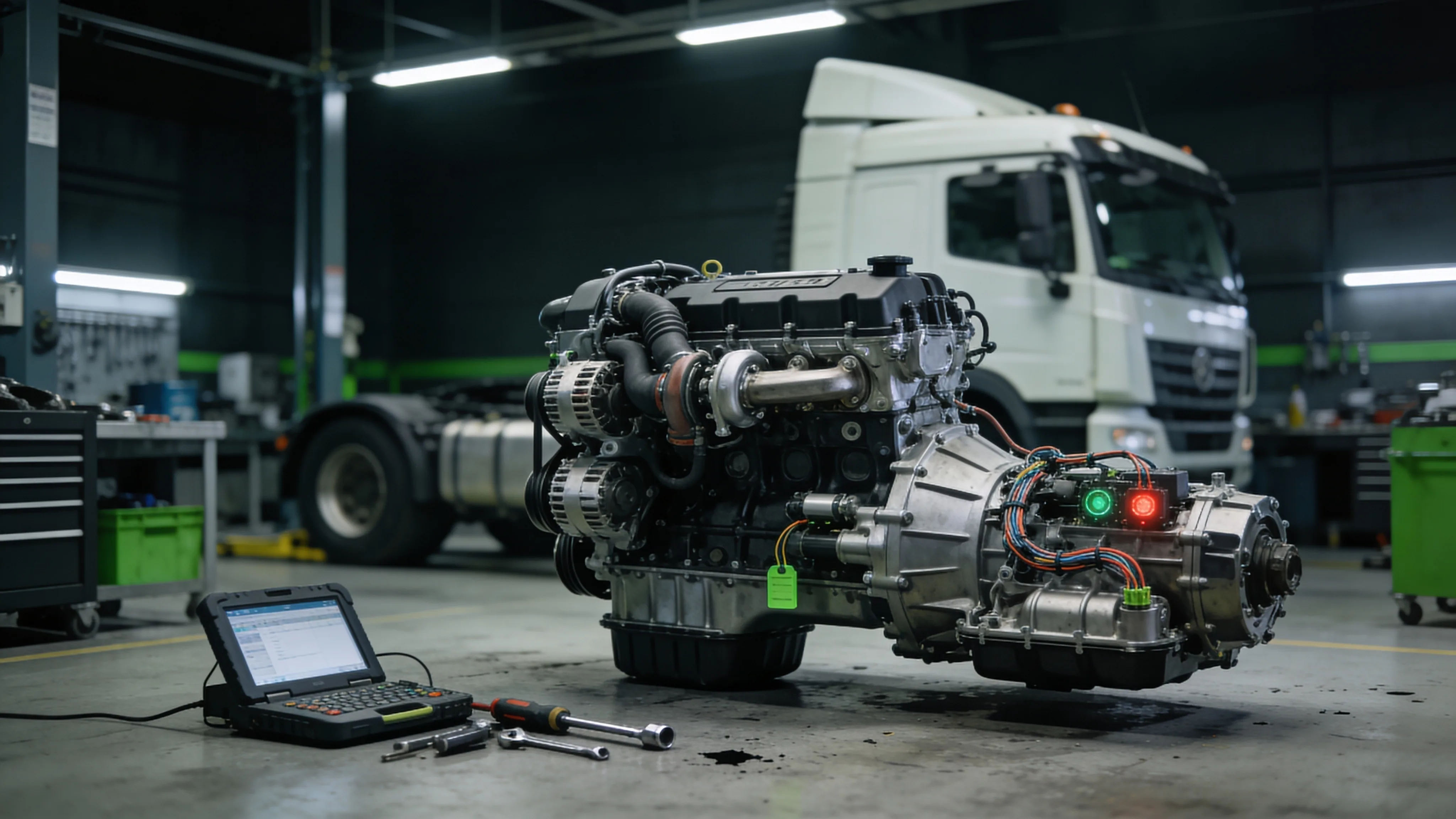
The ECU is the brain of a modern engine. Without it, a modern engine couldn’t meet emissions standards, deliver torque precisely, or protect itself under certain conditions…
Introduction
.imported-article{ --bg: #06110B; --card: #12281A; --ink: #F5F7FA; --muted: #AEB8C2; --accent: #58CF0D; --accent-light: #7FE836; --accent-2: #7FE836; --line: #1C3624; --line-light: #16321F; --shadow: 0 4px 24px rgba(0,0,0,0.35); --shadow-lg: 0 12px 48px rgba(0,0,0,0.45); --radius: 12px; --radius-sm: 8px; } .imported-article *{ box-sizing: border-box; margin: 0; padding: 0; } .imported-article{ font-size: 16px; scroll-behavior: smooth; } .imported-article{ font-family: "Mona Sans", system-ui, sans-serif; color: var(--ink); background: var(--bg); line-height: 1.75; font-weight: 400; -webkit-font-smoothing: antialiased; -moz-osx-font-smoothing: grayscale; } .imported-article a{ color: var(--accent-2); text-decoration: none; transition: color 0.2s ease; } .imported-article a:hover{ color: var(--accent); text-decoration: underline; } .imported-article .container{ max-width: 800px; margin: 0 auto; padding: 40px 24px 80px; } .imported-article /* Header / Hero */ .hero{ background: linear-gradient(135deg, var(--card) 0%, var(--line-light) 100%); border: 1px solid var(--line); border-radius: var(--radius); padding: 40px 36px; margin-bottom: 32px; box-shadow: var(--shadow); } .imported-article .badge{ display: inline-flex; align-items: center; font-family: "Mona Sans", system-ui, sans-serif; font-size: 0.75rem; font-weight: 600; letter-spacing: 0.05em; text-transform: uppercase; color: var(--accent); background: rgba(88, 207, 13, 0.14); padding: 8px 14px; border-radius: 20px; margin-bottom: 20px; } .imported-article .meta{ display: flex; align-items: center; gap: 16px; font-family: "Mona Sans", system-ui, sans-serif; font-size: 0.875rem; color: var(--muted); margin-bottom: 16px; } .imported-article .meta-item{ display: flex; align-items: center; gap: 6px; } .imported-article h1{ font-family: "Mona Sans", system-ui, sans-serif; font-size: 2.25rem; font-weight: 900; line-height: 1.2; letter-spacing: -0.02em; color: var(--ink); margin-bottom: 16px; } .imported-article .subtitle{ font-size: 1.125rem; color: var(--muted); line-height: 1.6; max-width: 90%; } .imported-article /* Table of Contents */ .toc{ margin-top: 28px; padding: 24px; background: rgba(255,255,255,0.04); border: 1px solid var(--line); border-radius: var(--radius-sm); } .imported-article .toc-title{ font-family: "Mona Sans", system-ui, sans-serif; text-transform: uppercase; letter-spacing: 0.08em; font-size: 0.75rem; font-weight: 600; color: var(--accent); margin-bottom: 12px; } .imported-article .toc ul{ list-style: none; } .imported-article .toc li{ margin: 8px 0; font-family: "Mona Sans", system-ui, sans-serif; font-size: 0.9rem; } .imported-article .toc a{ color: var(--ink); } .imported-article .toc a:hover{ color: var(--accent); } .imported-article .toc .toc-sub{ margin-left: 20px; font-size: 0.85rem; color: var(--muted); } .imported-article /* Article Content */ .article{ background: var(--card); border-radius: var(--radius); border: 1px solid var(--line); padding: 48px 40px; box-shadow: var(--shadow); } .imported-article .article h2{ font-family: "Mona Sans", system-ui, sans-serif; font-size: 1.625rem; font-weight: 700; margin: 2.5rem 0 1rem; padding-top: 1.5rem; border-top: 1px solid var(--line-light); color: var(--ink); letter-spacing: -0.01em; } .imported-article .article h2:first-child{ margin-top: 0; padding-top: 0; border-top: none; } .imported-article .article h3{ font-family: "Mona Sans", system-ui, sans-serif; font-size: 1.25rem; font-weight: 700; margin: 1.75rem 0 0.75rem; color: var(--ink); } .imported-article .article p{ margin: 1rem 0; font-size: 1.0625rem; } .imported-article .article ul, .imported-article .article ol{ margin: 1rem 0 1.25rem 1.5rem; } .imported-article .article li{ margin: 0.5rem 0; font-size: 1.0625rem; } .imported-article .article li::marker{ color: var(--accent); } .imported-article .article strong{ font-weight: 600; color: var(--ink); } .imported-article .article hr{ border: none; height: 1px; background: var(--line-light); margin: 2rem 0; } .imported-article /* Tags */ .tags{ margin-top: 3rem; padding-top: 2rem; border-top: 1px solid var(--line); } .imported-article .tags h2{ font-family: "Mona Sans", system-ui, sans-serif; font-size: 0.875rem; font-weight: 600; text-transform: uppercase; letter-spacing: 0.05em; color: var(--muted); margin-bottom: 12px; border: none; padding: 0; } .imported-article .tag-list{ list-style: none; display: flex; flex-wrap: wrap; gap: 8px; } .imported-article .tag-list li{ font-family: "Mona Sans", system-ui, sans-serif; background: var(--line-light); border: 1px solid var(--line); border-radius: 20px; padding: 6px 14px; font-size: 0.8125rem; font-weight: 500; color: var(--muted); transition: all 0.2s ease; } .imported-article .tag-list li:hover{ background: rgba(88, 207, 13, 0.14); border-color: var(--accent); color: var(--accent); } .imported-article /* Footer */ .footer{ text-align: center; font-family: "Mona Sans", system-ui, sans-serif; color: var(--muted); font-size: 0.875rem; margin-top: 40px; padding-top: 24px; border-top: 1px solid var(--line); } .imported-article .footer a{ color: var(--accent); font-weight: 500; } .imported-article /* Responsive */ @media (max-width: 768px){ .container { padding: 24px 16px 60px; } .hero { padding: 28px 24px; } h1 { font-size: 1.75rem; } .article { padding: 32px 24px; } .article h2 { font-size: 1.375rem; } .article p, .article li { font-size: 1rem; } .meta { flex-wrap: wrap; gap: 10px; } } .imported-article /* Print styles */ @media print{ .toc, .tags, .badge, .footer { display: none; } .hero, .article { box-shadow: none; border: none; } body { font-size: 12pt; } } .imported-article .container{max-width:100%;padding:0;margin:0;}.meta{display:flex;flex-wrap:wrap;gap:8px 18px;align-items:center}.meta-item{display:inline-flex;gap:6px;align-items:center}.meta-item svg{width:16px;height:16px;flex:none} ReproRACE - Technical Guide By the ReproRACE Team 11 min read Contents What Is an ECU: Hardware and Software Working Together How an ECU Controls a Modern Engine: The Decision-Making Process Sensors: The Foundation of Every Decision Actuators: How the ECU Delivers Torque Torque Model: The Heart of Modern Control Limiters: The ECU’s Safety Net Emissions: A Legal Priority Over Power The ECU and Communication with Other Modules Starting Strategies and Transients The ECU Learns: Adaptations and Corrections The ECU and Reliability: Why It Protects So Much Real-World Examples: How the ECU Makes Decisions in Practice Case 1: Power Loss Without Faults Case 2: Temperature Protection Mode Case 3: Gear-Based Limiter Calibration vs. Modification: They’re Not the Same What to Analyze Before Changing the ECU Why the ECU Is Key to Remapping The ECU’s Internal Architecture Inputs and Outputs: How the ECU Makes Decisions Internal models and plausibility Redundancy and safety Communication with other modules Practical example: sensor failure and safe mode Diagnostics and live data Conclusion Introduction The ECU is the brain of the modern engine. Without it, a modern engine couldn’t meet emissions standards, deliver torque precisely, or protect itself under critical conditions. Even so, it’s one of the least understood components by the average driver. People often think the ECU “produces power,” when in reality it decides how much torque is safe and possible at any given moment based on real data. That’s why the same engine can perform differently in seemingly identical situations. Understanding what an ECU is and how it controls a modern engine makes it possible to diagnose power losses, interpret protection modes, and carry out remaps with sound technical judgment. The rule is clear: the ECU decides, not the driver , and it does so based on sensors that are never perfect. In this article, we explain the ECU’s architecture, its internal logic, and how it turns data into actual engine torque. You’ll see why power is a consequence and why good calibration isn’t about “increasing numbers,” but about modeling the engine’s reality. What an ECU is: hardware and software working together The ECU (Engine Control Unit) is a computer dedicated to managing the engine. It consists of: Hardware : processor, memory, inputs/outputs, and power circuits. Software : control logic, mathematical models, protection strategies, and calibration maps. The ECU receives signals from sensors, processes data in milliseconds, and sends commands to actuators. It doesn’t act on impulse: it works with mathematical models and safety limits designed by engineers. How the ECU controls a modern engine: the decision-making process Control isn’t direct. The ECU doesn’t “open the turbo” or “add fuel” just because the driver asks it to. The actual process is: The driver requests torque using the pedal The ECU calculates the maximum torque allowed based on conditions and limiters The lower of the two is delivered The ECU converts that torque into the required air and fuel Control is adjusted in real time based on sensor data This approach is based on a central axiom: torque is the primary variable; power is the consequence . Sensors: the foundation of every decision Sensors are the ECU’s eyes. If the information is incorrect, the decision will be incorrect. That’s why it’s often said that sensors fail more often than actuators . The most relevant sensors for torque control are: MAF and MAP (air mass and pressure) IAT and ECT (intake and engine temperatures) Rail pressure and fuel temperature CKP and CMP (rotational synchronization) Lambda / AFR and knock sensor EGT and DPF differential pressure An out-of-range sensor doesn’t always generate a DTC. Often, the ECU considers the reading “valid” and reduces torque. DTCs are symptoms, not diagnoses . Actuators: how the ECU delivers torque Once the data has been calculated, the ECU acts on the components that generate actual torque: Injectors : injection quantity, duration, and timing. Turbo : target pressure and control of the geometry or wastegate. Throttle body : air control in gasoline engines and supporting role in diesel engines. EGR : gas mixing for emissions. VVT / variable valve timing : optimizing cylinder filling. Fuel pump : rail pressure and flow rate. If any of these actuators does not respond as the ECU expects, torque is adjusted. This is how the engine is protected. Torque model: the heart of modern control Today's ECUs do not work with “power” maps. They work with a torque model that integrates: Driver demand Safety limiters Thermal conditions Emissions The engine's actual capacity They then convert that torque into air and fuel using conversion maps and correction factors. This explains why an engine may feel like it has no power despite there being no visible faults: the ECU limits torque before any risk arises. Limiters: the ECU's safety net Limiters are rules that protect the engine and ensure emissions compliance. Some examples: Torque limiter : protects the transmission and clutch. Smoke limiter (diesel): prevents excess fuel. Thermal limiter : reduces torque based on engine, oil, or EGT temperature. Altitude limiter : adjusts the load according to air density. Gear-based limiters : reduces torque in 1st and 2nd gear for traction and reliability. These limiters are constantly active. They are not faults; they are engineering decisions. Removing them without good reason leaves the engine unprotected. Emissions: legal priority over power The ECU is legally required to control emissions. If it detects inconsistencies in the DPF, EGR, or AdBlue systems, it may: Reduce torque Limit turbo boost Activate limp mode Restrict speed This is a non-negotiable principle: emissions control systems have legal priority , even if the driver wants power. ECU and communication with other modules In a modern vehicle, the ECU doesn't work alone. It is connected via a network (CAN or others) to units such as the transmission, ABS/ESP, and body control. This makes it possible to coordinate torque in real time: The automatic transmission requests torque reduction during a gear change The traction control system requests torque limitation if it detects wheel slip The ESP intervenes with instant torque cuts to stabilize the vehicle In practice, this means that the available power also depends on interaction with other modules. The same engine can deliver power differently depending on the state of the transmission, the driving mode, or whether the stability control system intervenes. The ECU doesn't just calculate torque; it also negotiates torque with the rest of the vehicle. Starting and transient strategies Torque control is not the same when the engine is cold as it is at its optimal operating temperature. The ECU applies specific strategies: During a cold start, it enriches or adjusts fuel injection for stability and emissions During warm-up, it limits load to protect the oil and turbo During rapid transients, it controls smoke and turbo pressure to prevent dangerous spikes These strategies explain why an engine may feel different during the first few minutes, or why it sometimes “doesn't respond the same way” after several successive accelerations. The ECU prioritizes stability, emissions, and reliability over maximum figures. The ECU learns: adaptive values and corrections Many modern ECUs are not static. They learn and make corrections based on actual use: Injector deviations Actual airflow Knock corrections Combustion efficiency This explains why two cars with the same hardware can perform differently. The ECU adjusts torque based on its “data history,” and that changes the response. ECU and reliability: why it protects so much Modern engines operate at high pressures, elevated temperatures, and very tight tolerances. The ECU prevents damage through protective strategies: Progressive torque reduction Timing adjustment to prevent knock Turbo and DPF thermal management Load limitation during critical phases In technical terms, reliability > figures . The ECU is designed to extend the engine’s life, not to deliver maximum performance all the time. Real-world cases: how the ECU makes decisions in practice Case 1: loss of power with no faults A diesel engine with a complaint of lack of pulling power. There are no DTCs. The logs show that the MAF reads 6% low and the smoke limiter cuts fuel. The ECU is acting correctly: it protects emissions and prevents smoke. The problem isn’t the ECU; it’s the sensor. Case 2: temperature protection mode A turbocharged car in summer under continuous load. The EGT exceeds the threshold, so the ECU reduces torque, lowers turbo pressure, and prevents damage to the system. The driver notices a lack of power, but the ECU is doing its job. Case 3: gear-based limiter Two acceleration runs: in 2nd gear, the car pulls less than in 4th. There are no faults. The ECU limits torque to protect the transmission and maintain traction. The engine can deliver more, but it isn’t allowed to in that gear. Calibration vs. modification: they’re not the same An ECU has two layers: Base software : the control logic. Calibration : the values that adjust that logic. Reprogramming with care means modifying calibrations, not breaking the logic. When protections are removed or the torque model is altered without understanding it, engine reliability suffers. Reprogramming optimizes , it doesn’t repair. If there are hardware or sensor faults, the ECU will continue to limit torque even if the maps are changed. What should be analyzed before modifying the ECU Professional engine management starts with real data: Logs from key sensors under load Comparison of requested and delivered torque Inspection of the DPF, EGR, and AdBlue Condition of the turbo, intake, and fuel injection system Verification of adaptive values Without this foundation, any adjustment is a gamble. The ECU works with reality, not theories. Why the ECU is key to reprogramming The ECU is where the torque models, limiters, and protection strategies reside. Reprogramming without understanding its logic leads to inconsistent results: Unstable gains Frequent protection mode Emissions outside the permitted range Risk of mechanical failure A good calibration respects critical limits, adjusts only where there is room, and maintains a balance between performance, emissions, and reliability. ECU Internal Architecture A modern ECU combines a microcontroller, memory, analog-to-digital converters, and communication modules. Its job is to read sensors, run mathematical models, and control actuators within milliseconds. Fast processing is the foundation of precision in the air-fuel mixture, torque, and emissions. Inputs and outputs: how the ECU makes decisions The ECU receives signals for airflow, pressure, temperature, and position. Using this data, it calculates the permitted torque and adjusts fuel injection, the turbo, EGR, or the throttle. It does not follow the driver's commands directly; it interprets a request and determines the outcome. That is why people say the ECU makes the decisions and the driver makes the request. Internal models and plausibility checks The ECU does more than read sensors: it checks whether signals are plausible in relation to one another. If a sensor fails, it compares the readings with its internal model and activates a protection strategy. This logic prevents damage but reduces power. This safety approach explains many losses in performance that occur without any visible mechanical faults. Redundancy and safety For critical functions, the ECU uses redundancy or backup strategies. For example, if a primary sensor fails, it can estimate values using internal models and keep the engine running in safe mode. This allows the vehicle to keep running, but with torque limitations to protect the system. Communication with other modules The ECU communicates with the TCU, ABS, BCM, and emissions systems. Torque decisions may depend on signals from the traction control, gear changes, or stability control. That is why a fault in another module can also limit power. Engine electronics are an integrated system, not an isolated one. Practical example: sensor failure and safe mode A MAP pressure sensor sends inconsistent data. The ECU detects a discrepancy with its model and activates a safe mode that limits torque. The car still runs, but its response is reduced. This behavior is intentional and prevents more serious damage. Diagnostics and live data Modern diagnostics rely on live data: requested torque, actual torque, turbo pressure, temperature, and fuel-injection corrections. This data shows how the ECU makes decisions and helps identify inconsistencies before they turn into faults. Without readings from real-time data, any interpretation of the ECU is incomplete. The ECU is the brain of the modern engine, and its logic determines performance, emissions, and reliability. Understanding it is essential for any responsible adjustment. How it works explains why real-world power depends on data, not promises. That is why any intervention must respect its internal logic. Modern ECUs also receive software updates at dealerships, which can change calibrations, strategies, and torque limits. That is why it is essential to know which version is installed before making any adjustments. Conclusion The ECU is not a black box: it is an advanced control system that makes real-time decisions to protect the engine and meet emissions requirements. Torque is the central variable and power is the consequence. That’s why a modern engine doesn’t always deliver the same output: the ECU adjusts torque based on sensors, limiters, and real-world conditions. Understanding how the ECU works makes it possible to diagnose accurately, calibrate thoughtfully, and avoid unrealistic expectations. At ReproRACE, we treat the ECU as what it is: an engineering system that must be optimized using real data, without empty promises and with reliability taking priority over numbers. Tags particulate filter clogged DPF DPF regeneration DPF fault DPF cleaning engine electronics advanced diagnostics error code electronic fault specialist workshop Related services from ReproRACE Find your vehicle and check its performance gains ReproRACE remapping workshops near you Stage 1 remapping Faults and fault codes ReproRACE — ReproRACE - engine electronics with technical expertise.