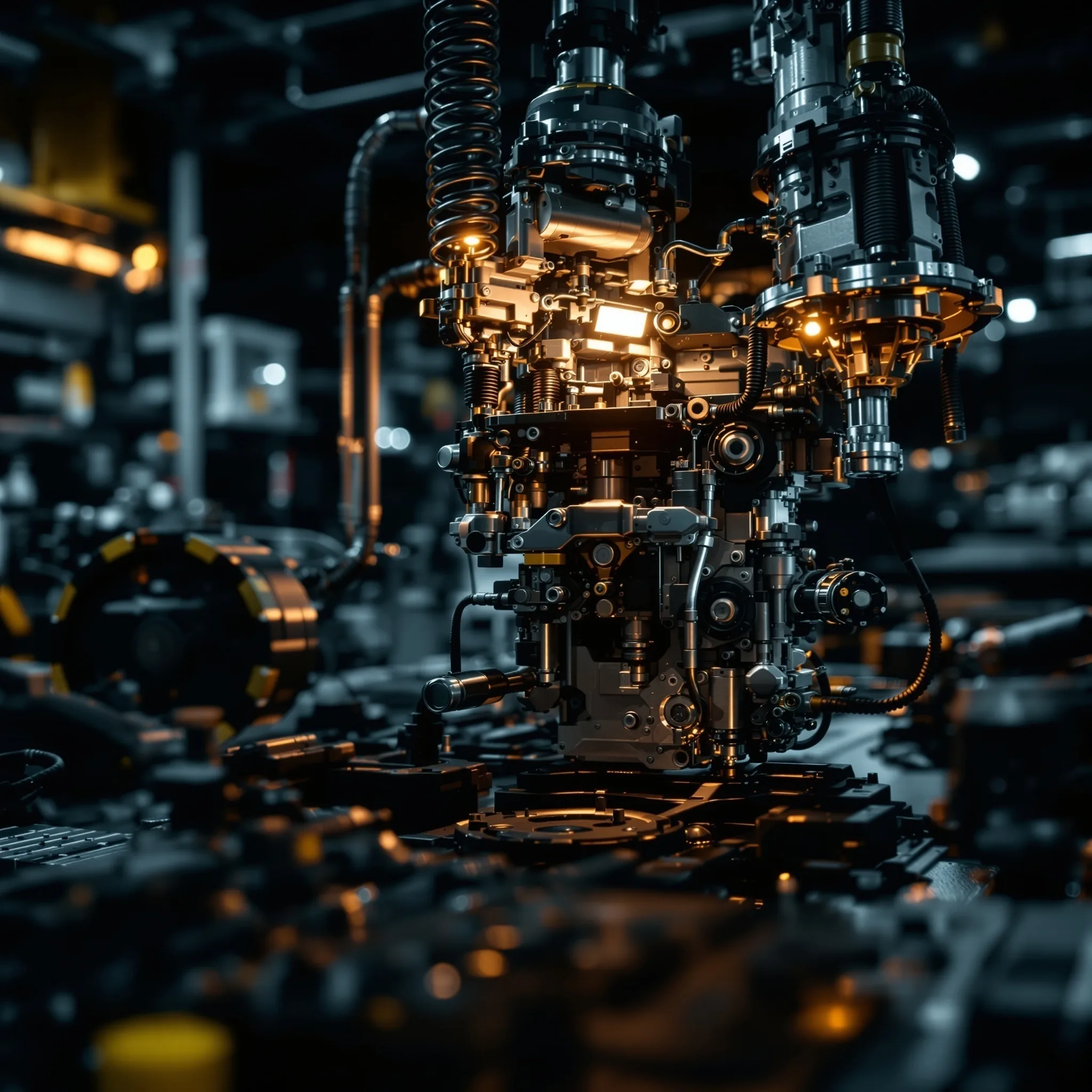
Heavy machinery operates under harsh conditions: continuous loads, aggressive environments, and long operating cycles.
Introduction
.imported-article{ --bg: #06110B; --card: #12281A; --ink: #F5F7FA; --muted: #AEB8C2; --accent: #58CF0D; --accent-light: #7FE836; --accent-2: #7FE836; --line: #1C3624; --line-light: #16321F; --shadow: 0 4px 24px rgba(0,0,0,0.35); --shadow-lg: 0 12px 48px rgba(0,0,0,0.45); --radius: 12px; --radius-sm: 8px; } .imported-article *{ box-sizing: border-box; margin: 0; padding: 0; } .imported-article{ font-size: 16px; scroll-behavior: smooth; } .imported-article{ font-family: "Mona Sans", system-ui, sans-serif; color: var(--ink); background: var(--bg); line-height: 1.75; font-weight: 400; -webkit-font-smoothing: antialiased; -moz-osx-font-smoothing: grayscale; } .imported-article a{ color: var(--accent-2); text-decoration: none; transition: color 0.2s ease; } .imported-article a:hover{ color: var(--accent); text-decoration: underline; } .imported-article .container{ max-width: 800px; margin: 0 auto; padding: 40px 24px 80px; } .imported-article /* Header / Hero */ .hero{ background: linear-gradient(135deg, var(--card) 0%, var(--line-light) 100%); border: 1px solid var(--line); border-radius: var(--radius); padding: 40px 36px; margin-bottom: 32px; box-shadow: var(--shadow); } .imported-article .badge{ display: inline-flex; align-items: center; font-family: "Mona Sans", system-ui, sans-serif; font-size: 0.75rem; font-weight: 600; letter-spacing: 0.05em; text-transform: uppercase; color: var(--accent); background: rgba(88, 207, 13, 0.14); padding: 8px 14px; border-radius: 20px; margin-bottom: 20px; } .imported-article .meta{ display: flex; align-items: center; gap: 16px; font-family: "Mona Sans", system-ui, sans-serif; font-size: 0.875rem; color: var(--muted); margin-bottom: 16px; } .imported-article .meta-item{ display: flex; align-items: center; gap: 6px; } .imported-article h1{ font-family: "Mona Sans", system-ui, sans-serif; font-size: 2.25rem; font-weight: 900; line-height: 1.2; letter-spacing: -0.02em; color: var(--ink); margin-bottom: 16px; } .imported-article .subtitle{ font-size: 1.125rem; color: var(--muted); line-height: 1.6; max-width: 90%; } .imported-article /* Table of Contents */ .toc{ margin-top: 28px; padding: 24px; background: rgba(255,255,255,0.04); border: 1px solid var(--line); border-radius: var(--radius-sm); } .imported-article .toc-title{ font-family: "Mona Sans", system-ui, sans-serif; text-transform: uppercase; letter-spacing: 0.08em; font-size: 0.75rem; font-weight: 600; color: var(--accent); margin-bottom: 12px; } .imported-article .toc ul{ list-style: none; } .imported-article .toc li{ margin: 8px 0; font-family: "Mona Sans", system-ui, sans-serif; font-size: 0.9rem; } .imported-article .toc a{ color: var(--ink); } .imported-article .toc a:hover{ color: var(--accent); } .imported-article .toc .toc-sub{ margin-left: 20px; font-size: 0.85rem; color: var(--muted); } .imported-article /* Article Content */ .article{ background: var(--card); border-radius: var(--radius); border: 1px solid var(--line); padding: 48px 40px; box-shadow: var(--shadow); } .imported-article .article h2{ font-family: "Mona Sans", system-ui, sans-serif; font-size: 1.625rem; font-weight: 700; margin: 2.5rem 0 1rem; padding-top: 1.5rem; border-top: 1px solid var(--line-light); color: var(--ink); letter-spacing: -0.01em; } .imported-article .article h2:first-child{ margin-top: 0; padding-top: 0; border-top: none; } .imported-article .article h3{ font-family: "Mona Sans", system-ui, sans-serif; font-size: 1.25rem; font-weight: 700; margin: 1.75rem 0 0.75rem; color: var(--ink); } .imported-article .article p{ margin: 1rem 0; font-size: 1.0625rem; } .imported-article .article ul, .imported-article .article ol{ margin: 1rem 0 1.25rem 1.5rem; } .imported-article .article li{ margin: 0.5rem 0; font-size: 1.0625rem; } .imported-article .article li::marker{ color: var(--accent); } .imported-article .article strong{ font-weight: 600; color: var(--ink); } .imported-article .article hr{ border: none; height: 1px; background: var(--line-light); margin: 2rem 0; } .imported-article /* Tags */ .tags{ margin-top: 3rem; padding-top: 2rem; border-top: 1px solid var(--line); } .imported-article .tags h2{ font-family: "Mona Sans", system-ui, sans-serif; font-size: 0.875rem; font-weight: 600; text-transform: uppercase; letter-spacing: 0.05em; color: var(--muted); margin-bottom: 12px; border: none; padding: 0; } .imported-article .tag-list{ list-style: none; display: flex; flex-wrap: wrap; gap: 8px; } .imported-article .tag-list li{ font-family: "Mona Sans", system-ui, sans-serif; background: var(--line-light); border: 1px solid var(--line); border-radius: 20px; padding: 6px 14px; font-size: 0.8125rem; font-weight: 500; color: var(--muted); transition: all 0.2s ease; } .imported-article .tag-list li:hover{ background: rgba(88, 207, 13, 0.14); border-color: var(--accent); color: var(--accent); } .imported-article /* Footer */ .footer{ text-align: center; font-family: "Mona Sans", system-ui, sans-serif; color: var(--muted); font-size: 0.875rem; margin-top: 40px; padding-top: 24px; border-top: 1px solid var(--line); } .imported-article .footer a{ color: var(--accent); font-weight: 500; } .imported-article /* Responsive */ @media (max-width: 768px){ .container { padding: 24px 16px 60px; } .hero { padding: 28px 24px; } h1 { font-size: 1.75rem; } .article { padding: 32px 24px; } .article h2 { font-size: 1.375rem; } .article p, .article li { font-size: 1rem; } .meta { flex-wrap: wrap; gap: 10px; } } .imported-article /* Print styles */ @media print{ .toc, .tags, .badge, .footer { display: none; } .hero, .article { box-shadow: none; border: none; } body { font-size: 12pt; } } .imported-article .container{max-width:100%;padding:0;margin:0;}.meta{display:flex;flex-wrap:wrap;gap:8px 18px;align-items:center}.meta-item{display:inline-flex;gap:6px;align-items:center}.meta-item svg{width:16px;height:16px;flex:none} ReproRACE - Technical Guide By Daniel Morales 10 min read Contents Work Cycles and Sustained Torque Load Management and Protection Systems Productivity and Fuel Consumption Emissions and Industrial Regulations Critical Sensors and Common Failures Maintenance and Advanced Diagnostics Integration with the Transmission and Hydraulics Extreme Environments and Additional Protection Fleet Management and Downtime Industrial Telemetry and Operational Data Operator Training Maintenance Plan Based on Operating Hours Safety and Operation on Construction Sites Fuel Impact and Real-World Quality Relationship with Hydraulic Systems and Power Take-Off Risks of Generic Adjustments to Machinery Validation Under Real Working Conditions Torque by Gear and Load Limiters Real-World Heavy Machinery Cases Case 1: Excavator with Power Restrictions Case 2: Agricultural tractor with high fuel consumption Case 3: Quarry machinery with an erratic pressure sensor Ethical calibration checklist for heavy machinery Periodic audits and technical support Work cycles and load-based calibration Predictive maintenance for heavy machinery Operator checklist Final note on machinery Closing note on machinery Operational wrap-up for machinery Conclusion Introduction The heavy machinery operates in harsh conditions: continuous loads, aggressive environments, and long cycles. In this context, engine electronics are not aimed at peak power, but at sustained torque, reliability, and productivity. ReproRACE applies responsible calibrations so that machinery performs better without compromising its service life. The ECU determines torque and protects the engine. Remapping optimizes; it does not repair. For this reason, calibration for heavy machinery must be even more conservative and based on real-world data. Work cycles and sustained torque Unlike a passenger car, heavy machinery operates under constant load. The adjustment should prioritize: Useful torque in the mid-range. Stability under prolonged load. Avoiding peaks that generate thermal stress. The goal is for the machine to work consistently for hours, without power cuts or overheating. Load management and protections Machinery ECUs include derate strategies to protect the engine. Ethical calibration respects these protections and works with them, not against them. This includes: Limiters based on oil and coolant temperature. Protection based on turbo and fuel rail pressure. Torque management according to environmental conditions. Ignoring these strategies may seem effective in the short term, but it reduces the engine's service life. Productivity and fuel consumption For heavy machinery, fuel consumption is a direct cost. A technical calibration aims to: Improve efficiency across real-world load ranges. Reduce losses caused by excessive enrichment. Maintain stability across varying terrain. Productivity improves when torque is more usable and fuel consumption remains under control. This is the foundation of real-world benefits. Emissions and industrial regulations Industrial engines are subject to strict regulations (Stage V, Tier, etc.). Calibration must comply with emissions control systems such as DPF and SCR. ReproRACE does not remove these systems because legality and reliability go hand in hand. Keeping emissions within limits helps avoid penalties and ensures operational continuity in regulated environments. Critical sensors and common faults In heavy machinery, sensors are more exposed to vibration, dust, and moisture. The most common faults include: Contaminated turbo pressure sensors. Mass airflow meters with erratic readings. Temperature sensors exposed to vibration. Intermittent wiring faults. Customer education and preventive diagnostics are essential to avoid costly breakdowns. Maintenance and advanced diagnostics Responsible calibration is accompanied by a maintenance plan: Inspect filters and the intake system according to operating hours. Monitor DPF regeneration and condition. Periodically verify actual values. In machinery, an electronic fault can bring an entire operation to a halt. That is why advanced diagnostics are an integral part of the service. Integration with the transmission and hydraulics Heavy machinery depends on more than just the engine. The transmission and hydraulics can also suffer if an increase in torque is not managed properly. Ethical calibration includes: Torque adjusted to the transmission for each gear. Coordination with the TCM where applicable. Protection of hydraulic systems against spikes. This prevents secondary faults and maintains the reliability of the entire system. Extreme environments and additional protection Heavy machinery operates amid dust, mud, heat, and constant vibration. These factors affect sensors, connectors, and intake systems. Responsible calibration must take into account: Additional headroom for high temperatures. Strategies to prevent filter saturation. Consistent torque limits when the air is less dense. The ECU protects the engine, but if the calibration ignores the environment, power cuts happen frequently. Thoughtful tuning helps prevent unexpected downtime. Fleet management and downtime In heavy machinery, the real cost lies in uptime. An electronic failure can bring an entire job site to a halt. Calibration should focus on reducing incidents: Stable usable torque to prevent transmission overload. Optimized fuel consumption to reduce operating costs. Preventive diagnostics to anticipate sensor failures. Well-calibrated electronics increase uptime and reduce unplanned downtime. Industrial telemetry and operational data More and more machines are using telemetry. This data helps detect trends in temperature, pressure, and fuel consumption. Calibration should use these records to adjust: Torque maps based on actual load. Thermal strategies during periods of peak demand. Early warnings for sensor deviations. Telemetry turns calibration into an ongoing process and improves long-term reliability. Operator training The operator is part of the system. Incorrect use can negate any improvement. Basic operator training should include: Warming up properly before applying maximum loads. Taking breaks when required by the thermal system. Recognizing early warning signs. An informed operator reduces thermal stress and extends engine life. Maintenance plan based on operating hours Machinery is measured in hours, not miles. Responsible calibration recommends: Regular inspections of the intake system and filters. Monitoring regeneration cycles and DPF condition. Preventive replacement of critical sensors. This plan prevents intermittent failures and maintains productivity. Safety and operation on job sites Extra torque must be managed carefully on job sites. A sudden increase can affect the machine's stability and control. That's why responsible calibration regulates torque delivery and prioritizes the safety of the operator and the surrounding environment. Fuel impact and actual quality In industrial environments, fuel quality is not always consistent. Quality variations affect the air-fuel mixture, temperature, and emissions. Responsible calibration must account for margins that prevent knocking or excessive smoke when fuel quality is less than optimal. This results in maps that prioritize stability and allow the ECU to make adjustments without entering protection mode. Relationship with hydraulic systems and power take-off Many machines are coupled to hydraulic systems or a power take-off. A sudden increase in torque can cause pressure spikes in the hydraulics and lead to wear. Ethical calibration regulates torque delivery during transient conditions to protect pumps and valves. The goal is for the system to operate smoothly and steadily, not just with more power. Risks of generic settings on machinery Generic files ignore the engine’s actual condition and the type of work it performs. This is especially critical in heavy machinery because the thermal margin is smaller and load cycles are long. A generic setting can cause overheating, DPF saturation, and frequent derating. Calibration must be specific and validated using real equipment data. Validation under real working conditions Calibration is validated while the machine is working, not just at idle. It is essential to check: Stable temperatures under continuous load. Turbo and rail pressure within range. Transmission and hydraulic system behavior under load. This validation confirms that the resulting performance is useful and safe for everyday work. Torque by gear and load limiters In heavy machinery, torque must be adjusted to suit the operating range. Not every gear or situation requires the same torque level. Ethical calibration sets limiters by gear and load to prevent excessive strain on the transmission. This improves traction, reduces wear, and keeps the system stable. Useful torque is torque that can be sustained without derating or overheating. Real-world cases in heavy machinery Case 1: Excavator with power derating The logs showed that thermal protection was active due to continuous load. Thermal management and usable torque were adjusted. Result: stable operation without derating. Case 2: Agricultural tractor with high fuel consumption The analysis indicated excess fuel at low load. The air-fuel mixture and torque control were optimized. Result: reduced fuel consumption and consistent performance. Case 3: Quarry machinery with an erratic pressure sensor An intermittent turbo pressure fault was detected. The sensor was repaired and the system recalibrated using actual values. Result: reliability restored. Ethical calibration checklist for heavy machinery Responsible work should include: Preliminary diagnostics using actual values. Verification of critical sensors. Strict adherence to protection strategies. Adjustment of usable torque, not peak torque. An associated maintenance plan. Periodic audits and technical support Heavy machinery benefits from periodic calibration reviews. Changes in the environment, accumulated operating hours, or component replacements can affect system consistency. A technical audit reviews logs, sensors, and temperatures to ensure performance remains within safe limits. This support helps prevent silent failures and maintain productivity over time. Work cycles and load-based calibration Heavy machinery operates in long cycles and under sustained loads. Calibration must be adapted to this profile, not that of a passenger car. The type of work, the most frequently used rpm ranges, and the usual ambient temperature are analyzed. This data is used to define a map that prioritizes usable torque and thermal stability. If torque is increased in areas where the engine is already operating at its limit, temperatures rise sharply and derates occur. By contrast, when tuned with sufficient headroom, the machine maintains continuous performance and reduces downtime. The key is to calibrate based on actual loads, not dynamometer figures. Predictive maintenance for heavy machinery Predictive maintenance is essential in this environment. The ECU records temperature and pressure trends, as well as corrections. This information can be used to schedule downtime before a fault occurs. At ReproRACE, we recommend reviewing logs regularly and comparing them with the baseline. If a turbo loses efficiency or a sensor drifts, the issue can be detected before it affects daily work. This reduces costs and increases availability—the key metric for heavy machinery. Operational checklist for operators The correct calibration is maintained when the operator uses the machine responsibly. A simple checklist helps preserve reliability: Warm up before sustained loads. Avoid sudden acceleration when the engine is cold. Allow the engine to cool down after hard work. Check temperature and pressure alerts. Report any recurring derates. Following these guidelines keeps the machinery within its safe operating range and maintains stable calibration for more hours of service. Final note on machinery For heavy machinery, availability is what matters. Stable calibration reduces downtime and maintains productivity. The goal is not to impress with figures, but to ensure that the machine can work for hours without derates. This technical approach protects the customer's investment and keeps daily operations running. Closing note on machinery Heavy machinery cannot afford unexpected downtime. Stable calibration protects the engine, but it also protects the business. Continuous operation requires thermal headroom and predictable response. With a technical approach, the machine performs better and reduces operating costs. Operational wrap-up for machinery Calibration for heavy machinery should support continuity. If the operator finds that the machine maintains its response without derates, work flows smoothly and costs go down. This result is only achieved when the tune is validated under actual load and thermal headroom is preserved. An engine that runs steadily for hours is the true measure of success in this sector. Conclusion ReproRACE and heavy machinery means stable performance and genuine reliability. In industrial environments, engine electronics must operate with sufficient headroom and consistency. The ECU determines torque and protects the engine; calibration must respect this logic to ensure productivity without breakdowns. This approach reduces downtime and allows work to be planned with confidence, because the engine maintains its behavior even in difficult conditions. Productivity is sustained when the electronics operate with sufficient headroom. That stability is the difference between a productive day and a costly breakdown. For this reason, every adjustment must be validated under real-world conditions and reviewed as operating hours accumulate, with no exceptions or shortcuts. At ReproRACE, we apply technical standards that prioritize durability and long-term results. Because with heavy machinery, true performance is the kind that never stops. Tags particulate filter clogged DPF DPF regeneration DPF fault DPF cleaning engine electronics advanced diagnostics error code electronic fault specialist workshop Related ReproRACE services Heavy machinery remapping Find your vehicle and see its power gains ReproRACE remapping workshops near you Stage 1 remapping Faults and fault codes ReproRACE — ReproRACE - engine electronics backed by sound technical judgment.