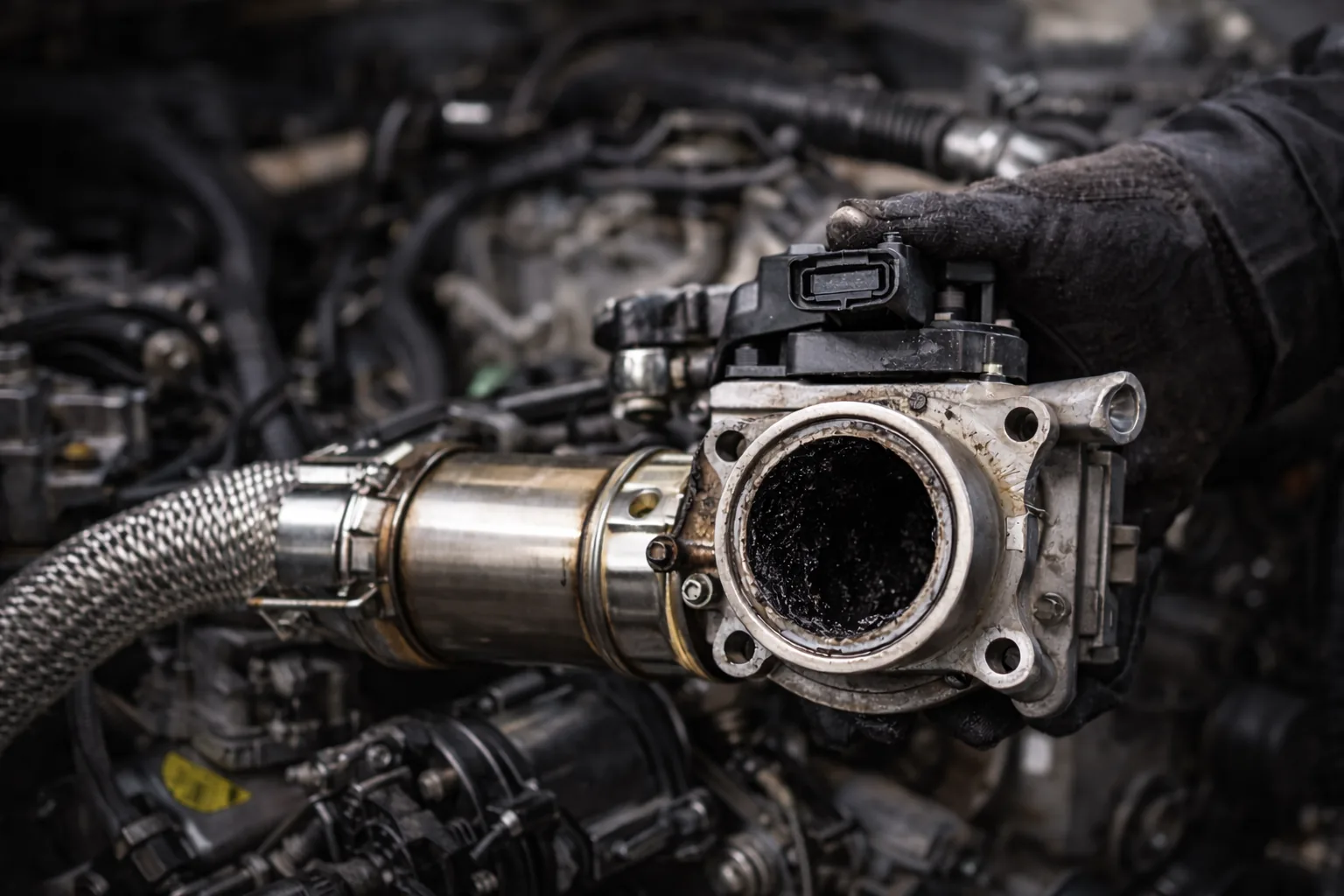
The EGR valve is one of the components that causes the most problems in modern engines, especially in diesel vehicles and in engines that make…
Introduction
.imported-article{ --bg: #06110B; --card: #12281A; --ink: #F5F7FA; --muted: #AEB8C2; --accent: #58CF0D; --accent-light: #7FE836; --accent-2: #7FE836; --line: #1C3624; --line-light: #16321F; --shadow: 0 4px 24px rgba(0,0,0,0.35); --shadow-lg: 0 12px 48px rgba(0,0,0,0.45); --radius: 12px; --radius-sm: 8px; } .imported-article *{ box-sizing: border-box; margin: 0; padding: 0; } .imported-article{ font-size: 16px; scroll-behavior: smooth; } .imported-article{ font-family: "Mona Sans", system-ui, sans-serif; color: var(--ink); background: var(--bg); line-height: 1.75; font-weight: 400; -webkit-font-smoothing: antialiased; -moz-osx-font-smoothing: grayscale; } .imported-article a{ color: var(--accent-2); text-decoration: none; transition: color 0.2s ease; } .imported-article a:hover{ color: var(--accent); text-decoration: underline; } .imported-article .container{ max-width: 800px; margin: 0 auto; padding: 40px 24px 80px; } .imported-article /* Header / Hero */ .hero{ background: linear-gradient(135deg, var(--card) 0%, var(--line-light) 100%); border: 1px solid var(--line); border-radius: var(--radius); padding: 40px 36px; margin-bottom: 32px; box-shadow: var(--shadow); } .imported-article .badge{ display: inline-flex; align-items: center; font-family: "Mona Sans", system-ui, sans-serif; font-size: 0.75rem; font-weight: 600; letter-spacing: 0.05em; text-transform: uppercase; color: var(--accent); background: rgba(88, 207, 13, 0.14); padding: 8px 14px; border-radius: 20px; margin-bottom: 20px; } .imported-article .meta{ display: flex; align-items: center; gap: 16px; font-family: "Mona Sans", system-ui, sans-serif; font-size: 0.875rem; color: var(--muted); margin-bottom: 16px; } .imported-article .meta-item{ display: flex; align-items: center; gap: 6px; } .imported-article h1{ font-family: "Mona Sans", system-ui, sans-serif; font-size: 2.25rem; font-weight: 900; line-height: 1.2; letter-spacing: -0.02em; color: var(--ink); margin-bottom: 16px; } .imported-article .subtitle{ font-size: 1.125rem; color: var(--muted); line-height: 1.6; max-width: 90%; } .imported-article /* Table of Contents */ .toc{ margin-top: 28px; padding: 24px; background: rgba(255,255,255,0.04); border: 1px solid var(--line); border-radius: var(--radius-sm); } .imported-article .toc-title{ font-family: "Mona Sans", system-ui, sans-serif; text-transform: uppercase; letter-spacing: 0.08em; font-size: 0.75rem; font-weight: 600; color: var(--accent); margin-bottom: 12px; } .imported-article .toc ul{ list-style: none; } .imported-article .toc li{ margin: 8px 0; font-family: "Mona Sans", system-ui, sans-serif; font-size: 0.9rem; } .imported-article .toc a{ color: var(--ink); } .imported-article .toc a:hover{ color: var(--accent); } .imported-article .toc .toc-sub{ margin-left: 20px; font-size: 0.85rem; color: var(--muted); } .imported-article /* Article Content */ .article{ background: var(--card); border-radius: var(--radius); border: 1px solid var(--line); padding: 48px 40px; box-shadow: var(--shadow); } .imported-article .article h2{ font-family: "Mona Sans", system-ui, sans-serif; font-size: 1.625rem; font-weight: 700; margin: 2.5rem 0 1rem; padding-top: 1.5rem; border-top: 1px solid var(--line-light); color: var(--ink); letter-spacing: -0.01em; } .imported-article .article h2:first-child{ margin-top: 0; padding-top: 0; border-top: none; } .imported-article .article h3{ font-family: "Mona Sans", system-ui, sans-serif; font-size: 1.25rem; font-weight: 700; margin: 1.75rem 0 0.75rem; color: var(--ink); } .imported-article .article p{ margin: 1rem 0; font-size: 1.0625rem; } .imported-article .article ul, .imported-article .article ol{ margin: 1rem 0 1.25rem 1.5rem; } .imported-article .article li{ margin: 0.5rem 0; font-size: 1.0625rem; } .imported-article .article li::marker{ color: var(--accent); } .imported-article .article strong{ font-weight: 600; color: var(--ink); } .imported-article .article hr{ border: none; height: 1px; background: var(--line-light); margin: 2rem 0; } .imported-article /* Tags */ .tags{ margin-top: 3rem; padding-top: 2rem; border-top: 1px solid var(--line); } .imported-article .tags h2{ font-family: "Mona Sans", system-ui, sans-serif; font-size: 0.875rem; font-weight: 600; text-transform: uppercase; letter-spacing: 0.05em; color: var(--muted); margin-bottom: 12px; border: none; padding: 0; } .imported-article .tag-list{ list-style: none; display: flex; flex-wrap: wrap; gap: 8px; } .imported-article .tag-list li{ font-family: "Mona Sans", system-ui, sans-serif; background: var(--line-light); border: 1px solid var(--line); border-radius: 20px; padding: 6px 14px; font-size: 0.8125rem; font-weight: 500; color: var(--muted); transition: all 0.2s ease; } .imported-article .tag-list li:hover{ background: rgba(88, 207, 13, 0.14); border-color: var(--accent); color: var(--accent); } .imported-article /* Footer */ .footer{ text-align: center; font-family: "Mona Sans", system-ui, sans-serif; color: var(--muted); font-size: 0.875rem; margin-top: 40px; padding-top: 24px; border-top: 1px solid var(--line); } .imported-article .footer a{ color: var(--accent); font-weight: 500; } .imported-article /* Responsive */ @media (max-width: 768px){ .container { padding: 24px 16px 60px; } .hero { padding: 28px 24px; } h1 { font-size: 1.75rem; } .article { padding: 32px 24px; } .article h2 { font-size: 1.375rem; } .article p, .article li { font-size: 1rem; } .meta { flex-wrap: wrap; gap: 10px; } } .imported-article /* Print styles */ @media print{ .toc, .tags, .badge, .footer { display: none; } .hero, .article { box-shadow: none; border: none; } body { font-size: 12pt; } } .imported-article .container{max-width:100%;padding:0;margin:0;}.meta{display:flex;flex-wrap:wrap;gap:8px 18px;align-items:center}.meta-item{display:inline-flex;gap:6px;align-items:center}.meta-item svg{width:16px;height:16px;flex:none} ReproRACE - Technical Guide By the ReproRACE Team 10-minute read Contents Why the EGR valve gets dirty or fails Most common symptoms of a dirty or faulty EGR valve 1\. Gradual loss of power 2\. Jerking and rough running 3\. Increased fuel consumption 4\. Check engine light comes on 5\. Entering limp mode 6\. Excessive exhaust smoke 7\. Hot-start problems Electronic symptoms associated with the EGR The relationship between a faulty EGR and other engine systems DPF (diesel particulate filter) Turbocharger Fuel injection system How the ECU detects a dirty or faulty EGR Common EGR error codes Effects on emissions and fuel consumption Relationship with the EGR cooler Common diagnostic errors Why clearing the EGR error isn't enough Accurately diagnosing a dirty or faulty EGR valve How to prevent EGR valve problems The importance of electronic management in EGR control Advanced diagnostics with live data Long-term impact on reliability False positives and intermittent faults EGR in city and highway driving Conclusion Introduction The EGR valve is one of the components that causes the most problems in modern engines, especially in diesel vehicles and engines that frequently make urban trips. Over time, the buildup of soot and exhaust residues can prevent the EGR from working properly, resulting in a series of clear symptoms of a dirty or faulty EGR valve . These symptoms affect not only driving comfort, but also engine performance , fuel consumption and medium- and long-term reliability . In this article, we take an in-depth look at what these symptoms are, why they occur, and how electronic engine management plays a key role in detecting them. Why the EGR valve gets dirty or fails Before looking at the symptoms, it’s important to understand why the EGR is so prone to failure. The EGR valve works by recirculating exhaust gases laden with: Soot Combustion residues Oil vapors Over time, these residues stick to the valve and ducts, causing: Erratic movement Partial blockages Out-of-range openings In modern engines, where the EGR is electronically controlled, any deviation is detected by the ECU and recorded as a fault. Most common symptoms of a dirty or faulty EGR valve Below, we detail the symptoms of a dirty EGR valve most commonly seen, ordered from the mildest to the most serious. 1\. Gradual loss of power One of the first symptoms is a gradual loss of power , especially at low and mid-range RPM. The engine feels less responsive and reacts more sluggishly to the accelerator. This happens because: The EGR remains partially open when it shouldn't Too much exhaust gas enters the intake Less oxygen is available for combustion 2\. Jerking and uneven operation A faulty EGR can cause: Jerking when accelerating Unstable idling Vibrations at low RPM This symptom is very common in city driving and is often mistaken for fuel injection or ignition problems. 3\. Increased fuel consumption When combustion is inefficient, the ECU tries to correct the mixture using additional electronic strategies, resulting in: Higher fuel consumption Lower efficiency More frequent regeneration cycles in diesel engines Drivers often notice that the vehicle uses more fuel on the same usual routes. 4\. Engine warning light comes on When the ECU detects that the EGR's behavior does not match the expected values, it records a fault code (DTC) and turns on the engine warning light. These errors can be: Permanent Intermittent Dependent on specific driving conditions In many cases, the warning light appears and disappears, making diagnosis difficult if the issue is not analyzed correctly. 5\. Entering limp mode In more advanced stages, a faulty EGR can trigger limp mode , in which: Power is limited Engine speed is restricted The engine switches to safe operating mode This symptom indicates that the system has detected a potential risk to the engine or emissions. 6\. Excessive exhaust smoke Incorrect combustion caused by a faulty EGR can produce: Black smoke A strong exhaust odor This symptom is usually accompanied by other electronic faults and irregular engine operation. 7\. Hot-start problems In some cases, an EGR valve stuck open can make it difficult to start the engine when it is hot, due to an incorrect air-fuel mixture at ignition. Electronic symptoms associated with the EGR In addition to mechanical symptoms, a dirty or faulty EGR causes electronic symptoms that can only be detected through diagnostics: EGR flow-related error codes Out-of-range readings from mass air flow sensors Differences between theoretical and actual flow Activation of protection strategies This data is key to identifying the real problem. Relationship between a faulty EGR and other engine systems An EGR fault rarely occurs on its own. It can directly affect other systems, such as: DPF (diesel particulate filter) An EGR that is not working properly increases soot production, accelerating DPF saturation. Turbocharger Incorrect backpressure and poor gas management can affect turbocharger performance. Fuel injection system The ECU adjusts injection timing and quantities to compensate for inefficient combustion. How the ECU detects a dirty or faulty EGR The ECU does not monitor how dirty the valve is. Instead, it assesses whether several signals are consistent: requested opening, measured airflow reduction, and intake pressure. If the EGR moves more slowly than expected or remains open when it should not, the ECU detects: Fresh air mass flow outside the normal range. Intake pressure inconsistent with the valve opening. Abnormal intake temperatures. When these variables do not match the ECU's internal model, it generates a plausibility DTC. That's why many EGR faults appear as “insufficient flow” or “excessive flow,” even when the real problem is a dirty passage or a drifting sensor. Common EGR error codes The most common EGR-related DTCs are: P0401 : insufficient flow. The valve opening does not produce the expected drop in MAF. P0402 : excessive flow. Recirculation is greater than expected, or the valve remains open. P0403 : control circuit fault. P0404 : range or performance outside specifications. These codes do not mean “broken valve”; they mean the ECU is not getting the expected result from the recirculation strategy. Effects on emissions and fuel consumption A dirty EGR disrupts the balance between NOx and particulate matter. If the EGR does not recirculate exhaust gas properly: NOx emissions increase due to hotter combustion. More particulate matter is produced if the mixture becomes oxygen-deficient. The ECU compensates with additional fuel injection, which increases fuel consumption. The result is twofold: the engine performs worse, and the emissions system operates outside its optimal range, accelerating problems in the DPF and catalytic converter. Relationship with the EGR cooler Many modern EGR systems include a cooler. If the cooler becomes clogged or loses efficiency: Recirculated gases arrive hotter. The ECU reduces recirculation to protect combustion. Temperature and plausibility faults appear. In these cases, the valve may be mechanically sound, but the system still fails because cooling capacity is insufficient. Common diagnostic mistakes Replacing the valve without checking the MAF or MAP . A sensor reading outside its range can mimic an EGR fault. Cleaning the valve without inspecting the passage . If the intake is clogged, the problem persists. Ignoring intermittent faults . An EGR valve that remains open when cold can cause symptoms only under certain conditions. Clearing codes without analyzing live data . The fault returns because the internal model continues to detect inconsistencies. Why clearing the EGR error is not enough One of the most common mistakes is clearing the fault code without fixing the cause . This causes the following: The fault returns The system enters protection mode sooner Other resulting problems get worse The EGR will generate the error again as long as the physical or electronic problem remains. Proper diagnosis of a dirty or faulty EGR valve A professional diagnosis should include: Reading and interpreting DTCs Analyzing live data Checking the valve's movement Evaluating the electronic strategy Only then is it possible to determine whether the problem is: Dirt Electrical failure Electronic control problem How to prevent EGR valve problems Some preventive measures include: Combining urban trips with longer journeys Keeping the intake system clean Addressing electronic warnings as soon as they appear Performing regular diagnostics Proper electronic management helps extend the service life of the EGR system. The importance of electronic management in EGR control The EGR valve is fully integrated into the ECU strategy. Proper electronic management helps: Reduce emissions without compromising performance Prevent excessive residue buildup Maintain engine reliability Therefore, any electronic intervention must take the EGR's behavior within the overall system into account. Advanced diagnostics using live data A proper diagnosis goes beyond reading the DTC. The EGR's behavior is analyzed in real time: Requested opening vs. actual opening. Airflow measured with the EGR open and closed. Changes in intake pressure when the valve operates. Gas temperature before and after the cooler. This data can help distinguish a stuck EGR valve from a sensor problem or a control strategy altered by another fault. This approach avoids unnecessary part replacements and makes it possible to address the actual cause. Long-term impact on reliability A dirty EGR valve doesn't just cause immediate symptoms. Over time: Soot builds up in the intake. The air passage narrows, worsening combustion. DPF regeneration frequency increases. Irregular backpressure accelerates turbo wear. These consequences explain why an apparently “minor” EGR problem eventually affects overall engine performance. False positives and intermittent faults In many vehicles, EGR faults come and go. This is usually caused by: Slow-responding sensors. Thermal conditions that occur only on certain trips. Partial buildup of deposits that block the valve only in certain positions. The result is a complex diagnosis if you only read the error code. Correct interpretation requires analyzing the driving context and the system's behavior under real-world load. EGR in city driving and on the highway The EGR works much harder in city driving, where the engine operates at partial loads and lower temperatures. In these conditions: Recirculation increases. More deposits build up. The valve spends more time in intermediate positions. On the highway, the temperature and engine speed stabilize, and EGR activity may decrease. This explains why many vehicles show symptoms only in city driving. Understanding this difference helps guide diagnosis and establish driving habits that reduce accumulated deposits without resorting to aggressive solutions. Conclusion The symptoms of a dirty or faulty EGR valve usually appear gradually, but their impact on the engine can be significant if no action is taken in time. Recognizing these symptoms, understanding their cause, and getting a professional diagnosis are key to preventing more serious faults. At ReproRACE, we address EGR problems from a technical, preventive, and reliability-focused , always analyzing the complete electronic management system before applying any solution. This approach makes it possible to distinguish between a genuinely faulty valve and a control strategy altered by sensors, temperature, or operating conditions. The result is a more accurate diagnosis, fewer unnecessary replacements, and an engine that maintains its balance between emissions and performance. When the EGR remains within range, the engine responds better and the emissions control system operates steadily. This stability is key to long-term reliability. And it prevents protection strategies that unnecessarily reduce torque and increase fuel consumption. It's a direct benefit for the driver. Tags particulate filter DPF clogged DPF regeneration DPF fault DPF cleaning engine electronics advanced diagnostics error code electronic fault specialist workshop Related ReproRACE services How to tell if the EGR valve is failing Software EGR valve deactivation Find your vehicle and check its power gains ReproRACE remapping workshops near you Stage 1 remapping Faults and fault codes ReproRACE — ReproRACE - engine electronics with a technical approach.